

Park · Liverpool · ⭐ 9.3/10 · 3003 reviews · updated: 2026-08-04 20:22:03
Address: Muirhead Ave E, Liverpool L11 1EH, United Kingdom
Croxteth Hall And Country Park — five hundred acres of a vanished aristocratic estate
Liverpool has no other green space quite like this: an entire working country estate that the city inherited whole, fences, farm and all. Woodland rides, hay meadows, a small river valley, a rare-breeds farm and a red-brick hall carrying more than four centuries of building history all sit inside one boundary in the north-east of the city. You can walk in for nothing and spend a whole day without repeating a path, and the further you get from the entrance the less it feels like a municipal park and the more it feels like the Lancashire countryside the suburbs simply never reached.
Highlights
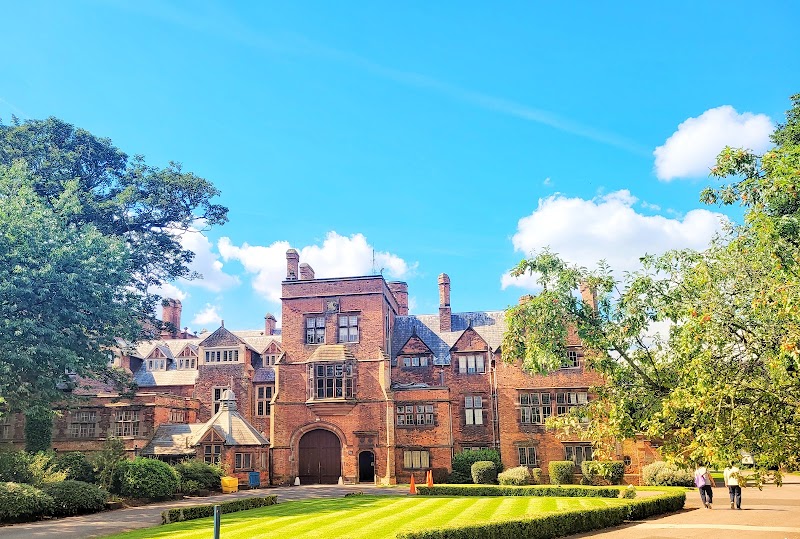
- Croxteth Hall — a Grade II* listed house begun around 1575 and extended by every generation since; the showpiece west front dates from 1702, and an entire wing was added in 1874 purely to lodge house guests.
- The Victorian Walled Garden — laid out on the fertile flood plain of the River Alt to supply the Earl’s kitchens, with heated flue walls, a rare surviving mushroom house and espaliered fruit trained flat against warm brick.
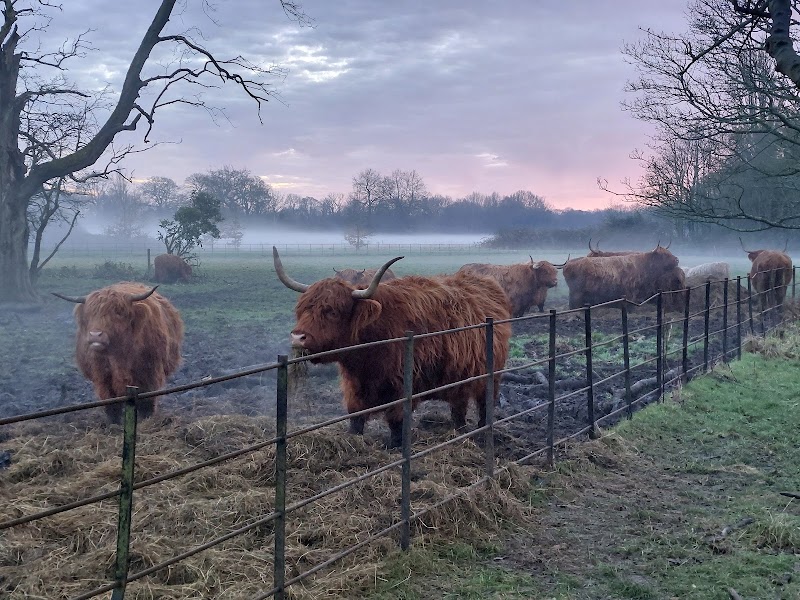
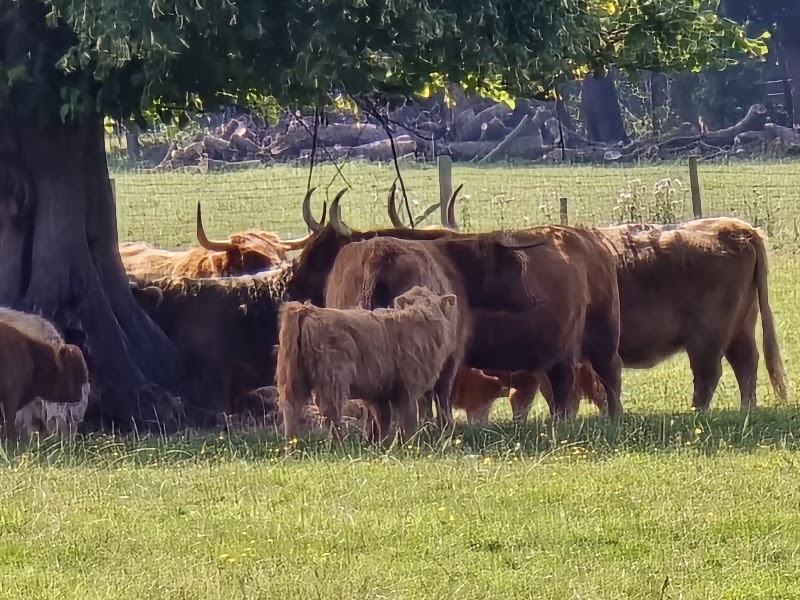
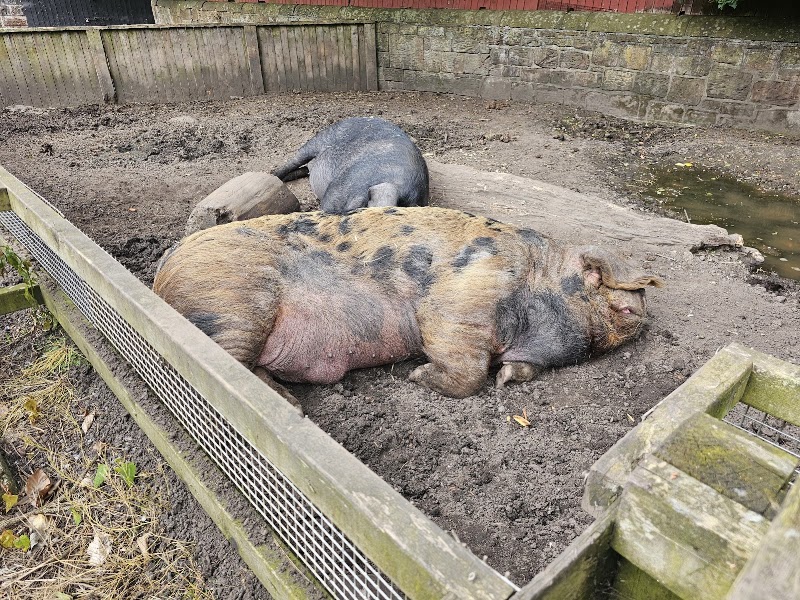
- Home Farm — one of the largest rare-breeds collections in the country, keeping more than twenty breeds classed as Priority or At Risk, among them Tamworth pigs, Manx Loaghtan sheep and Belted Galloway cattle.
- Mull Wood — Liverpool’s very first nature reserve, an English oak and sycamore wood that still holds nuthatch and, in good years, lesser spotted woodpecker.
- Croxteth Local Nature Reserve — around 85 hectares of woodland, rough grassland, pasture and ponds strung along the River Alt, managed in partnership with the Lancashire Wildlife Trust.
- The Edwardian interiors — the hall is dressed as it looked in its 1900s prime, from drawing room and library through to the servants’ quarters and the estate office where the whole enterprise was run.
What you’ll find
The estate splits neatly into a free outer layer and a ticketed inner core. The outer layer is the country park itself — miles of surfaced and grass tracks through woodland and old parkland, open every day of the year. The inner core is the heritage cluster: hall, walled garden and farm, each with its own opening season. Most visitors do one of the two and come back for the other.
- Waymarked walking trails of varying length, from a half-hour loop near the entrance to circuits that take in the far woods.
- Wide, level avenues that suit family cycling, buggies and anyone who would rather not tackle mud.
- A visitor cluster around the hall courtyard with a café and toilets, open in the main season.
- A children’s play area with sturdy equipment aimed at primary-age visitors.
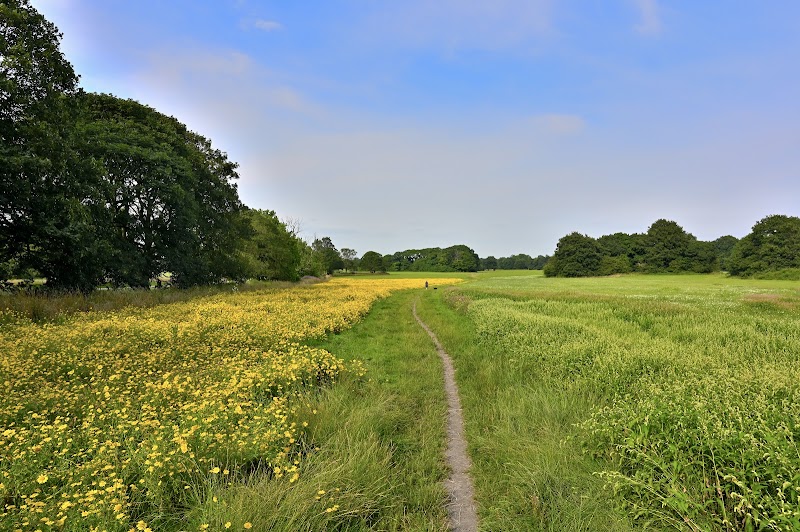
- A wildflower meadow established near the old kennels specifically to feed pollinators.
- National plant collections under glass in the walled garden — Dracaena, Codiaeum and Solenostemon, plus orchids and bromeliads, a living echo of the Liverpool Botanics founded in 1802.
Things to do — and who it’s for
- Families with young children — the farm is the reliable winner: real animals at close range, feeding sessions and keeper talks spread through the day, then the playground to burn off the rest.
- History enthusiasts — the hall rewards a slow circuit, because the below-stairs rooms are as complete as the grand ones and tell a fuller story than either could alone.
- Birdwatchers — buzzards circle over the open grassland, kingfishers work the river, and warblers fill the woods from April; winter brings redwing and fieldfare to the pasture.
- Gardeners — the walled garden is a working lesson in Victorian kitchen-garden engineering, from the flue walls to the fruit training and the glasshouse collections.
- Runners and dog walkers — the sheer scale means you can build a long route without crossing a road, which almost no other Liverpool park allows.
- Anyone who wants a free day out — the country park costs nothing, and a picnic in the old parkland needs no ticket at all.
Getting there & practical
The estate sits in West Derby, roughly five miles north-east of the city centre, and it is one of the few big Liverpool parks without a Merseyrail station on its doorstep — the practical public-transport option is a city-centre bus, with the number 12 group of services taking about half an hour. Free parking is available at the main entrance. Access to the country park is free all year, with gates open from 7am to 7pm between April and October and from 7am to 5.30pm from November to March. The hall, the Victorian Walled Garden and Home Farm charge admission and open for a main season running from around late March to late September, typically from 10.30am to 5pm. Allow two to three hours for the country park alone, or a full day if you add the hall and the farm.
When to visit
Spring is the estate at its most alive: lambs and piglets on the farm, bluebells and wood anemone under the oaks, and the first blackcaps and chiffchaffs singing from the middle of the canopy. Summer is the season of the walled garden, when the beds are fully cropped, the glasshouses are at their densest and the long grass avenues are perfect for a picnic; it is also the busiest time, so arrive early. Autumn turns the sycamore and oak gold, the fruit trees are picked, and the woodland paths quieten dramatically once the heritage season closes at the end of September. Winter strips the estate back to structure — bare trees, long views across the parkland, buzzards easy to spot against a pale sky and thrushes down from Scandinavia working the frozen pasture. The country park stays open through all of it, which makes January here a genuinely underrated walk.
Good to know
Croxteth was the seat of the Molyneux family, who held it from the sixteenth century and rose to become the Earls of Sefton, at one point owning enormous tracts of Lancashire and of Liverpool itself. Queen Victoria and Prince Albert stayed on 9 October 1851 with their children before continuing into Liverpool the next day, an occasion marked by entertaining some seven hundred of the local gentry on the grounds. The hall was designated Grade II* on 28 June 1952; three of its outbuildings share that grade and roughly fifteen further estate structures are listed Grade II, which makes the site one of the densest concentrations of listed fabric in the city. The line ended in 1972 when the seventh Earl of Sefton died without an heir, and the estate passed to Liverpool City Council, which opened the hall to the public in 1976. A substantial council-funded programme of structural repairs was carried out in 2020, and in August 2022 the council opened a public consultation on the estate’s long-term future and how its buildings should earn their keep.
Visitor tips
- Check the heritage season before travelling — the country park is open all year, but the hall, walled garden and farm shut for the winter, and arriving in February expecting animals leads to disappointment.
- Wear proper footwear if you intend to reach Mull Wood or the river; the surfaced avenues are easy, but the nature reserve paths hold water for days after rain.
- Time your farm visit around the feeding sessions and keeper talks rather than turning up at random — the animals are far more active and the talks are where the rare-breed story actually lands.
Questions & answers
Is Croxteth Hall And Country Park free? The country park is free to enter every day of the year. The hall, the Victorian Walled Garden and Home Farm are ticketed attractions with their own seasonal opening.
How big is it? Around 500 acres of publicly accessible parkland remain from the old estate, which includes a Local Nature Reserve of roughly 85 hectares of woodland, grassland, pasture and ponds.
How old is the hall? The core dates from about 1575, but the building is a layered thing — Tudor, Queen Anne, Georgian and Victorian phases are all readable, with the west front of 1702 as the principal face and a guest wing added in 1874.
Who owned it before the council? The Molyneux family, later the Earls of Sefton, from the sixteenth century until 1972, when the seventh Earl died without an heir and the estate passed to Liverpool City Council.
Can children see farm animals? Yes. Home Farm keeps more than twenty rare or at-risk breeds, including Tamworth pigs, Manx Loaghtan sheep and Belted Galloway cattle, with feeding sessions and talks during the open season.
What wildlife might I see in the woods? Nuthatch, jay, jackdaw and several tit species all year; blackcap, chiffchaff and willow warbler in spring and summer; redwing and fieldfare in winter; heron, moorhen, coot and kingfisher on the water, and buzzards overhead.
Is it good for cycling and pushchairs? The main avenues are wide and level and work well for both. The nature reserve tracks are rougher and often wet, so plan a mixed route rather than assuming the whole estate is smooth.
How long should I allow? Two to three hours covers a decent country-park walk. If you want the hall, the garden and the farm as well, treat it as a full day out.
Photos
Show 1 more photos
Visitor reviews
Reviews last updated: 2026-08-04 20:22:03
Data is refreshed monthly. Sources: liverpoolname.com and editorial picks based on reviews.
Great place for a walk. There's even a river at the back where you can have a quick swim with your dog 🙂
Great that there are so many parking spaces
Probably the best park in Liverpool, ideal for dog walking, with a full 5 km route. It's also not just for walkers; there's a farm and a dedicated playground for children.
There are food vans and toilets, everything you…
I love this place, the farm staff are wonderful, friendly and knowledgeable, the animals are amazing, and the café is great too, the Christmas fair in the courtyard was an incredible surprise, great stalls and traders. D…
Great place for a day out with children. Dogs are not allowed. Beautiful park and a good playground. There's a £5 entry fee, you can buy a little bucket of carrots and feed the animals. There's a café on site with tasty…
Not just a park, a world to explore
I live just a 20-minute walk away along the old bridle paths that wind behind the estates. It isn't only the convenience that draws me, but the scale and the character. Croxteth isn't…