Liverpool is slowly but surely transforming into a laboratory for the future of urban mobility. While other cities were still debating what should come first – charging stations or the electric vehicles themselves – they were already implementing both here. Chargers are emerging right out of lampposts, old vans are being swapped for quiet electric cars, and regional officials are suddenly starting to talk about the “net zero” goal quite seriously. This all sounds good, but does it work in reality? What does it cost, who pays for it, and do the electric cars hold enough charge to last until morning in a Liverpool suburb? The liverpoolname.com website investigated and provides the answers.
Why Liverpool Needs Electric Vehicles
The “environmental strategy” for most British cities once sounded like something from the distant future or a report for Brussels. But Liverpool decided to play the long game – even before it became mainstream. In 2019, the city region officially declared a “climate emergency” and promised: we will achieve net zero emissions by 2035. Not by mid-century, like most, but 15 years earlier.
One of the first items on this agenda is switching the city’s transport to “electric.” Not just municipal vehicles, but personal ones too – meaning creating conditions so that residents choose EVs themselves, rather than waiting for instructions from above. Because cars are the biggest source of emissions in the city.

This presents an interesting challenge. How do you make EVs accessible to people living in older housing stock without a dedicated parking space and a charger at home? How do you convince commercial vehicle drivers that charging doesn’t mean queuing somewhere for half an hour? And what exactly must the city provide to make this system work?
Liverpool decided not to reinvent the wheel but to assemble the electric vehicle infrastructure piece by piece: on the streets, in depots, at municipal bases, and in cooperation with private companies. This strategy is not the quickest, but it works for the long term.
Charging the City: How EV Infrastructure is Organised in Liverpool
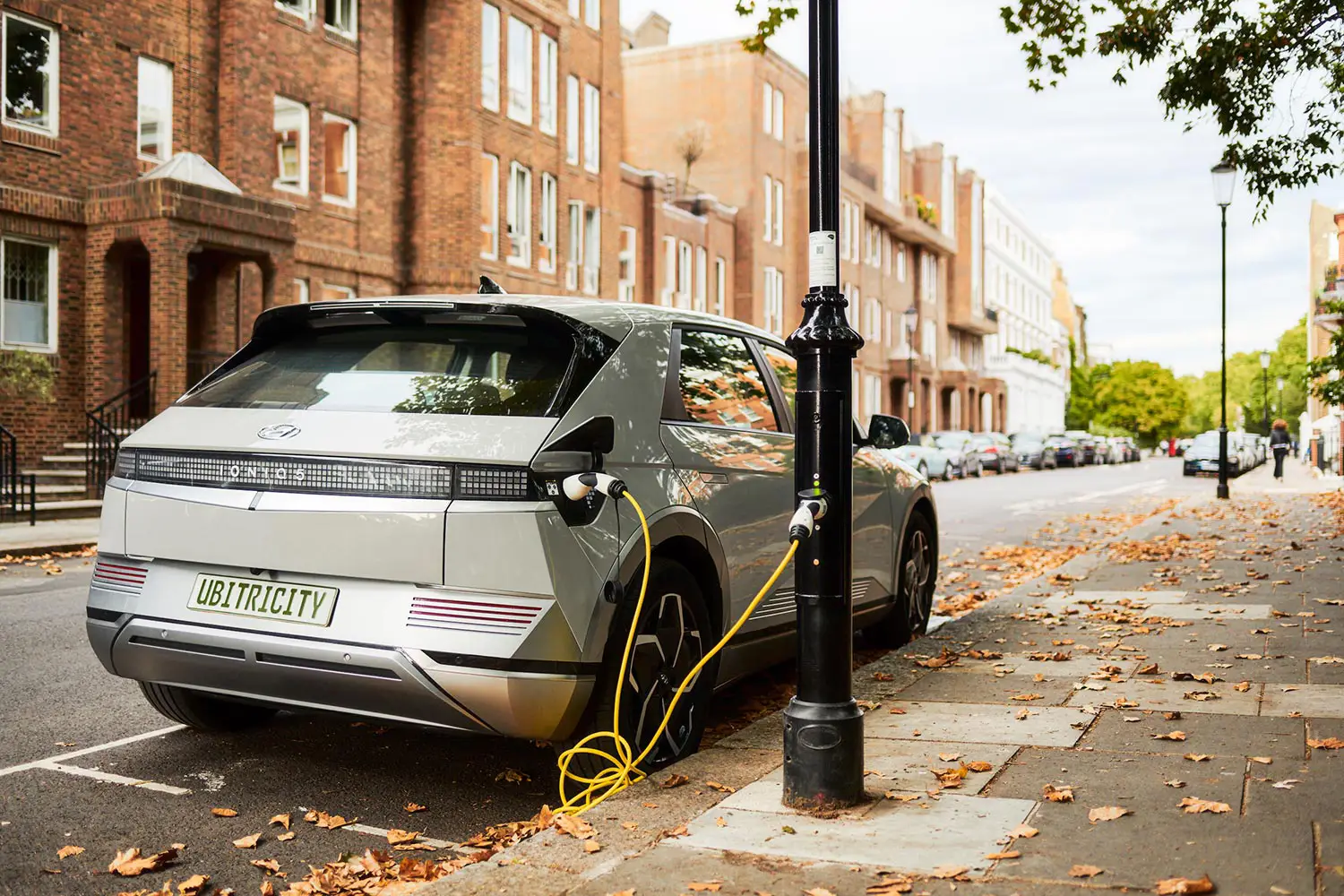
If you imagine for a moment that an electric car is simply a “phone on wheels,” the logical question is: where do you charge it if you don’t live in a detached house with a garage? In Liverpool, this issue is being solved quite literally – chargers are integrated right into streetlights. This is how the city’s on-street charging programme works, focusing on areas with multi-storey housing where private parking infrastructure is rare.
Over 450 such charging points have already been installed in the city, with plans to reach 2,000 by 2027. Technically, these are fairly simple devices: up to 5 kW chargers connected to the existing power grid. Slow? Yes. But this is enough to leave the car overnight – and have a full charge in the morning. And it is cheaper than building large rapid charging stations.
The city works with several contractors. One of them is ubitricity, a Shell subsidiary that specialises precisely in such “on-street” solutions. Their role includes equipment installation, technical support, billing, and connection to the general accounting system. In 2023, the company added 300 points in Liverpool alone.
Another player is char.gy, which also cooperates with the City Council. The idea is similar: charging without unnecessary cables, without a dedicated parking bay, just next to where the resident parks their car daily.
Now for another question: what if you need to charge not once a week, but every day? The city is working on this too – setting up stations for new service vehicles.
On-Street Charging: When There’s No Place to Install a “Socket” at Home
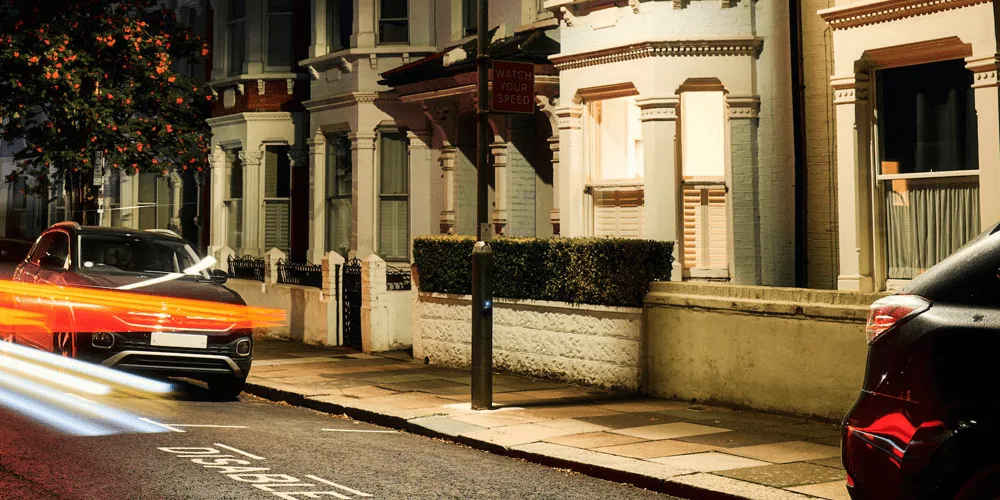
The aforementioned network of charging points has been installed in Liverpool, primarily in areas without private parking. All are designed for overnight charging up to 5 kW. The plan is to expand the network to 2,000 points by 2027. The equipment is mounted on streetlights or dedicated bollards. Chargers are accessible via apps and operate on a pay-as-you-go basis.
“Not everyone has a private driveway where they can install a charger, so expanding the on-street charging network is a real breakthrough for the city,”
said Dan Barrington from Liverpool City Council.
Charging for Their Own: How the City is Preparing Depots for Municipal and Corporate Transport
For service vehicles, powerful chargers are being installed at bases – for example, at the Liverpool City Region Combined Authority depot. In 2024, they launched stations for seven new electric vans and two pool cars. The equipment allows quick charging of vehicles between trips. This is part of the regional fleet modernisation, which aims to replace diesel vehicles by 2030.
Who Pays for the “Socket” and What the City Gains
The main source of funding is the government’s LEVI (Local Electric Vehicle Infrastructure) programme. The Liverpool City Region received over £9.6 million from this fund, the largest amount among all regions in England in that round. The funds go towards design, equipment procurement, installation, and partially – operation.
Private companies then get involved: the same ubitricity and char.gy take on the installation and maintenance of the equipment, often on terms of partial funding or deferred return on investment. The city essentially provides access to the sites and simplifies bureaucracy.
The renewal of the service fleet is funded separately. In 2024, the regional department allocated £250,000 for the purchase of new electric vans. It is estimated that replacing diesel vehicles with electric ones allows for savings on fuel and maintenance, as well as improves the environmental performance of urban transport.
All these expenditures fit into the strategic goal – to reduce dependence on fossil fuels, renew infrastructure, and make EVs attractive to a wide range of residents.
The Electric Van from Prescot Road: How Liverpool Tested Its First EV
In 2010, Liverpool City Council purchased its first electric vehicle – a Smith Edison truck from Smith Electric Vehicles. It was used by the Premises Management service for transport within the city. The vehicle had a range of up to 100 km, operated without emissions, and was designed for low speeds. The City Council called the solution “quiet and easy to use” (Fleet News, 2010).
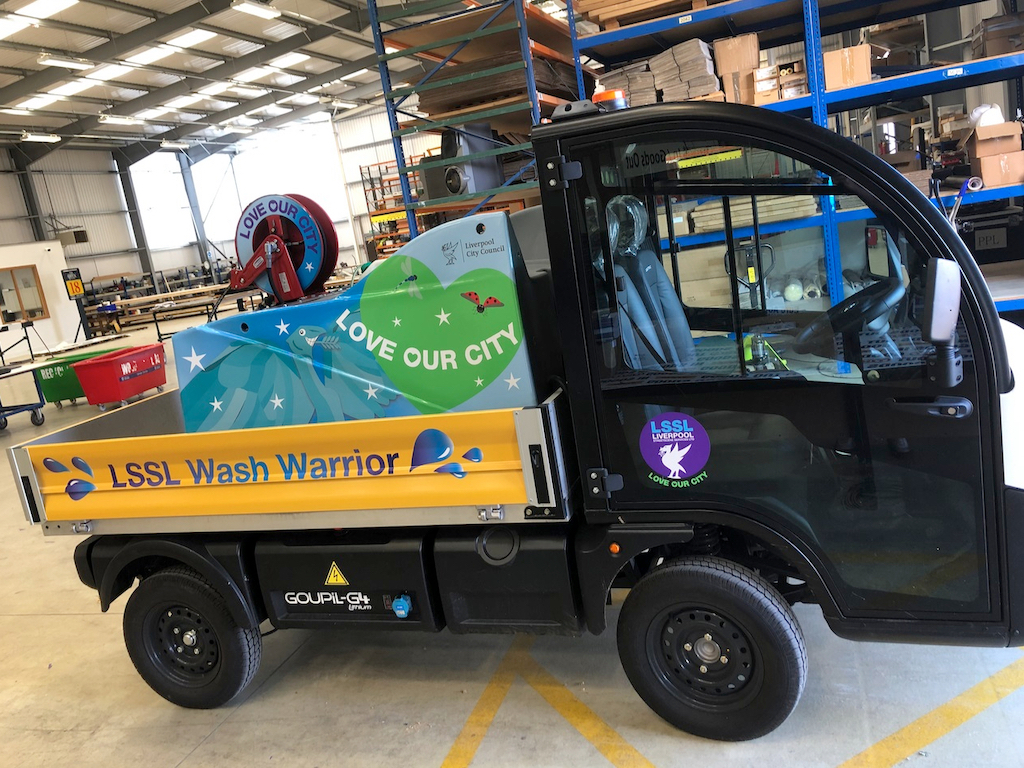
In 2022, compact Goupil G4s took to the streets – electric pickups for street cleaning and waste removal. These vehicles have a cargo bed, are manoeuvrable, and are charged at the municipal service base.
In 2024, the fleet was expanded: seven new electric vans and two cars were purchased. Rapid chargers were installed at the depot base. Estimates suggest that replacing diesel vehicles with electric ones allows savings on fuel and maintenance, as well as improving the environmental indicators of urban transport.
What Hinders Universal Charging and Where It’s All Heading
EV infrastructure development in Liverpool is uneven. Areas with private houses and garages are adapting faster – the situation is more complicated in the city centre or older districts: there are fewer spots for chargers, and it is technically harder to integrate them into the existing network. Furthermore, there are coordination issues – everything here hinges on the balance of power between the municipality, contractors, and different levels of responsibility.
Another issue is the stability of the electricity supply. Expanding the charging network requires upgrading local power grids. The city is looking for some solutions in collaboration with engineering start-ups. Some local activists have tested plastic recycling solutions on a communal scale, which is another contribution to the city’s green future. If the experiments work, we will gain a comprehensive urban system with an environmental focus.