

Park · Liverpool · ⭐ 8.9/10 · 1690 reviews · updated: 2026-08-04 20:22:04
Address: Walton Hall Ave, Liverpool L4 9XP, United Kingdom
Walton Hall Park — 130 acres of interwar municipal ambition in north Liverpool
Walton Hall Park is one of the largest green spaces in the north of the city, and one of the most quietly consequential. It occupies part of the estate of Walton Hall, a country house whose owners ran from a medieval family of stewards to some of Liverpool’s wealthiest and most compromised merchant dynasties, and which was demolished by the Corporation by 1907. What replaced it is a piece of pure municipal confidence: 130 acres laid out to designs by the Liverpool-born architect H. Chalton Bradshaw, delayed by a world war that turned the site into a munitions depot, and finally opened to the public on 18 July 1934 by King George V. Today it is a big, generous, unfussy park — a lake with two islands, a model-boat pond, football pitches, a fitness trail and a flat three-kilometre circuit — and it is also the park that famously did not become a football stadium.
Highlights
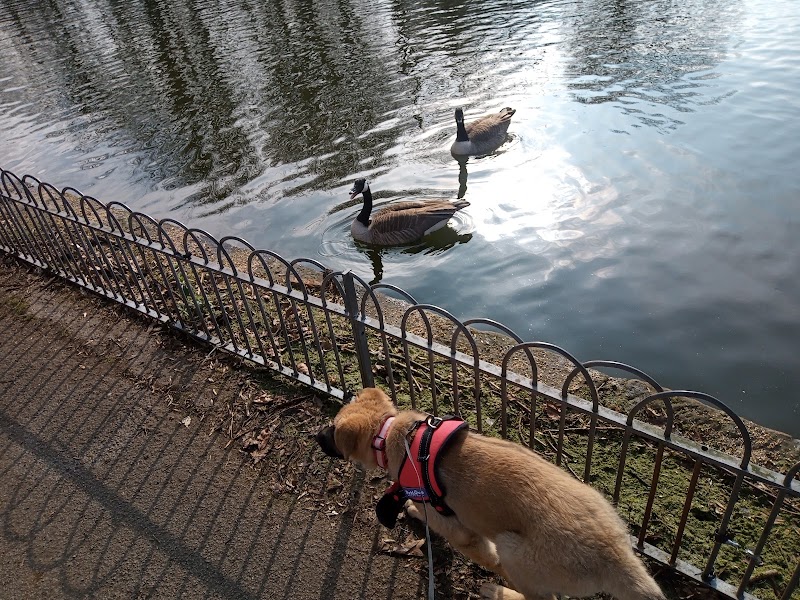
- The main lake and its two islands — the larger water is the park’s centrepiece, a genuine coarse fishery holding carp, bream, tench, roach, perch and pike, with permits required. The two islands keep the wildfowl undisturbed and give the lake a scale that reads as landscape rather than ornament.
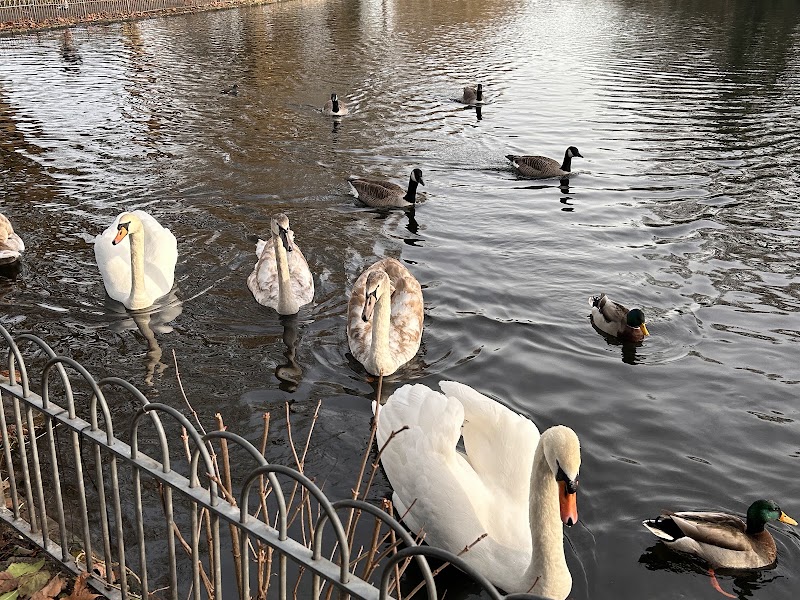
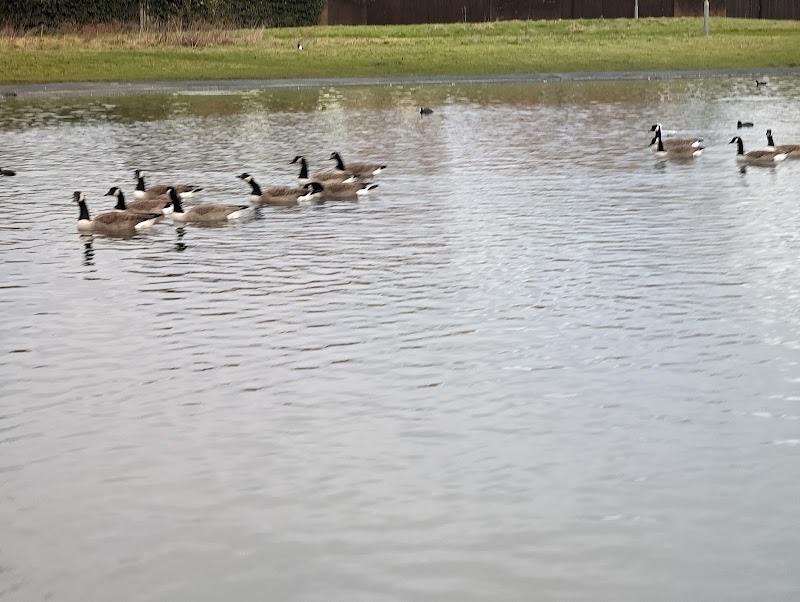
- The model boat pond — a smaller oblong water body designed for model boats and thoroughly colonised by the park’s ducks. The Liverpool Model Boat Club, founded in 1964, spent years sailing here before returning to Newsham Park in 2011, and the pond remains one of the calmest corners of the whole site.
- The pitches and the stadium ground — alongside the open football pitches, the park contains a compact stadium redeveloped in 2019 to designs by Condy Lofthouse Architects, with a hybrid grass pitch and a capacity of about 2,200 including 500 seats. Everton Women played their Women’s Super League home matches here from 2019 until June 2025; Liverpool Feds took over the ground afterwards.
- The three-kilometre perimeter route — a flat, waymarked circuit promoted as a beginner-friendly running loop, with a fitness trail of outdoor exercise stations spaced along the park.
- The King George V opening — the park was opened by the reigning monarch in person on 18 July 1934, during the same Liverpool visit on which he opened the Queensway road tunnel under the Mersey. Few municipal parks in Britain got a launch of that weight.
- The stadium that never was — from September 2014 the park was the proposed site of Everton FC’s new stadium, a scheme developed with Liverpool City Council and Liverpool Mutual Homes. It met sustained local opposition and was abandoned in May 2016; the club eventually built at Bramley-Moore Dock instead. The 130 acres survived intact, which is a large part of why local people talk about this park the way they do.
What you’ll find
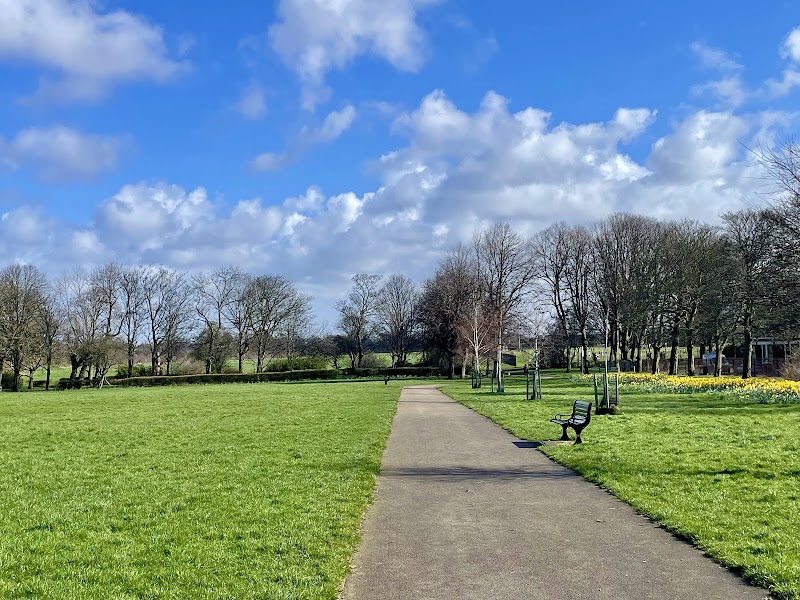
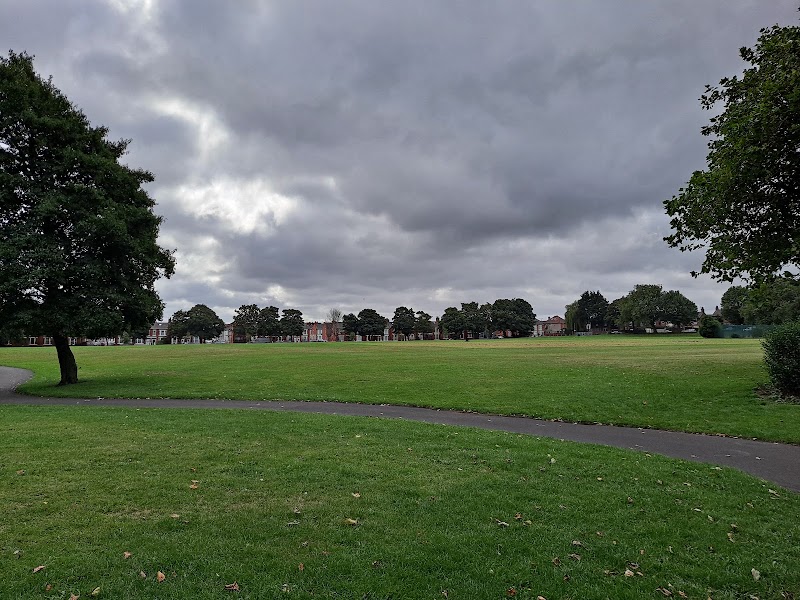
Walton Hall Park is laid out for use rather than for display. Bradshaw’s plan gave it long open sightlines, generous perimeter walking routes, water at the heart and flat ground for sport — a 1930s municipal formula that has aged unusually well, because it never depended on labour-intensive bedding schemes to work.
- Two water bodies — the large island-studded lake for angling and wildfowl, and the smaller rectangular pond for model boats, each with its own path along the edge.
- Football pitches — grass pitches in regular use by local clubs and casual games, occupying the flat open ground that made the site attractive to stadium planners in the first place.
- Children’s play area — swings, multi-play equipment, a roundabout, a see-saw, a rocking unit and a hard games area; the play area was closed for a full improvement programme and reopened at the end of August 2025.
- Fitness trail — outdoor exercise stations set along the walking routes, so a lap can be turned into a circuit session without any equipment of your own.
- Run Together 3K route — a flat, clearly usable perimeter loop specifically promoted for beginners and couch-to-5K groups.
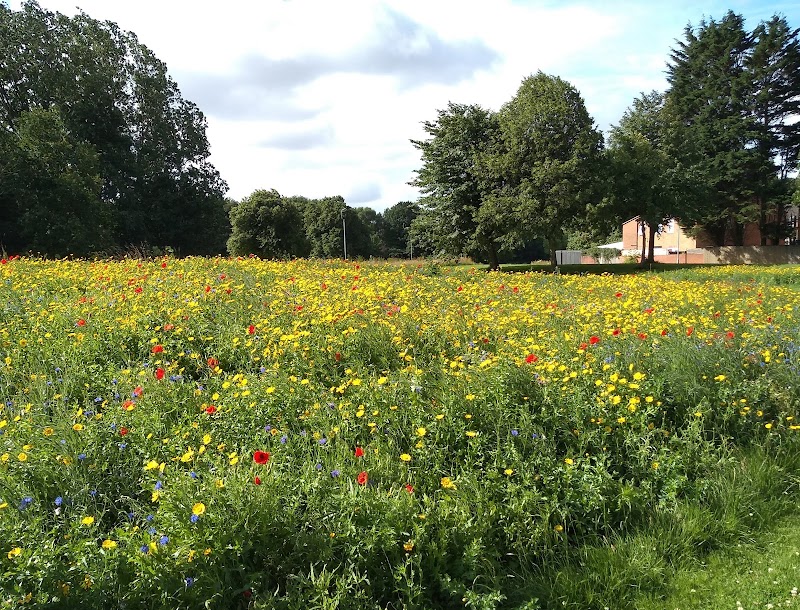
- Open grass and tree belts — large unprogrammed lawns for picnics, kites, dog walking and informal sport, framed by mature boundary planting that muffles the surrounding roads.
Things to do — and who it’s for
- Beginner runners — the flat 3K loop is one of the friendliest starter circuits in north Liverpool: no hills, no road crossings mid-lap, and an obvious finish point.
- Anglers — a properly stocked lake with carp, bream, tench, roach, perch and pike, fished under permit; the island margins are the classic pegs.
- Families — a refurbished play area, ducks on two waters and enough flat grass that a football and a picnic blanket cover an entire afternoon.
- Grassroots and women’s football followers — the ground inside the park has hosted top-flight women’s football since 2019 and continues as a senior women’s venue, which makes it a rare chance to watch serious football at close range in a park setting.
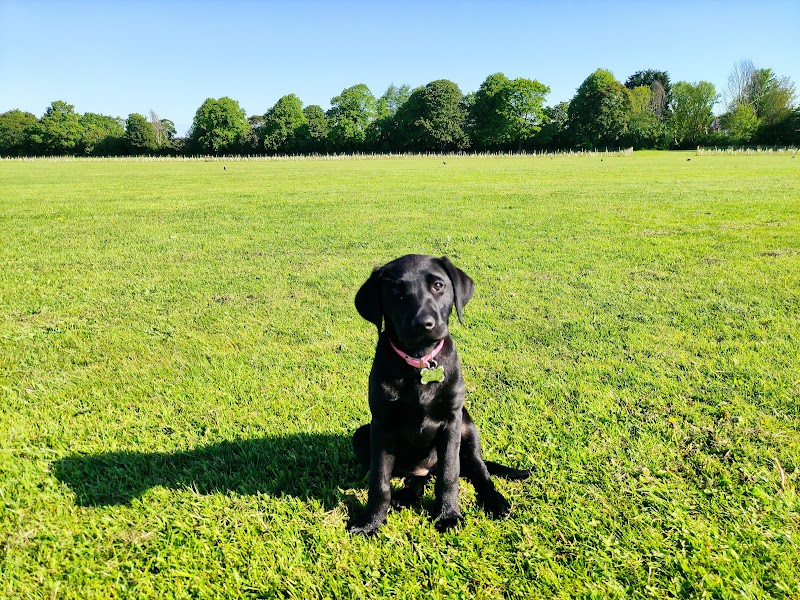
- Dog walkers — 130 acres with long perimeter routes and big open interiors means genuine off-path space rather than a single narrow circuit shared by everyone.
- Local history walkers — the park is the surviving fragment of a 300-acre estate whose story runs from medieval stewards through privateering and slave-trading merchant owners to municipal ownership, and reading the ground with that in mind changes the walk completely.
Getting there & practical
The park sits in Walton, in the north of the city, a little over four kilometres from the centre and within easy reach of the Anfield and Kirkdale districts. Merseyrail’s Northern Line does the heavy lifting: Rice Lane, on the Kirkby branch, is the closest station and sits just north of the junction where the Kirkby and Ormskirk branches diverge; Orrell Park, on the Ormskirk branch, is the nearest step-free alternative, and Kirkdale is one stop back towards the city centre on both branches. From any of the three the park is a short walk or a single bus hop, and frequent city bus services run along the avenue that forms the park’s spine, stopping at the main entrances. Entry is free at all times, with no ticket, gate charge or booking; the only paid element is an angling permit for the lake, and any charge attached to an event or a match at the ground. The park is open daily, year-round, and the practical window is daylight hours. Budget 40 minutes for the flat 3K loop at walking pace, an hour and a half if you circle both waters and stop at the play area, and a full afternoon if you are combining a walk with a match or a session on the fitness trail.
When to visit
Spring brings the park back to life fastest of any season: the boundary tree belts green up, the lake islands fill with nesting wildfowl, and the pitches dry out enough for the grassroots football season to run properly through to May. Summer is the park at full stretch — the play area and the open lawns are busy from late morning, the model boat pond and the lake margins are at their most pleasant, and long evenings make the 3K loop usable well past normal park hours. Autumn is the best season for the water: fishing conditions sharpen, the crowds thin, and the mature perimeter planting turns colour along the walking routes while the light stays low and generous for photographs. Winter is quieter but far from empty — this is a working local park, so the pitches, the runners and the dog walkers keep going through it; the ground gets soft off the surfaced paths, wildfowl numbers on the lake climb, and short days mean an early-afternoon lap is the sensible plan.
Good to know
The land here has been documented since the very beginning of English local record-keeping: Henry de Walton served as steward of the West Derby hundred around 1199, and his family held the estate for more than three and a half centuries through the Middle Ages before it passed through the Crosse, Chorley, Fazakerley and Briers families. In 1746 it was sold to John Atherton (1697–1768), a Liverpool merchant and privateer whose wealth, like that of many in the port at the time, was entangled with the Atlantic slave trade; his son John Atherton the younger (1738–1786) inherited in 1768, and the youngest of the line, John Joseph Atherton (1761–1809), sold up in 1804. The buyer was Thomas Leyland, banker and one of the largest slave traders in British history — at least 69 slave voyages sailed from Liverpool in his name. The estate then passed to his nephews, who died childless, and on to their sister Dorothy and her husband John Wrench Naylor (1813–1889); their son Christopher John Naylor took the Leyland name in 1893. Walton Hall itself was a country house with a Jacobean façade at the centre of a 300-acre estate, offered at auction in 1802 as a residence suited to a commercial gentleman of the first importance. Liverpool Corporation bought it and had it demolished by 1907; 14th-century fabric was uncovered during the dismantling, confirming how far back the site’s occupation ran. That same year a triangular plot of former estate land was taken for a recreation ground, and in 1913 the Corporation bought a further 120 acres for £51,000 with a full public park in mind. The design was entrusted to H. Chalton Bradshaw (1893–1943), a Liverpool-born architect who won the first Rome Scholarship in Architecture in 1913 and later became the first Secretary of the Royal Fine Art Commission. The First World War intervened: the site was requisitioned as a munitions depot and did not revert to the Corporation until 1924. Walton Hall Park finally opened on 18 July 1934, and the opening was performed by King George V during the visit on which he inaugurated the Queensway tunnel. The park’s most recent chapter is the stadium saga. In September 2014, Everton FC — working with Liverpool City Council and Liverpool Mutual Homes — set out plans for a new stadium on the park, roughly a mile from Goodison Park. Opposition from residents and local politicians was sustained and organised, and the scheme was scrapped in May 2016. The club then engaged the American architect Dan Meis and considered Stonebridge Cross and Bramley-Moore Dock; in January 2017 Bramley-Moore Dock was named the preferred site, a 200-year lease with Peel Holdings followed in November 2017, construction began in summer 2021, and the new stadium opened for the 2025-26 season, ending 133 years at Goodison Park. Walton Hall Park was never built on. Meanwhile the park’s own ground was redeveloped in 2019 to Condy Lofthouse Architects’ designs; Everton Women played their first Women’s Super League match there on 23 February 2020, losing 3–2 to Manchester United in front of 893 spectators, and further upgrades for WSL requirements announced in June 2020 saw the venue reopen in September 2021. Everton Women moved on in June 2025 and Liverpool Feds took over. Wider regeneration continues around the park rather than inside it: Liverpool City Council secured £1 million from the Liverpool City Region Town Centre Fund towards a ten-year masterplan for Walton’s historic district centre, with Everton FC among the stakeholders, and the park’s own play area was rebuilt and reopened in August 2025.
Visitor tips
- Start at the big lake and finish at the model boat pond — the small water is the quiet end of the park and makes a much better place to sit than the busy lawns near the play area.
- Check fixtures before you go if you want to see football at the ground: it is a senior women’s venue with a small capacity, so match days change the feel of that corner of the park entirely.
- After heavy rain stick to the surfaced perimeter route. The interior grass is flat, which is exactly why it holds water, and the 3K loop stays usable when the open ground does not.
Questions & answers
Was Everton’s stadium actually built in Walton Hall Park? No. Plans were announced in September 2014 by Everton FC with Liverpool City Council and Liverpool Mutual Homes, met strong local opposition, and were abandoned in May 2016. The club later chose Bramley-Moore Dock, confirmed as the preferred site in January 2017, and the new stadium opened for the 2025-26 season. The park remains a park, all 130 acres of it.
Is entry free? Yes. The park is free public open space with no ticket, gate charge or booking at any time of year. You pay only for an angling permit if you fish, or for admission to a match or event at the ground inside the park.
How big is the park and how long is the circuit? It covers 130 acres. The promoted perimeter route is a flat 3 km, which is about 40 minutes at walking pace or under 20 minutes for a steady runner; circling both waters and stopping properly takes closer to an hour and a half.
Can you fish the lake? Yes, with a permit. The larger lake holds carp, bream, tench, roach, perch and pike, and the two islands create the sheltered margins that anglers favour. The smaller pond is for model boats, not fishing.
Who designed the park, and when did it open? H. Chalton Bradshaw, a Liverpool-born architect and the first winner of the Rome Scholarship in Architecture in 1913, drew up the layout after the Corporation bought 120 acres in 1913. The First World War delayed everything — the site became a munitions depot and only reverted to the Corporation in 1924 — and the park opened on 18 July 1934.
Who opened it? King George V, in person, on 18 July 1934, during the Liverpool visit on which he also opened the Queensway road tunnel under the Mersey.
Can you still watch football at the ground? Yes. The compact stadium inside the park, redeveloped in 2019 with a hybrid grass pitch and a capacity of roughly 2,200 including 500 seats, hosted Everton Women in the Women’s Super League from 2019 to June 2025 and has since been the home of Liverpool Feds.
Is the play area open? Yes. It was closed for a full improvement programme and reopened at the end of August 2025, with swings, multi-play equipment, a roundabout, a see-saw, a rocking unit and a hard games area.
Photos
Show 1 more photos
Visitor reviews
Reviews last updated: 2026-08-04 20:22:04
Data is refreshed monthly. Sources: liverpoolname.com and editorial picks based on reviews.
The park is well maintained, tidy and in good condition. There are lots of swans and ducks here, which makes walking there so pleasant. You'll see plenty of dogs there, and children too. It can be full of anglers all aro…
The Liverpool Feds stadium is a great place to watch a football match.
The tickets are very reasonably priced, and there's a great family atmosphere. The pitch is excellent, the best in the league. The Pod and Bean mobil…
Really, a very nice place, and I really like it, like I felt really great. The dogs were really sweet, and I like, you know, I was really happy in this place, and I really like it, and I almost like you. I don't want to…
The park is clean and tidy. Thanks to the work of the Friends of Walton, we'll be able to park. Lovely trees and flowers. Wonderful birdlife. A great place for walking, running or cycling. I love this place.
I live so close to this park and really don't go there often, which is a great shame, because it's such a lovely park.
I took my grandchildren for a wonderful walk around both lakes to feed the ducks, geese and swans, an…