

Greening of transport is the most important direction of modern environmental policy. At the end of the last century, the concept of environmentally sustainable transport (eco-transport) was developed and it has been actively implemented in large cities of Great Britain, including Liverpool. Modern innovations and engineering solutions help make the concept the most effective and contribute to its successful implementation. Let’s learn more about this important and at the same time difficult topic at liverpoolname.
What is it?
Eco-transport (it is also called the green one) is transport that has minimal or no negative impact on the environment. Ideally, green transportation uses energy from renewable sources, not from oil, which will one day run out completely. In addition, it is also an instrument of social justice, promoting social bonds. Thus, for example, comfortable public transport is better than a private car.
Why is this important?
More than 60% of harmful emissions occur in big cities and the largest part comes from vehicles. The authorities of megacities are aware of this problem and find solutions in the development of electric transport, the construction of bicycle paths and the implementation of the restriction to use transport on conventional fuel, diesel or gasoline. Not only Liverpool but also Rome, London, Hamburg and other cities are realising similar plans.
Which transport is considered the most ecological?
You can calculate how many megajoules of energy are needed to move a person a certain distance. According to this criterion, the most efficient way will be a bicycle. Urban public transport is next, followed by electric trains and in the last place are aeroplanes and private cars.
If we take another criterion, the energy source, then transport powered by electricity will be better, since it is renewable.
Liverpool’s motor transport
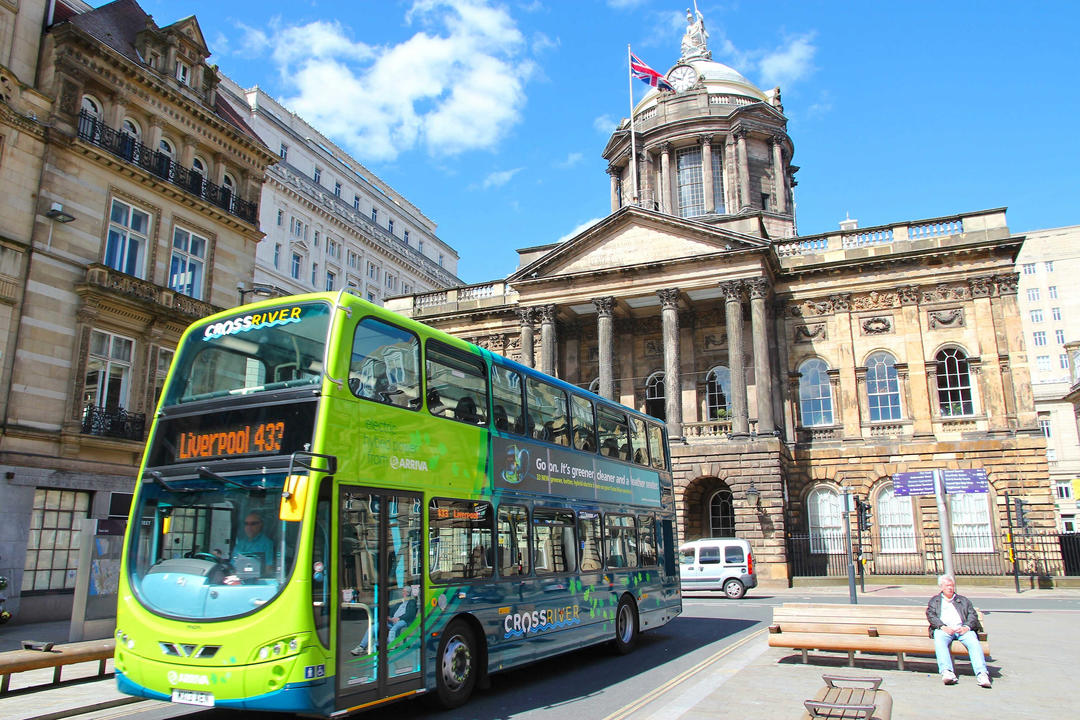
Matt Fox, head of the air pollution control project, reports that a huge proportion of harmful emissions are the result of diesel vehicle usage. These include personal cars, taxis and buses. Nitrogen dioxide released by them has a negative effect on health, causes many diseases and provokes the appearance of acid rain, which has a detrimental impact on plant and animal life.
That is why the authorities of Liverpool have decided to completely remove diesel vehicles from the city council’s fleet. Residents are advised to buy cars that run on electricity or liquefied gas.
In addition, there will be special buses, taxis, fire engines and ambulances to combat pollution on the roads of Liverpool and other major cities of Great Britain. Back in 2014, British politician Susan Kramer reported that 17 programmes aimed at the implementation of technologies to reduce the impact of public transport will receive £5 m from the new fund for eco-friendly transport technologies.
Environmental vehicles reduce emissions of nitrogen dioxide into the air to a minimum. That is why innovative engineering ideas embodied “in metal” can be seen more and more often on the streets of Liverpool.
Bicycles

Residents of Liverpool are advised to abandon the use of their own cars during rush hour in favour of a more environmentally friendly form of transport, bicycles. More than 10,000 households have been invited to join the TravelWise Personal Travel Planning Project, according to which residents will walk, cycle or use public transport.
The participants of the programme are supported by visits of the TravelWise group members. They offer a personalised travel service that demonstrates how using eco-transport helps save money and reduce harmful emissions into the atmosphere. Also, citizens participating in the project have the opportunity to take advantage of a special discount at Abbey Cycles and Gant Store in Liverpool.
Initiatives
Activists of The Clean Air Campaign propose to completely ban the sale of cars running on gasoline and diesel fuel by 2030. Instead, they propose more ecologically clean electric transport as an alternative. Research shows that if residents abandon the use of cars in the city centre in favour of electric scooters, emissions of nitrogen dioxide and problems with traffic jams will be reduced by more than half.
Ecological development of the modern city is one of the main components of the long-term strategy of the world’s megacities. The most important role in this strategy is played by mobility issues. Today, transport infrastructure not only connects different parts of the city but also acts as a formative element that makes the city a single whole. Transport in cities around the world, and in particular in Liverpool, is developing to ensure safety, environmental friendliness and comfort. These aspects will determine the immediate future of the local city transport.