

It’s impossible to imagine human existence without water. As a vital necessity, our ancestors always sought reliable sources of clean water for their communities. Today, we’ll explore the history of how Liverpool developed its water supply system. Learn more on liverpoolname.com.
A Brief History
Centuries ago, Liverpool’s water came from wells dug into the local sandstone aquifer. As far back as 1625, water was supplied to just eight streets. A major shift occurred in 1694 with the establishment of the first commercial water company. This company began piping water directly from springs to consumers, a significant upgrade from delivering it by cart.
Eventually, two main water companies emerged in Liverpool. Instead of competing, they decided to divide the city, each serving its own set of customers. However, the system was far from perfect. Water supply was often intermittent, with deliveries sometimes happening only three times a week. On top of that, the service was extremely expensive. This led to the decision that water supply should be a public service, not a private enterprise. In 1847, the Liverpool Corporation officially took control of the private water companies.
The City Takes Charge of Water Supply
As Liverpool grew, a series of Acts of Parliament transformed the city. The Liverpool Sanitary Act, for example, created three pivotal new roles: a Medical Officer of Health, an Inspector of Nuisances, and a Borough Engineer.
The first Borough Engineer, James Newlands, spearheaded the creation of the world’s first integrated sewer system, along with public baths and laundries. The Liverpool Sanitary Act became the blueprint for the nationwide Public Health Act of 1848, allowing many other cities to benefit from Newlands’ reforms. His initiatives drastically reduced the mortality rate in Liverpool, earning him great respect. When he died in 1871, a large crowd of citizens attended his funeral.
New laws also authorized the construction of reservoirs. The first project was at Rivington Pike, where eight reservoirs were eventually built under the direction of engineer Thomas Hawksley. The water was cleaned by sand filters before entering the pipeline.
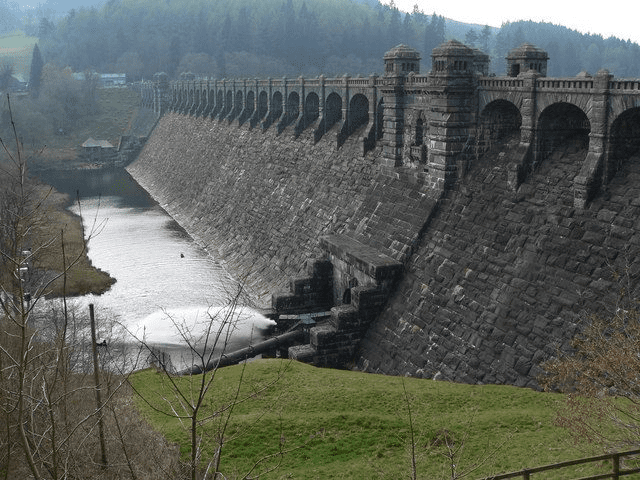
But as Liverpool’s population continued to boom, this system was no longer enough. The solution was ambitious: building the massive Lake Vyrnwy reservoir in Wales and constructing a 109-kilometer (68-mile) aqueduct to transport the water to the city.
Later, under the Water Act of 1973, responsibility for water and sewage services was transferred to the new North West Water Authority.
Why Are Reservoirs Necessary?
Reservoirs are hardly a modern invention; they have been built for centuries to meet the demand for water. A reservoir is essentially an artificial lake formed by constructing a dam. It’s estimated there are around 60,000 reservoirs in operation across the globe.
As the global population has grown, so has the number and size of reservoirs. In fact, many large reservoirs also feature hydroelectric power plants, providing communities not only with water but also with electricity.
Water is the essence of life, as no living thing can survive without it. For a time, the people of Liverpool received water just a few times a week. Poor water quality and unsanitary conditions led to the spread of infectious diseases and a high mortality rate. Over time, however, these critical water supply issues were solved. Today, residents of Liverpool enjoy a safe and reliable water supply, a stark contrast to the struggles of the past.