Liverpool, with its powerhouse academic cluster, has firmly established itself as a major UK scientific capital, easily holding its own against the city’s iconic cultural heritage. A true high-tech breakthrough came with the deep integration of artificial intelligence into traditional chemical research. The editorial team at liverpoolname.com explored how robotic and autonomous systems are accelerating the hunt for new substances inside one of Europe’s most advanced research hubs.
What Is the Materials Innovation Factory and How Does It Work?
The Materials Innovation Factory (MIF) is an £81 million state-of-the-art research facility that opened its doors in 2018 at the University of Liverpool. Located in the heart of the Knowledge Quarter, the complex spans roughly 11,600 square meters. It was born out of a long-term strategic partnership between academia and consumer goods multinational Unilever.
What sets the facility apart is its unprecedented concentration of robotic materials science equipment—widely considered one of the highest in the world. Under one roof, more than 200 academic researchers collaborate side by side with industrial scientists from corporate partners. The space was designed around maximum openness, featuring an open-access area and a unique “research hotel” model.
This setup allows independent teams and startups to temporarily lease cutting-edge laboratories to run their own experiments. The core mission of the center comes down to a single goal: seamlessly combining automation, high-performance computing, and traditional materials chemistry to dramatically accelerate the discovery of new substances.
Robot Chemists and Autonomous Laboratories
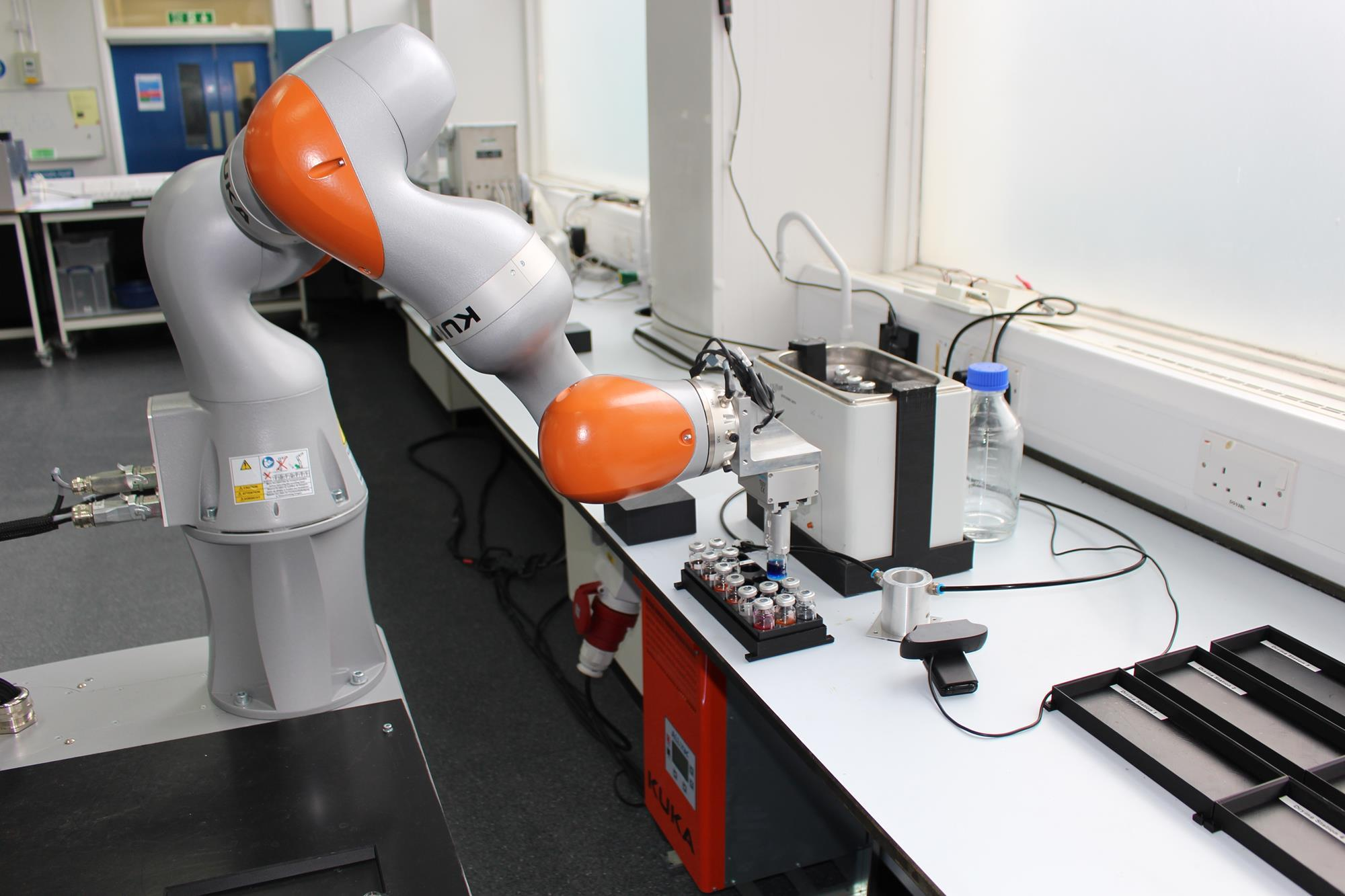
The crown jewel of the MIF is its fleet of mobile robot chemists. Standing about 1.75 meters tall, they were developed by a team led by Professor Andy Cooper. These machines can autonomously carry out the entire cycle of routine laboratory tasks: weighing reagents, dispensing liquids with millimeter precision, running chemical reactions, analyzing the outcomes, and independently deciding the next experimental step. Because they can work around the clock, their output is staggering—in early trials, a single robot performed nearly 700 catalytic experiments in just eight days.
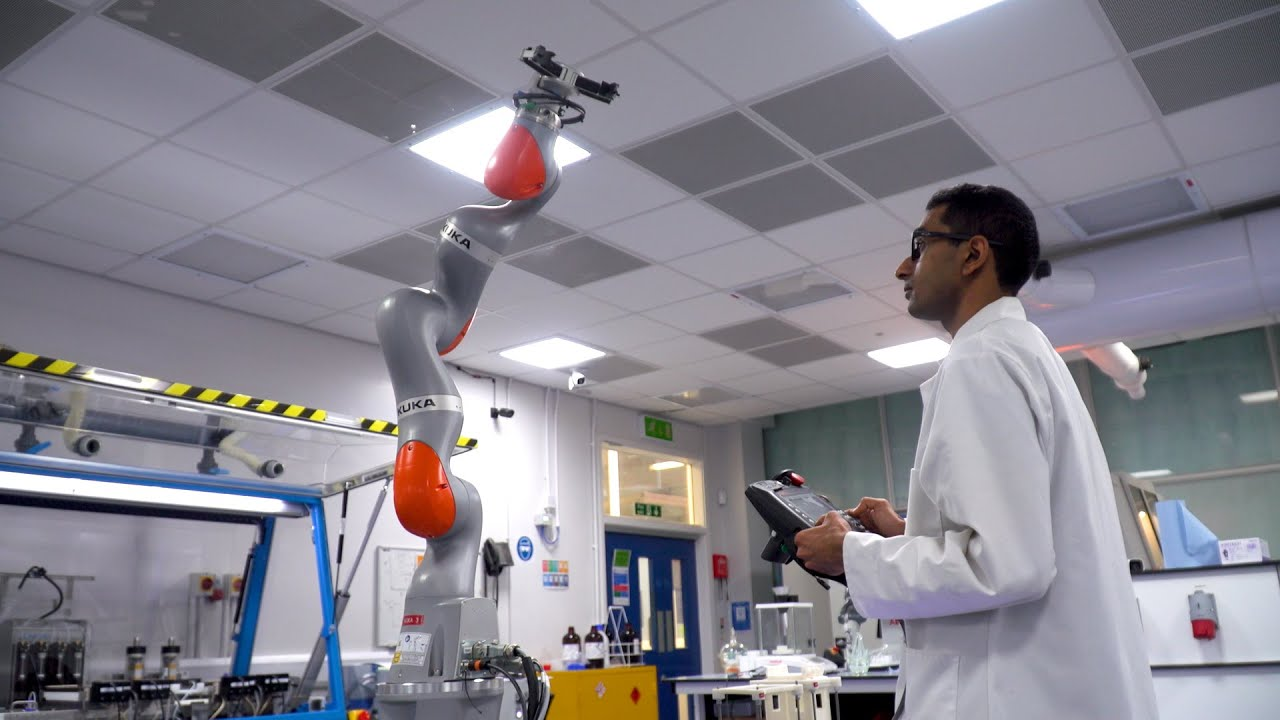
The technology continues to evolve rapidly. In 2024, the prestigious scientific journal Nature published results of a new milestone: Liverpool researchers taught two mobile robots to work as a coordinated team. The machines tackled intricate synthesis challenges together—most notably in drug discovery and photochemistry—making critical decisions significantly faster than a human could.
Beyond mobile units, the facility makes extensive use of the Formulation Engine, a stationary modular robotic platform engineered for high-throughput preparation of complex chemical mixtures. These processes are managed by cutting-edge AI algorithms developed in collaboration with NVIDIA, allowing scientists to predict the properties of materials before they are even synthesized in the real world.
Impact on Materials Science, Sustainability, and Industry
The synergy between robotics and artificial intelligence slashes the time it takes to go from a theoretical concept to a finished commercial product. This is particularly vital for clean energy applications, including novel catalysts, efficient carbon capture systems, high-capacity batteries, and eco-friendly household chemical formulations.
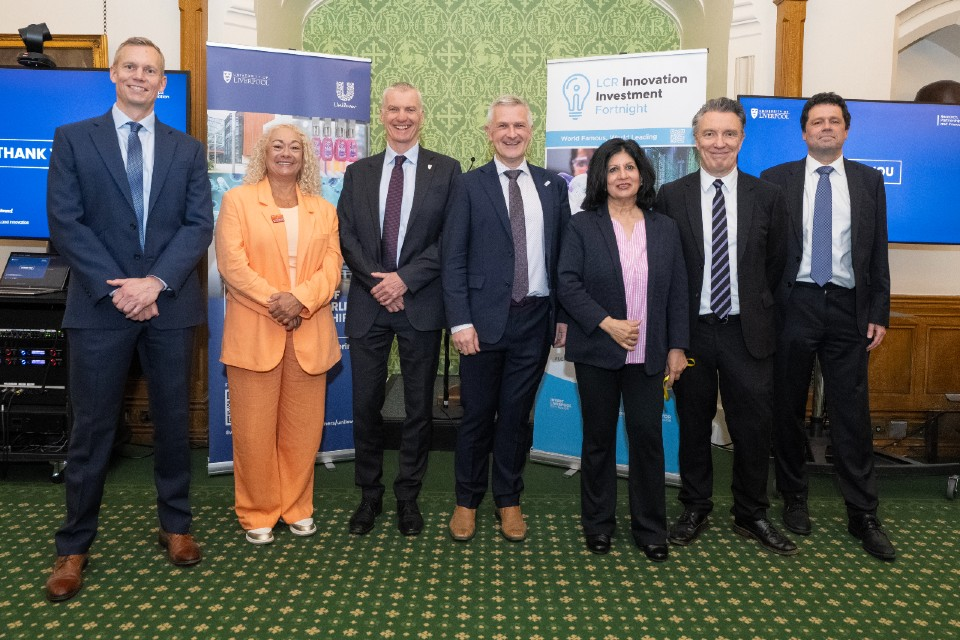
The partnership with Unilever has already delivered impressive commercial dividends. Between 2015 and 2024, joint initiatives yielded approximately 350 patent applications. Innovations developed in the Liverpool labs have made their way into 18 of the company’s 30 core brands, including household giants like Dove and Persil. Beyond direct corporate returns, the center’s work has helped secure between £120 million and £136 million in external funding and laid the groundwork for several successful scientific spin-offs.
Liverpool has no intention of slowing down. The next major leap will be the launch of the AI Materials Hub for Innovation (AIM-HI)—a cutting-edge, approximately £100 million facility slated to open in 2031. This ambitious initiative will scale up hybrid automated research even further, cementing the city’s position as a global benchmark in digital materials science.
Of course, while the round-the-clock grind of automated labs is undeniably impressive, humans—unlike intelligent machines—still need regular downtime to recharge. When the relentless flow of scientific discovery and the fast-paced rhythm of the city become overwhelming, stepping away into a completely different environment is essential. A classic Liverpool-style weekend—such as heading out for some water sports—offers the ideal counterbalance to Britain’s industrial drive.