Princes Group is a Liverpool-based food company with a long manufacturing history and a very down-to-earth perspective on food waste. In this case study on liverpoolname.com, we will explore how it minimises losses at every stage and finds value where others see only write-offs.
Behind Princes’ waste reduction figures, there are no pretty slides with green leaves — there is production mathematics: stream sorting, line loss analysis, specification adjustments, and the redistribution of edible food. In a business where a tin can, a tomato, or fruit pulp passes through a massive system, any inaccuracy quickly turns into tonnes of waste.
Princes Group: History and Features
The history of Princes Group began in Liverpool back in 1880, and the company’s headquarters are located in the Royal Liver Building on the Pier Head waterfront. For a manufacturer of this scale, waste arises during the processing of fruit and vegetables, the handling of raw fish, at the packaging stage, through product losses on the lines, or due to batches that, for various reasons, do not reach the shelf.
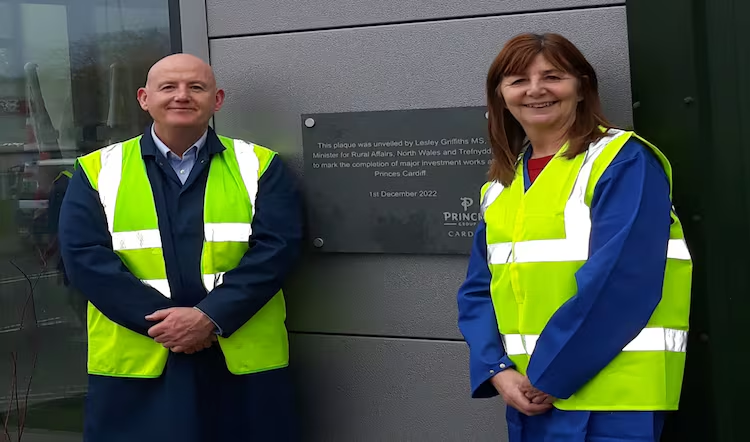
The company has set a target to halve its food waste by 2030 against a 2018/19 baseline. According to its own reporting, progress has already exceeded the 30% mark, and some reports show even higher dynamics depending on the accounting period. It is worth noting one detail here: for Princes, it is not about a single ‘pretty’ figure, but the accounting system itself, where waste is broken down by type, redistribution channel, and end use. For a large manufacturer, this is far more interesting than any loud declaration.
The figures detailing the distribution of streams are even more telling. The company sends a portion of its surpluses to charitable organisations, directs some to animal feed, and channels another part into biomaterials and anaerobic digestion. The logic here is quite sober: if a product is fit for consumption, they try to return it to the food chain; if not, they look for a way to extract value from it.
This approach is also clearly visible in the company’s UK data, where food waste accounted for around 1% of production volume. At first glance, the figure seems modest. However, in absolute terms, this equates to thousands of tonnes. And when vegetable and fruit peelings make up the largest share of the losses, the question becomes entirely different: what to do with this next, how to elevate the value of this stream, and where to stop losing the excess.
Exactly Which Innovations Help Princes Reduce Food Waste
The most fascinating aspect of the Princes case lies in rather applied process engineering. The company breaks down its production to the very core: at which stages raw materials are lost, residues accumulate on the lines, technical defects arise, or unsaleable batches appear.
Next, stream sorting comes into play. The future fate of by-products depends on how accurately they are separated. The exact same residue might go to charitable redistribution, animal feed, biomaterials, or anaerobic digestion. The difference is made by disciplined work: separate streams, clear quality criteria, and straightforward routing.
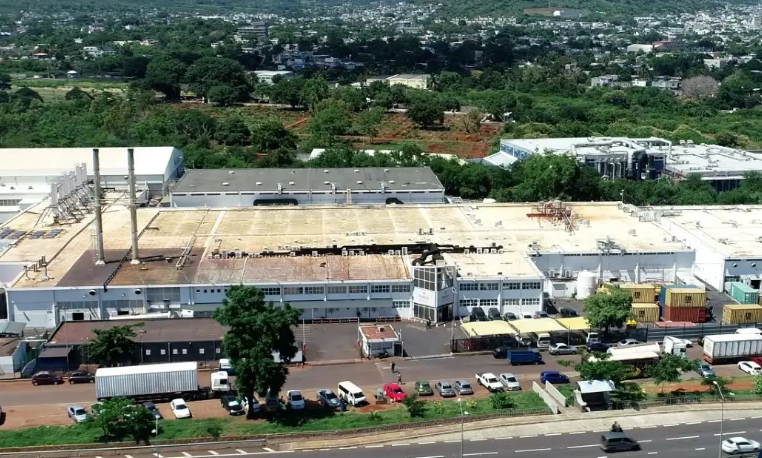
This approach is particularly evident in the handling of fish by-products. One of Princes’ most striking cases is its work with tuna hearts in Mauritius. Instead of leaving this stream in the realm of cheap technical processing, the company found a much more interesting application for it. The raw material began to be used to extract elastin, which is required in the food and pharmaceutical industries. This represents a different level of thinking. It is not ‘where can we dump this residue’, but ‘what additional value can we still extract from it’.
Another crucial detail is that Princes works with human behaviour and supplier guidelines. In its reports, the company explicitly mentions a culture of ‘valuing waste’, meaning the involvement of factory workers in identifying losses and finding better scenarios for by-products. Furthermore, Princes reviews its own requirements for suppliers if raw materials are wasted unnecessarily because of them. Simply put, waste sometimes appears even before production due to overly rigid or inconvenient standards.
Why This Approach Matters for the Industry – and What is Truly Noteworthy in the Princes Case
In the food industry, waste is often spoken about either too broadly or too pretentiously. Princes is interesting for a different approach — the company demonstrates that reducing losses begins with the ability to break down streams by type, calculate them without self-deception, and find the best scenario for each. For the industry, this is a useful signal: system adjustments often yield the greatest impact.
A portion of the losses can be reduced right at the production stage. Some residues can find a useful application (by-products are not always rubbish). Achieving this requires proper accounting, sorting, and clear operational rules.
Thus, Princes reduces production losses and finds the right application for by-products. This mirrors what is happening in Liverpool’s food industry as a whole. It also perfectly reflects the general trend towards a circular economy, where zero-waste principles are successfully implemented at all levels today — from the factories of multinational corporations to modern urban farms with aquaponics.