

Park · Liverpool · ⭐ 9.5/10 · 6647 reviews · updated: 2026-08-04 20:22:00
Address: George Parade, Liverpool L3 1DP, United Kingdom
Liverpool Waterfront — the city’s riverside esplanade, not a park
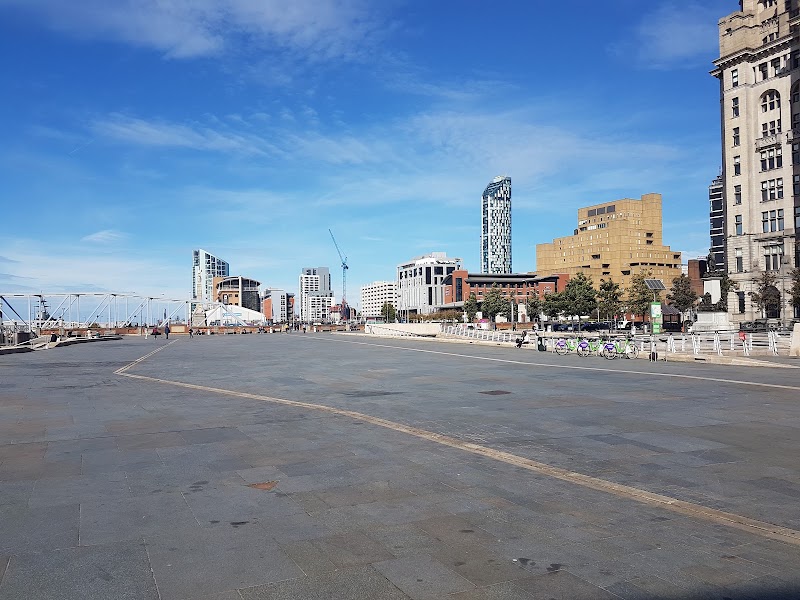
Let’s be exact about what this is. Liverpool Waterfront is not a park: there is no lawn, no boating lake and no ranger. It is a broad paved esplanade along the east bank of the River Mersey at the Pier Head, running past three of the most photographed buildings in Britain and on towards the old dock basins. What it offers instead of grass is a mile-and-a-bit of open river, a working ferry terminal, a national museum, a dense cluster of memorials and public sculpture, and the widest sky in the city centre. Liverpudlians use it exactly as they would use a park — walking, running, sitting, eating lunch, watching the tide — but it is a piece of civic architecture rather than a piece of landscape, and it is best judged on those terms.
Highlights
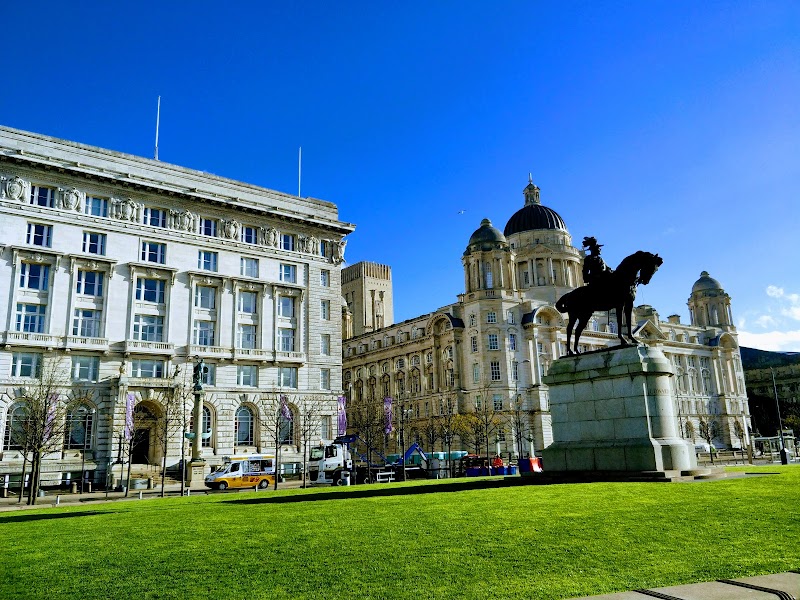
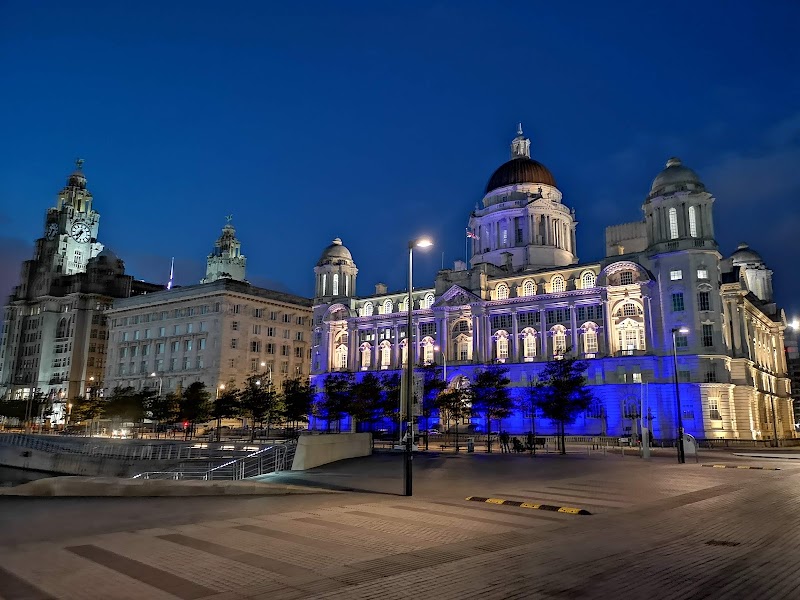
- The Three Graces — the Royal Liver Building (1908–11, by Walter Aubrey Thomas, Grade I listed), the Cunard Building (1914–16, Grade II*, in the manner of an Italian palazzo) and the Port of Liverpool Building (1903–07, Grade II*, neo-baroque under a central dome), built for the Mersey Docks and Harbour Board.
- The Liver Birds — the two mythical birds on the Royal Liver Building’s clock towers, traditionally nicknamed Bella and Bertie; local lore has one watching the sea for returning sailors and the other watching the city.
- The Memorial to the Heroes of the Marine Engine Room — a Grade II* granite obelisk of 1916 by Sir William Goscombe John, 48 feet tall and topped with a gilded flame. It was begun to commemorate the 32 engineers who stayed at their posts when Titanic sank on 15 April 1912, then widened to honour all marine engine-room crews. Blitz shrapnel damage is still visible on the stone.
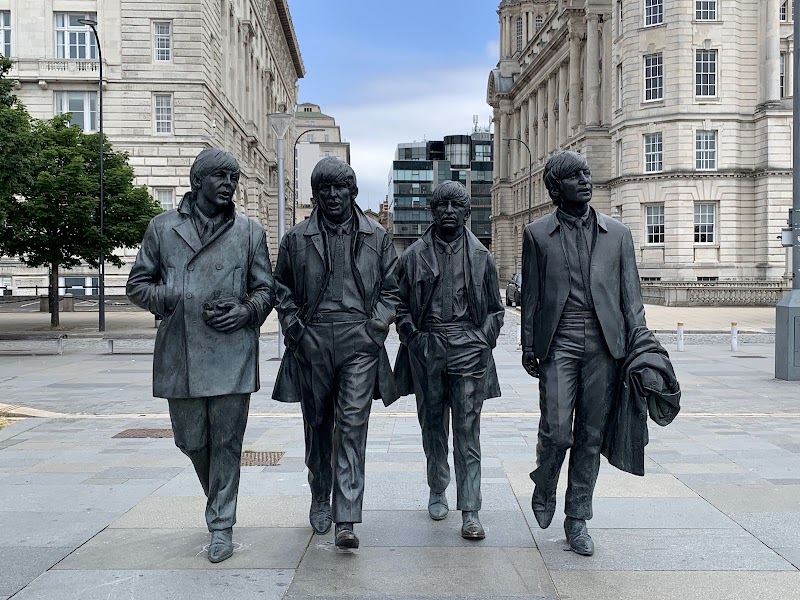
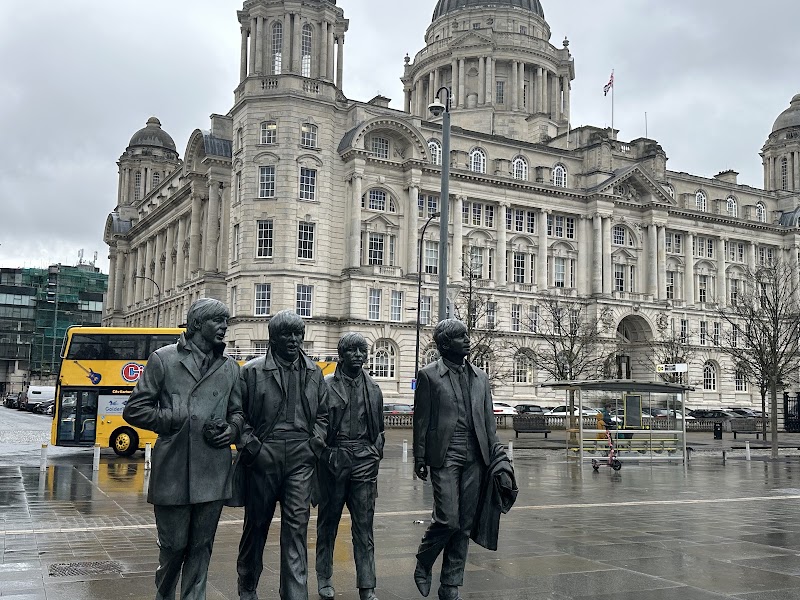
- The Beatles statue — four life-size bronzes by Andy Edwards, unveiled on 4 December 2015 and set facing the river, in the direction the band left for America. The acorns in John Lennon’s hand refer to the peace acorns he and Yoko Ono sent to world leaders.
- Mersey Ferries — the terminal here is the departure point for MV Royal Iris of the Mersey and MV Snowdrop, the latter wearing a “dazzle” livery designed by Sir Peter Blake to mark the First World War centenary and referencing the disruptive wartime ship camouflage.
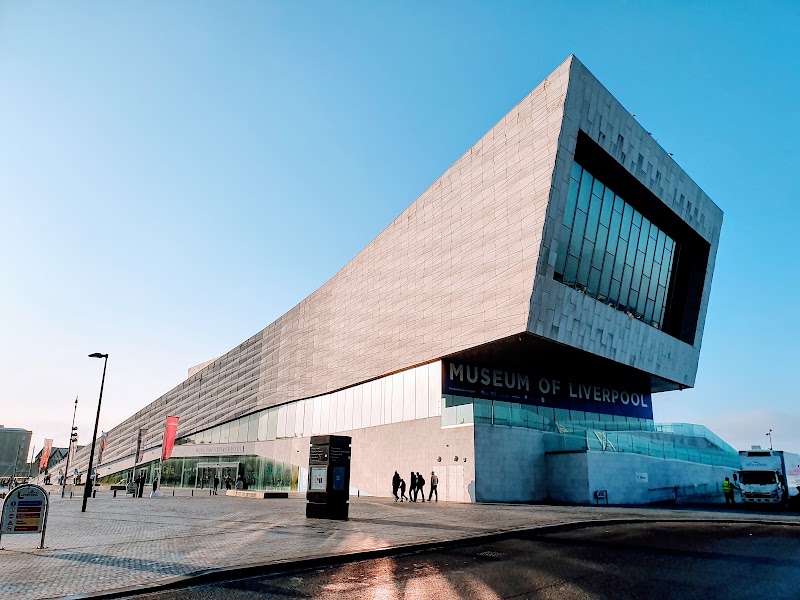
- The Museum of Liverpool — opened in 2011 on the waterfront itself, a free national museum telling the city’s social history, from dockwork and emigration to popular music.
What you’ll find
The Pier Head is built on water. George’s Dock, opened in 1771, was bought by the Corporation of Liverpool for £277,399 around 1898 and filled in; the Three Graces stand on the infill. That is why the esplanade is so flat, so wide and so exposed — you are walking on a former dock, with the working river on one side and Edwardian commercial grandeur on the other.
- A continuous paved promenade running from the Pier Head south past the old dock basins, level and step-free for most of its length.
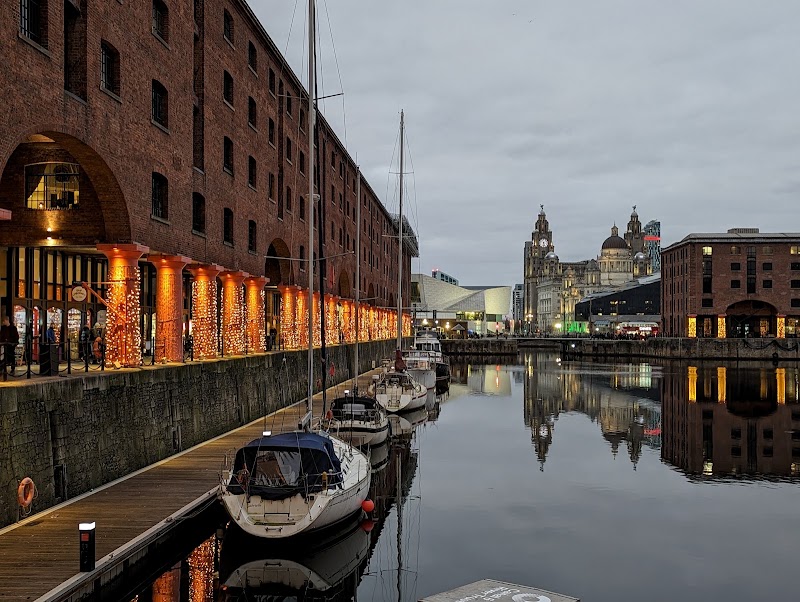
- Royal Albert Dock a short walk south — opened in 1846 by Prince Albert, engineered by Jesse Hartley with Philip Hardwick, and the first structure in Britain built of cast iron, brick and stone with no structural timber, making it the world’s first non-combustible warehouse system. All five warehouses are Grade I listed, the largest such group in the UK.
- Museums and galleries in and around the dock: Merseyside Maritime Museum, Tate Liverpool, The Beatles Story and the International Slavery Museum.
- Liverpool Mountain by Ugo Rondinone — a ten-metre stack of fluorescent painted boulders, commissioned by Liverpool Biennial and Tate Liverpool, standing beside the dock.
- Memorial ground: the Cunard War Memorial, the merchant navy memorials and Canada Boulevard, where maples were planted in memory of the Canadians who served in the Battle of the Atlantic.
- The Liverpool Canal Link, a £22 million cut opened on 25 March 2009 that carries the Leeds and Liverpool Canal across the Pier Head and down into the South Docks — narrowboats passing in front of the Three Graces are now an ordinary sight.
Things to do — and who it’s for
- First-time visitors — this is the single stretch that explains Liverpool: port, empire, emigration, music and football, all within a fifteen-minute walk.
- Photographers — the Three Graces face west, so they take the evening light directly; the ferry crossing gives the reverse shot of the whole skyline from the water.
- Families — free national museums on the doorstep, a short ferry ride that counts as a proper boat trip for a small child, and no admission charge for the promenade itself.
- Runners and walkers — a flat, largely traffic-free riverside route that links north to the newer dock developments and south towards Otterspool.
- Beatles pilgrims — the Pier Head statue, The Beatles Story in the dock, and the ferry itself, which has its own song attached to it.
- People who want water, not grass — if what you actually want is a lawn and mature trees, go inland to Sefton Park or Calderstones Park; this is a river walk and it does not pretend otherwise.
Getting there & practical
The waterfront is the western edge of Liverpool city centre, in the Pier Head and Albert Dock area. On Merseyrail, James Street on the Wirral Line is the closest station and puts you at the water within a few minutes on foot; Liverpool Central, served by both the Northern and Wirral lines, and Moorfields are only slightly further. Liverpool Lime Street, the mainline terminus, is a walk of fifteen to twenty minutes downhill through the centre. Most city bus routes converge on the nearby central bus interchanges, and the Mersey Ferries terminal on the promenade connects to the Wirral side. The promenade itself is free and open at all hours — there are no gates and nothing to close. The Museum of Liverpool is also free but keeps museum hours, as do the museums at the dock; the ferries, sightseeing cruises and the paid attractions inside the dock are separately ticketed. Allow an hour for the Pier Head alone, half a day if you add a museum, and a full day if you take the ferry and work through the dock. It is genuinely exposed to weather off the river, which is the single practical fact most visitors underestimate.
When to visit
Spring brings the clearest air of the year and the best long views across to the Wirral; the wind still has teeth, but the light is excellent from mid-morning. Summer is when the waterfront works hardest — festivals, tall-ship visits, outdoor events at the dock, ferries running frequently, and evening light on the Three Graces that lasts until nine or later. Autumn is the connoisseur’s choice: low sun straight down the river, dramatic weather rolling in from the west, and the crowds gone by late afternoon. Winter is honest and cold, with the wind coming unbroken off the estuary, but it is also when the buildings are floodlit against a dark sky by mid-afternoon, and when the free indoor museums a few steps away become the point rather than the extra. Whatever the season, the tide changes the character of the place twice a day.
Good to know
This shoreline was Liverpool’s front door for two centuries. The Pier Head as you see it dates from the turn of the twentieth century, when George’s Dock — in use since 1771 — was bought by the Corporation and filled in to create a monumental civic frontage. The Port of Liverpool Building went up in 1903–07 for the Mersey Docks and Harbour Board; the Royal Liver Building followed in 1908–11, one of the earliest large reinforced-concrete-framed buildings in Britain; the Cunard Building was finished in 1916. Together they became known as the Three Graces. Just south, the Albert Dock had already made history: opened by Prince Albert in 1846 to designs by Jesse Hartley and Philip Hardwick, it was the first non-combustible warehouse system in the world, and it is now the largest group of Grade I listed buildings anywhere in the UK. Trade moved on, the dock closed in 1972, and the site sat derelict until the Merseyside Development Corporation began regeneration in 1981; it reopened in 1988. Tate Liverpool opened that same year, the Merseyside Maritime Museum in 1986, The Beatles Story in 1990 and the International Slavery Museum in 2007. A royal charter granted the “Royal” prefix in 2018. The waterfront’s most contested chapter is recent: in 2004 UNESCO inscribed “Liverpool — Maritime Mercantile City” on the World Heritage List; in 2012 it was placed on the List of World Heritage in Danger over the Liverpool Waters development; and in July 2021 the World Heritage Committee deleted it altogether, citing irreversible loss of the attributes that had justified the listing, with high-rise development and the new Bramley-Moore Dock stadium among the cited causes. The city disputed the decision and continues to build.
Visitor tips
- Dress a layer warmer than the forecast suggests. There is nothing between you and the Irish Sea, and the estuary wind is a different proposition from the weather two streets inland.
- Take the ferry if you have an hour to spare. The view of the Three Graces from mid-river is the one every photograph of Liverpool is trying to imitate, and it costs less effort than any other viewpoint in the city.
- Do the Pier Head late in the day and the dock museums earlier. The buildings face the setting sun, so the golden hour is on the river side, while the indoor attractions keep fixed hours that close well before the light does.
Questions & answers
Is Liverpool Waterfront actually a park? No. It is a paved riverside esplanade and civic space at the Pier Head, with no lawns, gardens or park management. People use it like a park, but if you want grass and trees the nearest real parks are inland.
Does it cost anything? The promenade is free and open at all hours. The Museum of Liverpool and the Merseyside Maritime Museum are free national museums with fixed opening hours; ferries, cruises and some dock attractions are ticketed separately.
What are the Three Graces? The Royal Liver Building (1908–11), the Cunard Building (1914–16) and the Port of Liverpool Building (1903–07). The first is Grade I listed, the other two Grade II*, and all three stand on the infilled site of George’s Dock.
Why did Liverpool lose its UNESCO World Heritage status? Inscribed in 2004 and placed on the danger list in 2012, the site was deleted in July 2021. The World Heritage Committee concluded that new development — the Liverpool Waters scheme and the Bramley-Moore Dock stadium among them — had irreversibly damaged the authenticity and integrity of the historic waterfront.
Where is the Beatles statue? On the Pier Head promenade, facing the river. Four life-size bronzes by Andy Edwards, unveiled on 4 December 2015. It is free to see and open at any hour, which is why photographs of it are usually taken at dawn or after dark.
Can I get a boat across the Mersey? Yes — Mersey Ferries run from the terminal on the waterfront to the Wirral side, using MV Royal Iris of the Mersey and MV Snowdrop. Snowdrop wears a “dazzle” livery designed by Sir Peter Blake for the First World War centenary.
How long should I allow? An hour covers the Pier Head and its memorials at a walking pace. Half a day if you add the Museum of Liverpool. A full day if you also take the ferry and visit the Royal Albert Dock museums.
Is it accessible? Yes, unusually so. The promenade is flat, wide and step-free along almost its whole length, being built on infilled dock, and the major museums have level or lift access.
Photos
Show 1 more photos
Visitor reviews
Reviews last updated: 2026-08-04 20:22:00
Data is refreshed monthly. Sources: liverpoolname.com and editorial picks based on reviews.
Saw Paul Weller and his support acts, who put on a wonderful evening of musical entertainment. All the facilities you need are there, and the food was really tasty and not overpriced. We took the train from Bebington, an…
A great place to visit with plenty of attractions within walking distance. I enjoyed taking in the scenic views on a beautiful Friday, and I would definitely recommend this place
Lovely view, well kept – and easy to get to the boats. It's just fantastic to see that the boat is simply incredible, that it can carry around 200 people on board.
Always a great place for a walk, especially on a sunny day. The waterfront and the docks feel really clean and open, with plenty of space for walking, taking photographs or just sitting and relaxing by the water. There's…
Scenic, but in places a little underwhelming ️
Liverpool's waterfront offers genuinely iconic views, especially around the Royal Albert Dock and the Three Graces palazzos. The combination of historic architecture and…