

Zoos, menageries, and zoological gardens have always sparked curiosity in people, especially children. Today, we’re going to explore the history of zoos in Liverpool and highlight some of the fascinating animal attractions in and around our city. Read more at liverpoolname.com.
Liverpool’s First Zoos
Over the years, Liverpool has been home to a number of zoos and menageries that were open to the public:
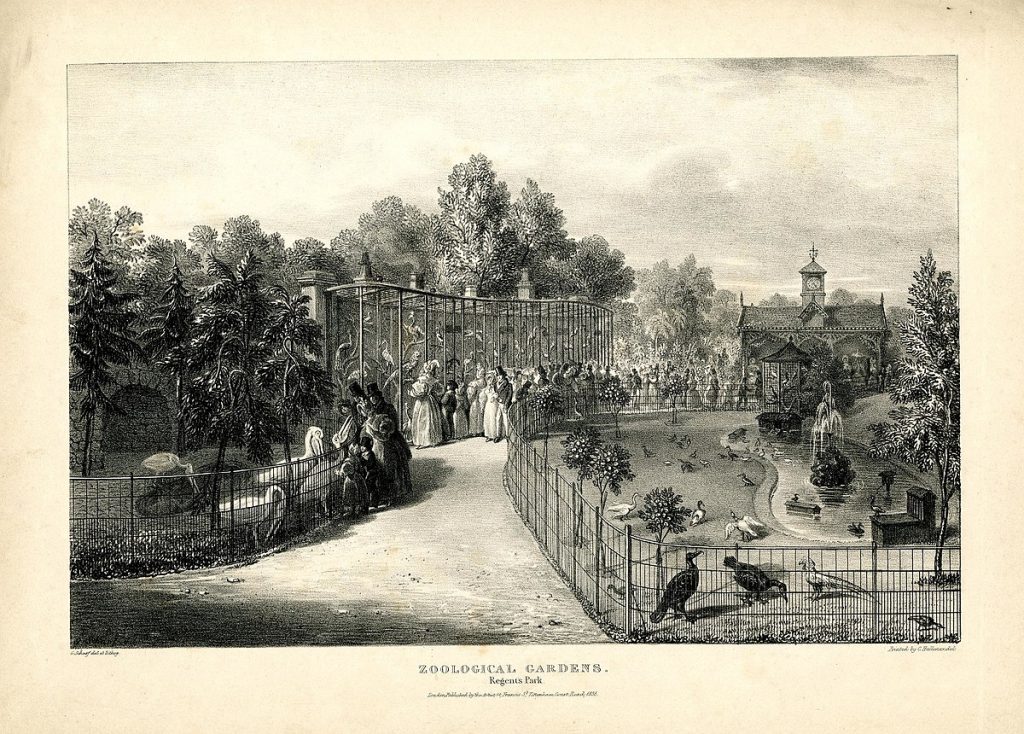
- The Liverpool Zoological Gardens on West Derby Road was the first zoo in our city. It opened its doors to visitors in 1833. The zoo operated for 30 years before closing in 1863. The site of the former zoo was later developed into Brougham Terrace and the surrounding streets.
- A few years later, a new menagerie appeared in the city. In January 1878, **Cross’s Menagerie** was located on Old Hall Street, and by November 1879, it had moved closer to Earle Street. However, in 1898, a fire broke out, killing many of the animals. The exact date of its final closure is unknown.
- Rice Lane Zoo, also known as the Liverpool Zoological Gardens Company, was founded in November 1882. The zoo opened to the public in 1885. It’s worth noting that the menagerie was never a commercial success. As a result, the animals were sold off in March 1886, and the attraction closed. The site continued to operate without animals until the 1890s, hosting football matches and other sporting events.
Liverpool was also home to the giant Bostock & Wombwell’s Menagerie, which was known as the Liverpool Zoo, and another open-air menagerie operated by the Cross family.
The Modern Era: Knowsley Safari
Liverpudlians and visitors to the city have the opportunity to visit Knowsley Safari. It is a safari park and a popular tourist attraction near Liverpool.
The park was opened in 1971 by Edward Stanley, 18th Earl of Derby. Initially, the safari drive was over five kilometres (three miles) long. Visitors would drive along this route to see lions, cheetahs, monkeys, zebras, giraffes, and elephants. The route became so popular that a further 2.4 kilometres were added a few years later. Camels, buffalo, white rhinos, and tigers were also added to the park’s collection.
Today, visitors drive through the park in their own cars. New residents have appeared—the baboons. For those worried about the integrity of their car (baboons have been known to cause mischief), there is a car-friendly bypass route around their enclosure.
In 2018, the Amur Tiger Trail was opened. This area covers 10,000 square metres and features woodland, streams, and ponds, all designed for the comfortable well-being of the animals.
The Equatorial Trail is another interesting attraction. This exhibit features four species: the South American tapir, the sitatunga, the rhea, and the capybara. Visitors can also take a ride on a small train.
Overall, Knowsley Safari has many wonderful attractions, making it an interesting day out for both children and adults.
Chester Zoo: A Great Day Out Near Liverpool
Just 25 kilometres (about 15 miles) from Liverpool lies the famous Chester Zoo. If you want to visit one of the largest zoos in the UK, it’s well worth the journey. The zoo’s total area is 160 hectares (400 acres).
The story of this zoo began in 1931. It was founded by George Mottershead, whose family ran a market garden business. He began by collecting lizards and insects that arrived in the region with exotic plants. As his animal collection grew, he started looking for a permanent home for them. He chose Oakfield Manor in Upton-by-Chester, purchasing it for £3,500. In addition to the house, the estate included a 3.6-hectare (9-acre) garden and had convenient transport links to Manchester and Liverpool. Interestingly, local residents were opposed to the zoo’s opening, but the animal exhibit went ahead in 1931.
The zoo became more popular each year and expanded rapidly. After the Second World War, a major expansion began. Mottershead’s vision was for the animals not to live in traditional cages; instead, moats and canals were used to create more naturalistic enclosures.
In 1986, the zoo was enclosed by a perimeter fence in accordance with the Zoo Licensing Act 1981.
In 2009, Chester Zoo unveiled a £225 million plan to transform it into the largest conservation attraction in Europe.
This plan included the creation of a 140-hectare enclosed reserve, a water attraction, and a 90-room hotel, among other features. Partial implementation of the plan began in 2012, and much of it has since been realised.
It’s worth noting that the zoo employs over 650 staff members, with the number increasing to around 1,000 during the summer season. Mobility scooters and buggies are available to hire near the main entrance.
Chester Zoo is not funded by the government. It is the most visited wildlife attraction in the country; for example, in 2019, the zoo welcomed over 2 million visitors. Chester Zoo has also received many awards: in 2007, Forbes named it one of the fifteen best zoos in the world, and ten years later, TripAdvisor recognised it as the best zoo in the UK and the third-best in the world.