In Liverpool, the roads have become a proving ground for non-standard engineering solutions thanks to the Live Labs 2 programme. The Net Zero goal necessitated determined work with water-absorbing materials, low-carbon road markings, and “warm-mix” asphalt that does not overheat under the sun. Liverpool took on the task with the backing of the City Council. They decided to transform everyday infrastructure into a driving force in the fight against climate change. We analyse exactly how this works, what has already been achieved, and where it is leading on liverpoolname.com.
What is Live Labs 2 and why is it important for cities?
Simply put: Live Labs 2 is a government experiment to change the rules of the road. Literally. The programme was launched by the UK Department for Transport with a £30 million budget, and its main goal is to see if infrastructure can be designed in a way that does not harm the climate. Furthermore, it should be able to adapt to new conditions: changing weather, new types of transport, and emission requirements.
Liverpool received its slice of this experimental pie – around £4 million for research and implementation of new solutions. Crucially, the city’s approach proved to be systemic. They decided not to limit themselves to one street with a trendy name but to turn an entire road network into a testing ground.
The local council set a course for creating a whole ecosystem: asphalt and road markings were a given. But there were also contracts with contractors, new procurement rules, and an approach to assessing the lifecycle of the assets. To this end, they even created their own tool – the Carbon Hierarchy Toolkit. It allows them to assess exactly how much carbon a particular solution “consumes” – taking into account construction, maintenance, repair, and disposal.
The idea is simple: if we are already spending money on roads, why not make them less harmful to the atmosphere? It might sound like utopia, but this is entirely the real logic of the 21st century.
The Road as a Laboratory: What Liverpool is Testing
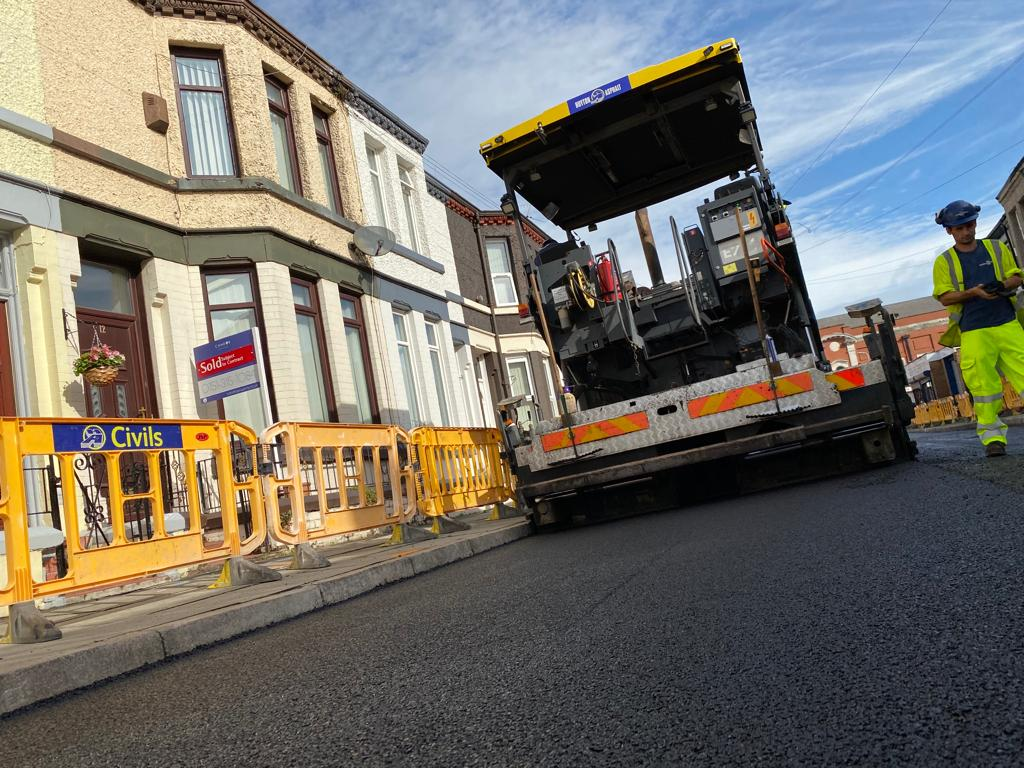
In Liverpool, roads are being tested. Each section within Live Labs 2 has become a small research area where contractors try new materials, observe how they behave on the street, and count every gram of carbon. It sounds quite technical, but the essence is simple. For example, road markings. On Pinehurst Avenue, instead of the usual hot-applied material, they used cold-applied MMA marking. The result: a 31% reduction in emissions. And the marking looks just as good.
Next up – surfacing. Upper Pitt Street received a new layer of permeable Kiacrete. This is a porous mixture that “soaks up” water. Essentially, the road becomes part of the city’s drainage system. It is estimated that over 40 years of operation, this will reduce emissions by 40%. And that is without even accounting for savings on repairs after every heavy rain.
On Millersdale Road, instead of classic hot-mix asphalt, “warm-mix” asphalt using Evotherm technology was used. Less energy consumption for laying means less CO₂ in the air. This equates to an approximate 20% reduction in emissions.
Technically, these solutions are not rocket science. But on a city scale, where dozens of kilometres of surfacing are renewed annually, even a 20% saving becomes a serious figure. What is interesting is that almost all these materials are already available on the market. The only question is the willingness to use them.
The Engineering of Climate Transition: Challenges and Prospects
Implementing innovations in a large city is always a bit like trying to change a tyre while driving. In theory, everything is beautiful: new materials, low emissions, resistance to rain and heat. But in practice, the generator on the construction site runs on diesel because the electric one suddenly won’t start. Or the established contractors are accustomed to “proven” recipes and are not in a hurry to learn new ones.
Liverpool has run into familiar problems – from the human factor to logistics. Procurement procedures need to be overhauled, technical specifications need to be changed, and budgets need to align with counting not tonnes of asphalt, but tonnes of CO₂. Engineers and managers need to be taught to think not “from curb to curb,” but decades ahead. And also – to explain to local residents why their street is suddenly testing some permeable coatings instead of normal asphalt.
But despite all these challenges, the city is moving. And that is the most interesting part. Because road infrastructure is one of the easiest ways for a city to show that it is serious about climate goals. Roads are visible. They cannot be hidden behind a facade. And if this strategy works, Liverpool will gain a low-carbon infrastructure with a working blueprint for other cities. And that is significantly more than just good road markings.
Live Labs 2 – A New Era of Technology?
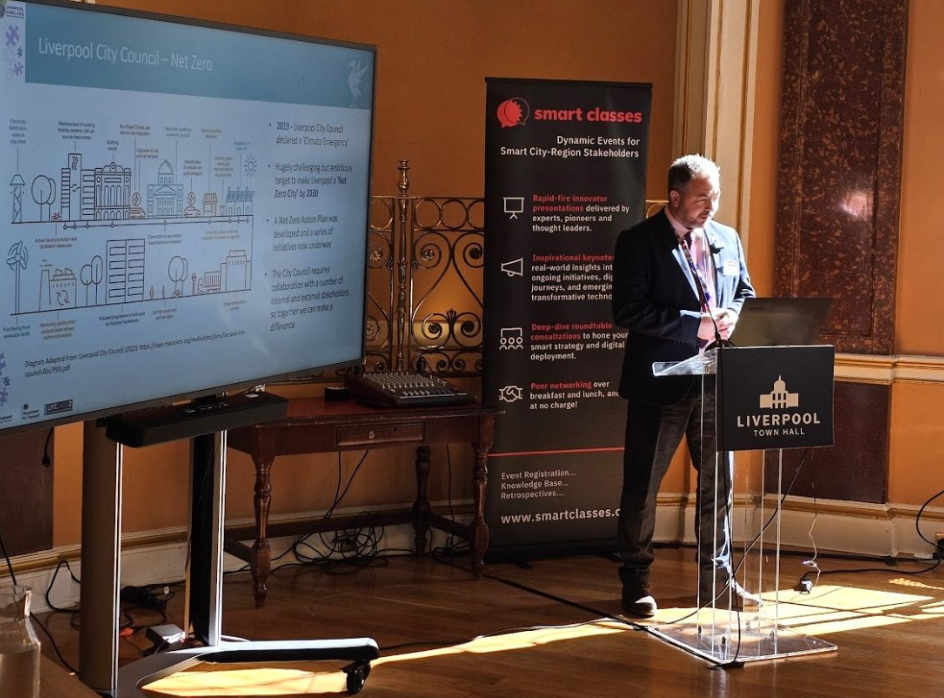
Live Labs 2 is a story about how engineering thought is once again becoming a tool for saving the city. But now, instead of sanitation, it’s CO₂, and instead of epidemics that created problems in past centuries, it’s anomalous global warming. And once again, Liverpool finds itself among those who do not wait for instructions from above, but test, learn, and take risks.
Engineers have been saving our city for a long time. For example, in the 19th century, James Newlands developed the world’s first urban sewage system, thanks to which Liverpool got rid of the stench, diseases, and high mortality rates. But it is pleasing that the city does not rest on old achievements but continues to find new, interesting solutions.