Imagine an infrastructure that doesn’t extract gas from beneath the seabed but, quite the opposite, injects carbon dioxide there. Meet Liverpool Bay CCS – an engineering solution that turns the traditional logic of the energy sector upside down. As part of the HyNet cluster in the United Kingdom, this system has an ambitious goal: to store millions of tonnes of CO₂ to reduce emissions from industry and transport. But how does it work in practice? And what challenges will need to be overcome? Let’s break it down step by step at liverpoolname.com.
What is Liverpool Bay CCS and what is its significance?
Sometimes the boldest engineering solutions are hidden not in space, but… beneath the North Sea. It is there, in the coastal Liverpool Bay fields, that the British are preparing to bury millions of tonnes of carbon dioxide. Not in filing cabinets, but literally injecting it into empty reservoirs up to a kilometre deep.
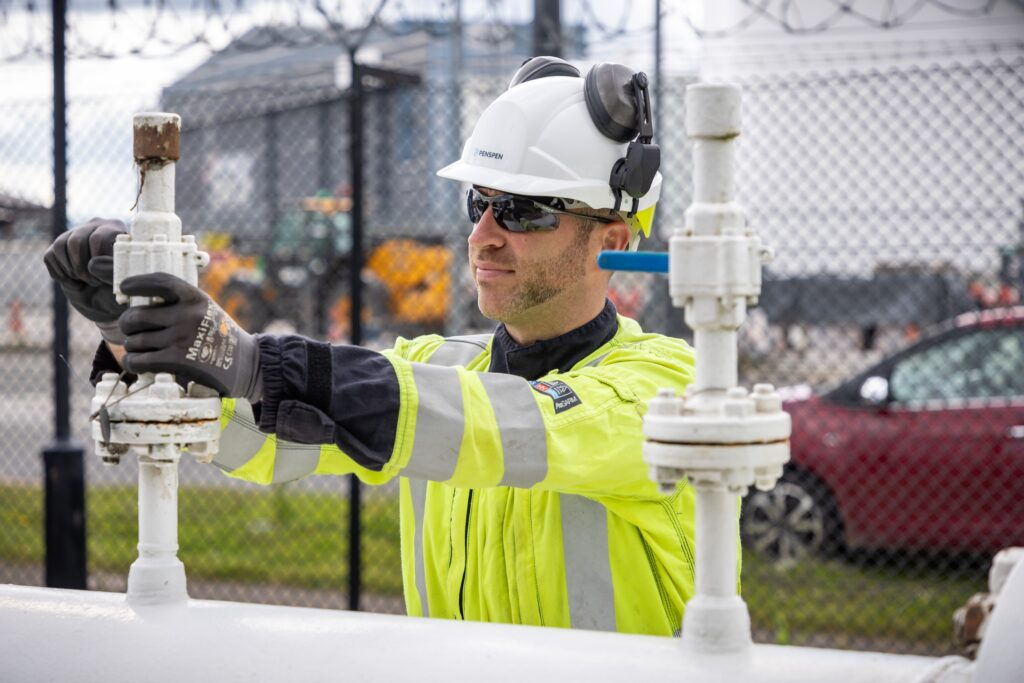
The project is called Liverpool Bay CCS. The concept is simple: collect CO₂ from factories, power stations, and incinerators, compress it, run it through pipelines, and inject it into geological formations that previously served as a source of natural gas. At the heart of the project is the company Liverpool Bay CCS Limited, which coordinates the creation of the entire infrastructure.
But this entire venture is not an isolated initiative. Liverpool Bay CCS is part of the larger HyNet cluster, covering North West England and North Wales. The cluster’s idea is not to build a single facility, but to create a whole system for reducing emissions in an industrial region. This includes the production of low-carbon hydrogen, thermal power stations, and chemical plants. CO₂ will be collected from all these sites and directed towards the seabed.
Initially, they plan to capture about 4.5 million tonnes of CO₂ per year, with a long-term prospect of reaching 10 million. The total potential of the geological storage under the sea is estimated at 200 million tonnes. And all this is within an area where gas was actively pumped just a few decades ago.
For the eco-community, this is both a hope and a field of unresolved questions. On one hand, it offers emission reduction for industries where completely abandoning fossil fuels is currently unrealistic. On the other hand, there needs to be assurance that the storage is genuinely reliable for many years, and that the transport system operates without leaks.
How is the CO₂ transport and storage system organised?
At first glance, the Liverpool Bay CCS project seems to be just a case of “taking a pipe and injecting gas.” But, as always with subsea engineering, things are a bit more complex.
The route begins in the Ince area – an industrial hub where CO₂ will be collected from the entire HyNet cluster. Here, it is compressed to a liquid state (at about 100 atmospheres), then moved through above-ground and underground pipelines to the Point of Ayr terminal on the Welsh coast. From there – into the sea.
The system comprises kilometres of pipes, offshore platforms, and a coastal terminal. Eni is simply repurposing some of them: the old infrastructure, which has been pumping gas from offshore platforms for decades, is now operating in the reverse direction. This, incidentally, allows for significant savings – both money and time – while simultaneously reducing the negative impact on the environment.
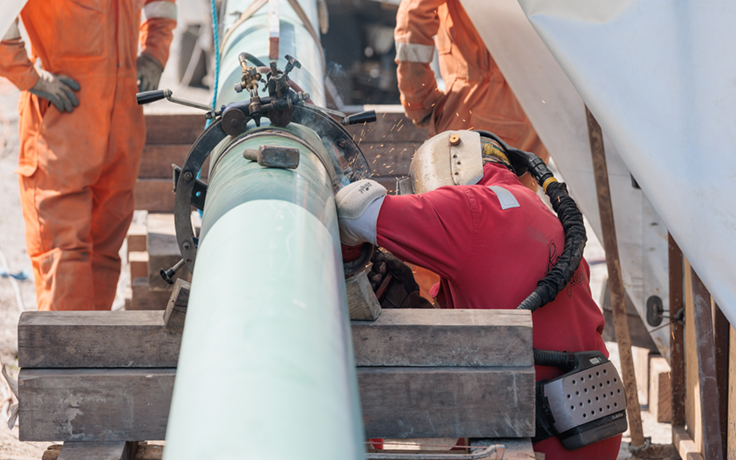
However, not everything could be taken “from the warehouse.” For example, a new 34-kilometre section is being built from scratch. Under a £334 million contract, it is being laid by the company United Living. Another key player is Saipem, which is responsible for the modernisation of the subsea part.
Once at sea, the CO₂ enters depleted gas fields, at a depth of up to 1 kilometre. Where there was once methane, there will now be carbon dioxide. The geology of this region has been studied since the 1980s, so engineers are working with fairly predictable structures: porous rocks overlaid by dense layers of clay – a natural “lid” that should hold the gas for decades, or even centuries.
In short, the entire system is a combination of old and new. Part of it is the legacy of the oil and gas era. Part is the result of the modern race to reduce emissions. And if everything works as intended, this could form one of the most powerful CCS centres in Europe.
Who is behind the implementation and what resources are involved?
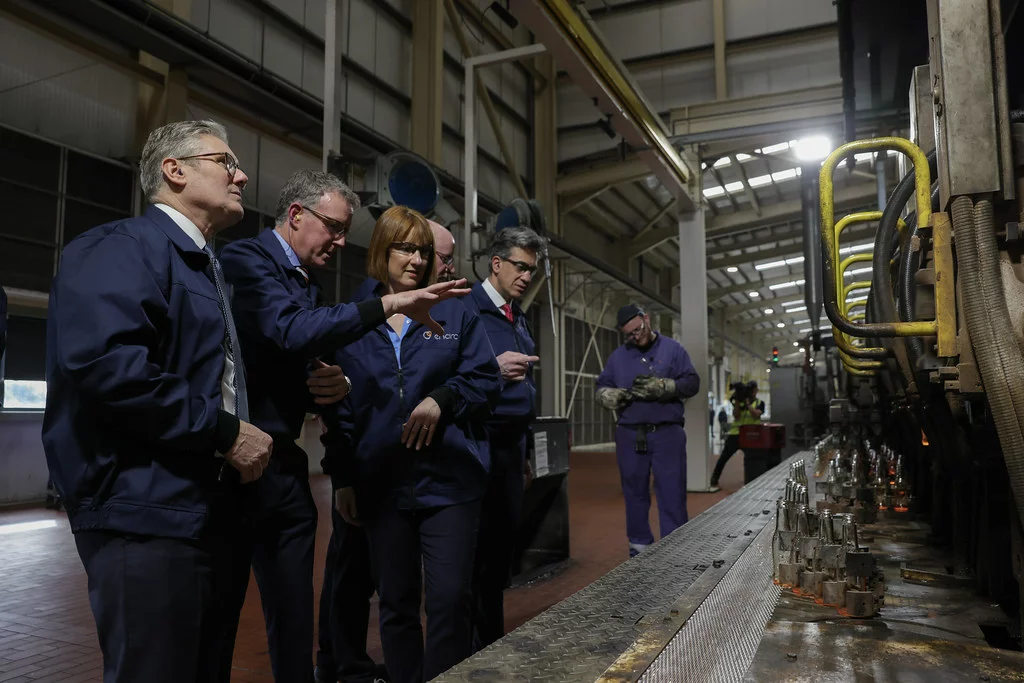
From the outside, it all looks like a complex technical diagram. But behind every pipe, compressor, and platform stand quite specific players – with contracts, ambitions, and deadlines.
The entire operation is coordinated by Liverpool Bay CCS Ltd, which is part of Eni UK – the British subsidiary of the major Italian energy giant. It owns the rights to use the offshore storage facilities in Liverpool Bay and is responsible for signing agreements with contractors, submitting documents to regulators, and building the routes.
As mentioned, the construction firm United Living is building the new pipe section between Ince and Point of Ayr. It has previously worked with hydrogen infrastructure and energy supply systems, so the CO₂ formula is familiar to them.
Another company, Saipem, is working on the re-equipping of the offshore infrastructure elements. Their contract is worth 520 million euros. What exactly are they doing? Repurposing old gas platforms, reinforcing pipelines, and adapting the CO₂ injection nodes.
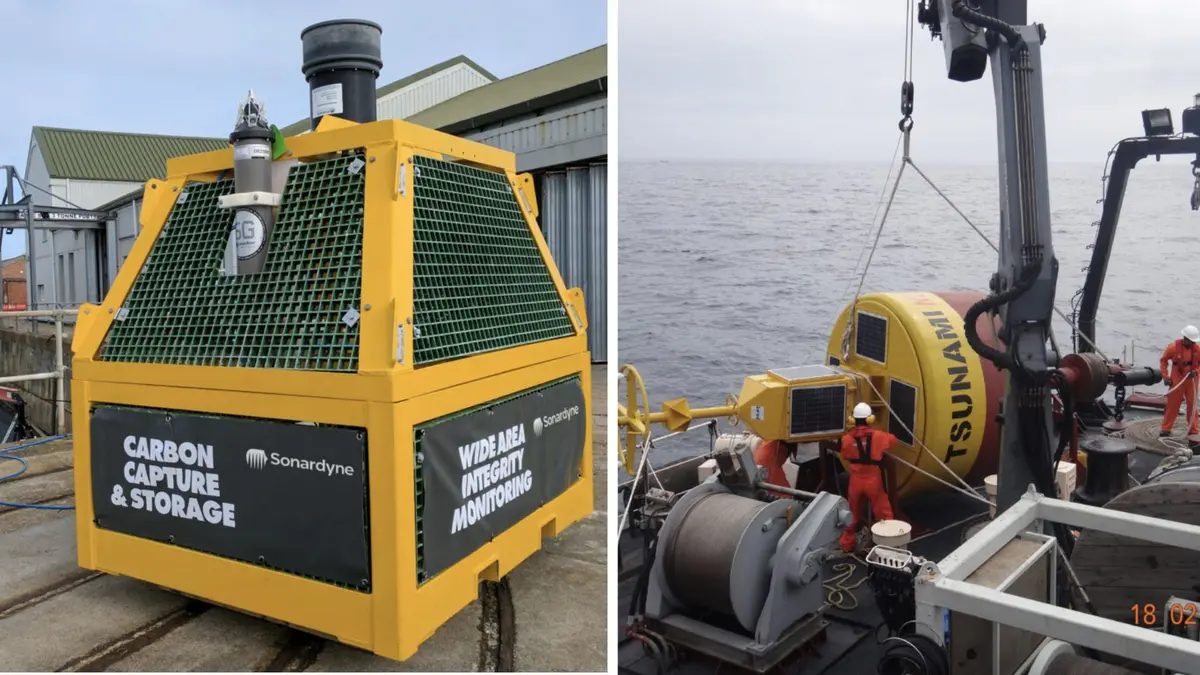
The infrastructure combines over 180 kilometres of pipes, several offshore platforms, and a terminal on the coast. All this must work as a unified mechanism where every valve is critically important.
The project received the financial “green light” in April 2025 – that’s when the financial close took place, allowing construction to officially begin. Support was also provided by government bodies, including the North Sea Transition Authority, which issued the CO₂ storage licences.
In short, the implementation is being undertaken by those who have already worked with oil and gas systems. But now with a new goal – not to extract, but to hide.
Problems, criticism, and environmental consequences
Any new technology that claims to be “salvation” sooner or later falls under the microscope. And CCS has its own skeletons in the closet, even if this engineering system is deeply hidden beneath the seabed.
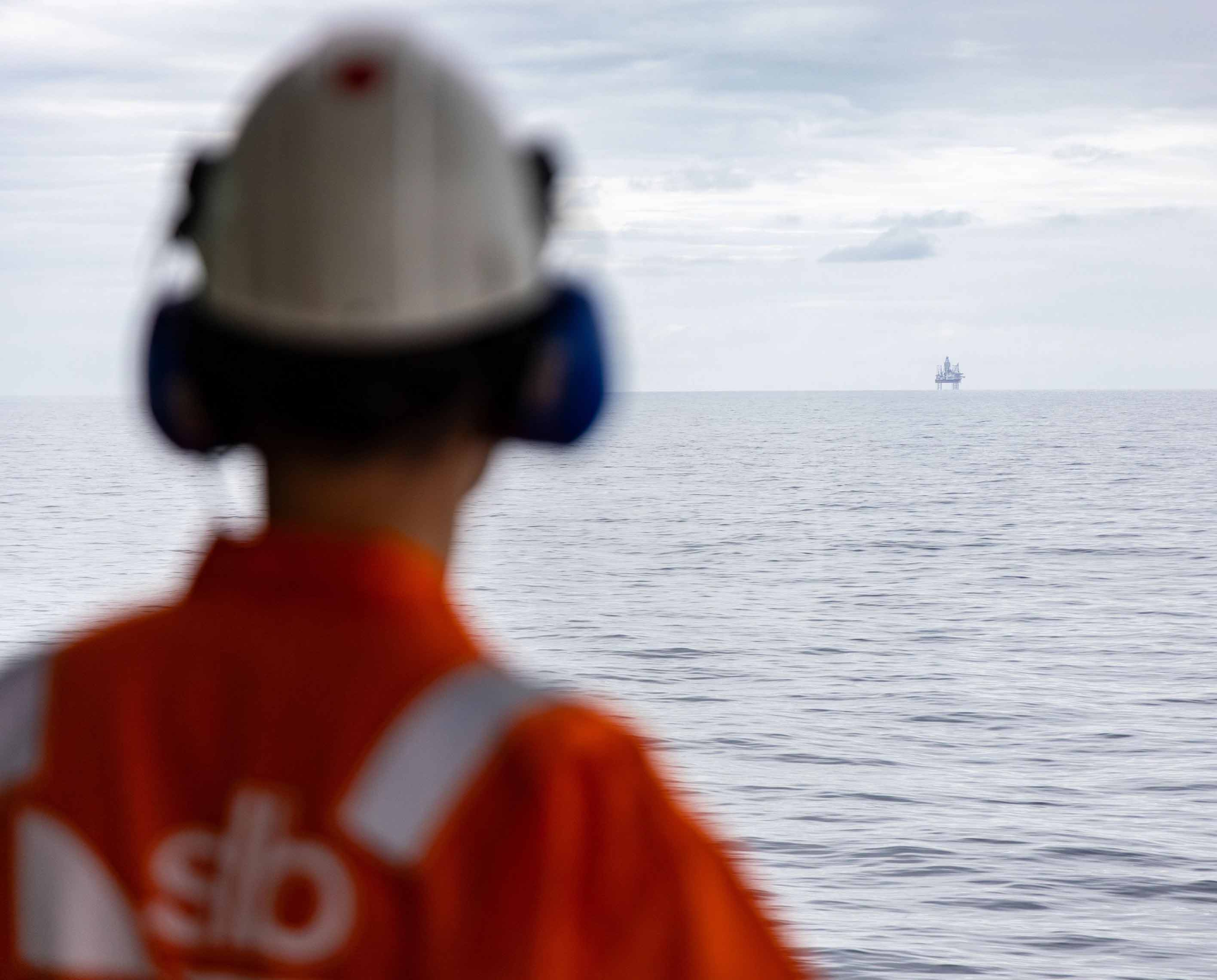
One of the main criticisms is ethical. Critics argue that while some are devising ways to “package” CO₂, others can continue to calmly burn gas, coal, or oil. It sounds like a technology that allows us not to change the familiar course, but simply to hide the consequences. And while in theory this is not the case – because CCS is needed precisely for “hard-to-abate” sectors where a quick switch to green hydrogen is not feasible – the reputation of the entire field is not the simplest.
The second issue is technical. Simply put: injecting CO₂ is only half the battle. The main thing is that it stays there. The geological layers covering the fields have been studied and tested with gas, but CO₂ behaves slightly differently. Its behaviour in porous rocks, long-term diffusion, and potential leaks – all this requires continuous monitoring. And trust in the system.
Another area of turbulence is the marine environment. Even microscopic CO₂ leaks can affect the pH of the water, and thus – the microflora and fauna. Furthermore, the infrastructure itself requires constant maintenance. And as it ages, the issue of wear and tear or further use also becomes quite acute.
But despite all these “buts,” CCS remains one of the most realistic options for reducing emissions specifically in industry. Especially in regions like the North West of Great Britain, where chemistry, energy, and heavy manufacturing are literally integrated into the landscape.
If they manage to do everything correctly, Liverpool Bay could become the case study that others will follow. In a city where robotic telescopes are created, they know how to launch promising projects. And if not – well, the sea remembers worse stories.