

The problem of waste has always been relevant in all countries, especially in the periods of their progress. Few people are concerned about its effect on the environment. However, there are those who impress with their creative ideas for dealing with litter. Liverpool can boast of several interesting examples. Learn more at liverpoolname.
20th-century Great Britain
Liverpool deals with household waste like any other city in the UK. Here are some interesting facts.
This problem became very acute during the First World War. In 1915, organisations that fought food waste started to appear. Soon, the first regulations were introduced into the sphere. There were certain standards, restrictions or rules regulating the volume, composition or treatment of waste. For some time, they were voluntary, so there is no evidence that before 1918 any fines were issued to any individual or legal entity.
A stricter regulation was introduced in the years of the Second World War and those rules mostly referred to food products. At that time, wastefulness was classified as a crime with liability for its violation. Campaign posters called for the use of unnecessary kitchen waste as food for animals, such as pigs.
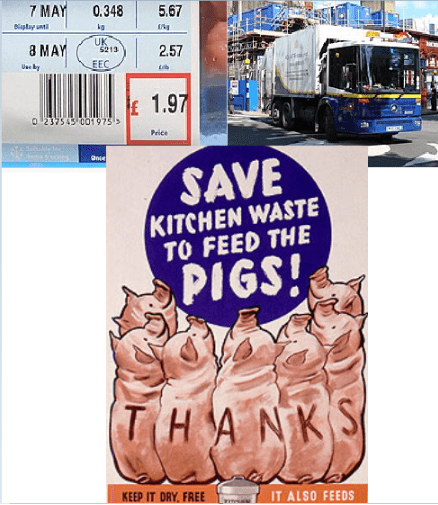
Some methods of combating household waste were suggested by the war. However, despite the efforts made, it didn’t result in any long-term and tangible changes. People continued to waste a lot, without thinking about the consequences. In 1980, a magazine article noted that there was too much waste in the food industry, as well as in households and that could be explained by the increasing number of products with a short shelf life, thus, more of them were simply thrown away.
The situation only worsened by the end of the century. However, in the 2000s, the government began to make efforts to solve the problem. In 2007, they launched the Love Food Hate Waste campaign. In just two years, it helped reduce waste by 137,000 tonnes, resulting in a saving of £300,000. Then the situation became alarming again, so Secretary of State for Environment, Food and Rural Affairs Hilary Benn declared a war on waste and spoke about the government’s plans to reduce its amount.
In particular, he urged to
- Remove or limit expiration date labels from some products.
- Change the size of packages, as households are becoming smaller and smaller and food is more likely to spoil.
- It was planned to build five flagship factories using anaerobic, or methane, fermentation technology by the end of March 2011. This process of biological decomposition of organic substances occurs in the absence of oxygen and with the participation of anaerobic microorganisms and results in biogas and biohumus. The Olleco company uses such innovative technologies in Liverpool. In addition, these innovative projects allow us to reduce carbon emissions.
So, at a certain point, the ice was broken and the necessary innovative technologies reached Liverpool.
Mysterious tunnels
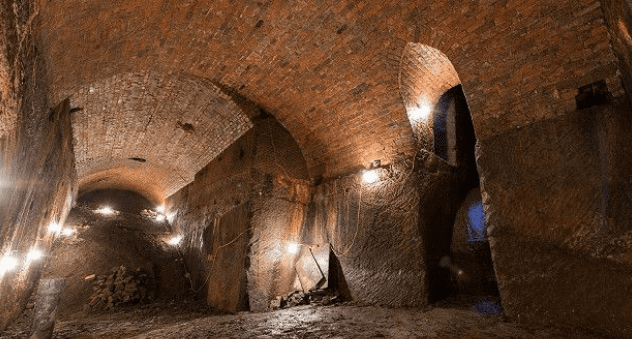
Liverpool has an extensive network of tunnels beneath the city’s streets. They were built around the beginning of the 19th century. Their original purpose is rather mysterious, but there is reason to believe that they are relevant to our topic.
These tunnels existed underground for two centuries, but then they were buried because the residents of Liverpool began to complain about the stench coming from there. Apparently, these tunnels were ordinary garbage dumps, which were filled with waste, household garbage and human excrement. Over time, the real facts mixed with myths, so today it’s difficult to tell the truth from assumptions and conjectures.
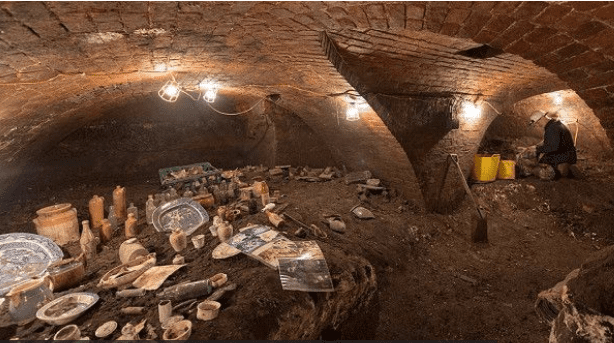
People have known about the tunnels for a long time, but no one dared to explore them. As BBC reports, in 2001, a team of enthusiasts led by Les Coe broke into this mysterious world and weren’t disappointed at all. The explorers made a hole with a pickaxe in the ceiling of one of the underground tunnel systems.
Then the intense and difficult excavations began. Soon, they found three more entrances into the tunnels. The work continued for 15 years and was carried out by volunteers twice a week. As a result, more than 120 truckloads of garbage were removed. Thus, they found a system of basements and multi-level tunnels. Sometimes, explorers came across even deeper voids. Most of the passages were clogged with all kinds of litter. The tunnels branch off in different directions, but where they lead and how far they stretch is unclear.
However, it became obvious that the people of Liverpool tried to dump waste and garbage as deep as possible. They preferred to hide it in the tunnels so that it wouldn’t bother them and interfere with their life on the surface. Perhaps the residents thought that this method of disposal wouldn’t be harmful to anyone, but over time the stench from the dungeon disproved this short-sighted idea.
Otterspool landfill
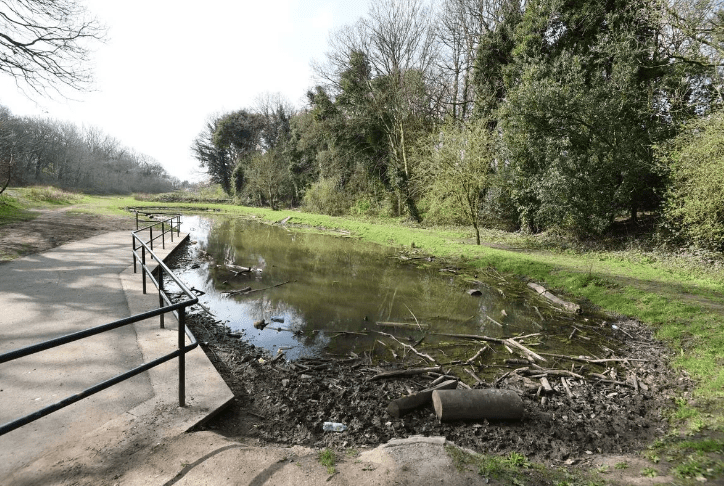
There is another interesting place in Liverpool, Otterspool Park. It features acres of green space, dense forests and a wonderful view of the river. It is located in the south and covers Aigburth and Grassendale suburbs. Interestingly, it was an ordinary landfill until 1950. However, the city authorities made it an excellent place for recreation and leisure.
The very name Otterspool comes from Old English. The otir part means “otter” and pool means “reservoir”. Obviously, the stream and freshwater pools were the habitat of a large number of otters. People very often came here for fishing and salmon was the most popular local fish. It is also believed that one of its first settlers was the Romans. In 1863, a gardener found 12 Roman coins here, which were dated 268-324 A.D.
However, the most interesting thing about this place is that the local scenic embankment was built from household waste. Construction began in 1929 and the river wall was completed in 1932. However, the embankment acquired its modern appearance only in 1950. Those who implemented this project used 2 million tons of household waste. As a result, the city government saved a huge sum, considering how much money it takes to dispose of litter. Thus, the main landfill of Liverpool was destroyed and replaced with a beautiful location, which is enjoyed by local residents and visitors to the city.
This is how Liverpool set an example for other cities and showed what to do with household waste. This story has become a positive lesson for contemporaries.
City’s closed landfills today
The organisation of Liverpool’s closed landfills is also interesting. They are monitored by the Merseyside Recycling and Waste Authority. They monitor landfill state in three aspects, namely landfill gas, filtrate (the liquid that is formed from litter) as well as groundwater and surface water. Thanks to this, the impact of harmful waste components on the environment is controlled very carefully and innovations are used to reduce them.