In Liverpool, right on the surface of the actively cleaned old docks, an artificial island has “grown.” It’s a self-sufficient ecosystem with micro-reefs that purify the water and provide a habitat for marine life. Floating Eco-Island is part of an ambitious experiment that weaves a living ecosystem into dense urban fabric without constructing new buildings. This development has already attracted the attention of ecologists and urban planners across continental Europe. The website liverpoolname.com delved into these questions and is sharing the research findings with you.
How did the idea of a floating island come about? What technologies are used to create this aquatic sanctuary for mollusks, fish, and birds? How do these developments impact the city’s ecosystem and architecture – and what exactly is “eco-friendly” about them? It’s going to get interesting, because an island that almost sank under the weight of mussels isn’t even the funniest part of this story.
Floating Ecosystem: When Technology Works for Nature
Floating Eco-Island, created as part of the URBAN GreenUP project, is an engineering solution that combines an artificial platform, algae, gravel, shells, and several types of aquatic plants. However, the function is more important than the form: the island’s purpose was to create a sanctuary for marine life that had disappeared from Liverpool’s docks after industrialisation. This eco-development has a very specific goal – to purify water, restore biodiversity, and integrate natural solutions into dense urban infrastructure.
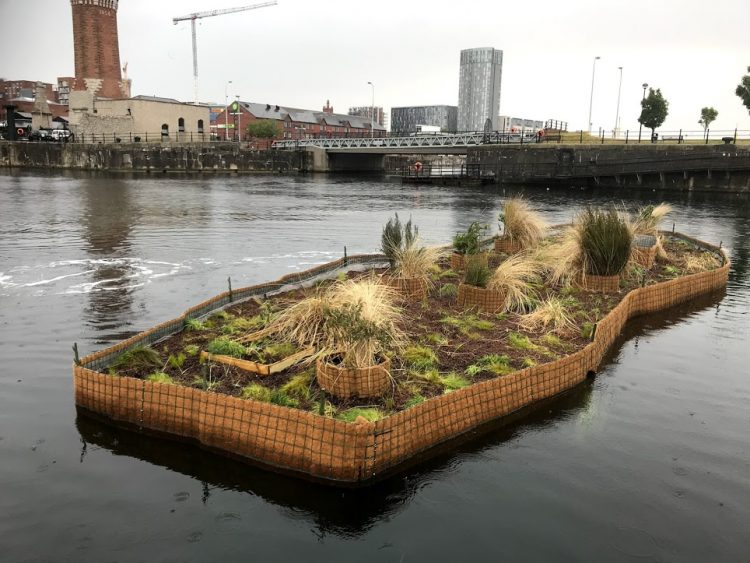
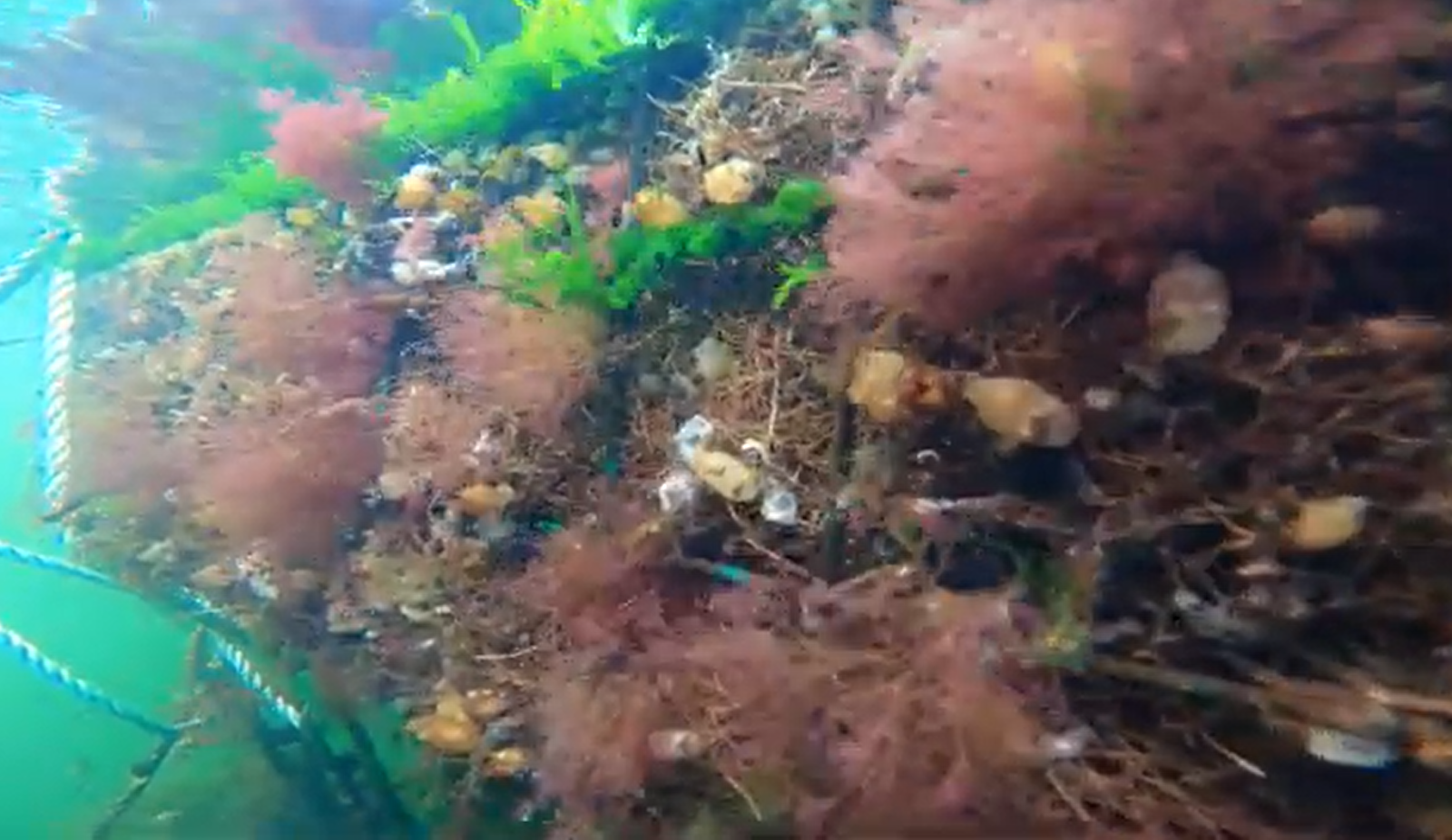
The main structure of the island consists of a metal frame covered with a special mat of plants and gravel. Underwater, it’s a real reef, albeit one created from what’s usually discarded: empty oyster shells, nets, and timber. Such bioengineering both beautifies the waterfront and kickstarts the water purification cycle. Filter-feeding organisms, such as mussels and ascidians, trap toxins, oxygenate the water, and contribute to the restoration of ecological balance.
At the same time, this project is a living experiment: after several months, it became clear that the structure needed strengthening, as mussel colonies multiplied so actively that the island began to submerge. Engineers increased its buoyancy, which allowed the platform to maintain its functionality. This is another example of how living systems demand a living response.
This ecological floating island has become one of the hallmarks of URBAN GreenUP – a large environmental initiative implementing nature-based solutions (such as rain gardens, green walls, or pollinator zones) throughout Liverpool. It’s an example of how ecological innovations can become part of the real urban landscape.
Experiment with Potential: How the Development Changes the City
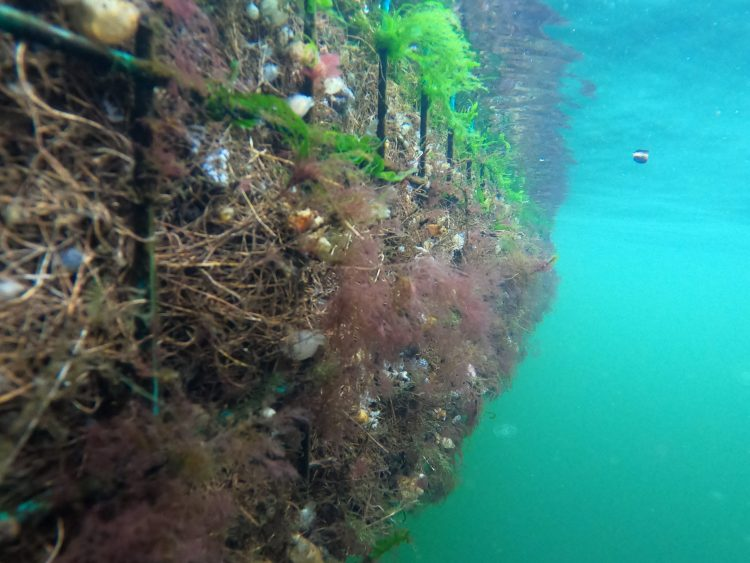
The floating eco-island purifies water, brings life back to the city docks, and reduces pollution – all without interfering with coastal infrastructure. In a city where there’s little room for nature, it ends up… in the water.
The project became part of Liverpool’s broader eco-strategy, which encompasses dozens of small but noticeable changes: green walls on facades, rain gardens, pollinator zones for bees, mini-parks, and living fences. Floating Eco-Island stands out among other projects because it’s a solution that isn’t temporary or symbolic, but deeply functional. It performs a natural role without artificial maintenance.
Equally important is the reaction to the project. For the first time in decades, small fish and waterfowl have appeared in the waters around the island. Biologists have recorded new populations of blue mussels and filter-feeding organisms that previously couldn’t tolerate the water quality in the docks. The city has effectively gained a new point of biological attraction, influencing perceptions of what urban ecology can be. From a dead industrial waterway, a self-regulating system has emerged.
The greatest value of this case lies precisely in the fact that Floating Eco-Island has become a source of ideas. Its example has shown that even in complex, constrained urban environments, natural processes can be integrated.
From Project to Model: How Developments Scale Up
When the European Union’s funding for Floating Eco-Island ended in 2023, there was a threat of dismantling. But losing a project that was already demonstrating ecological effectiveness proved too risky. That’s when Liverpool BID Company – a business association interested in the sustainable development of the coastal area – provided support. Their contribution of £15,000 secured the island’s continued existence until at least 2028.
This decision underscored that such eco-developments can live on even after grant schemes conclude. When their value becomes apparent, new players, including the private sector, get involved in funding. In Liverpool’s case, this also signifies the recognition that a sustainable city is a joint effort of business, scientists, and public organisations.
Meanwhile, other cities have begun to look to Liverpool as a source of ready-made solutions. Ecologists and urban planners from Vietnam, India, Romania, and the USA are considering this type of floating ecosystem as a model: for protecting coastlines, purifying water, and creating conditions for cultivating specific species of flora and fauna.
Thus, Floating Eco-Island is gradually transitioning from the status of a local experiment to a systemic solution. An idea born in a research laboratory has entered the world and begun to work for all humanity. It can also be another element of Liverpool’s tourist map, in addition to Penny Lane.