

In our previous articles, we have introduced readers to famous male scientists from Great Britain. Now, it’s time for the brilliant women in science. Today, we’re going to talk about Priscilla Susan Bury—a botanical illustrator and botanist who was born in Liverpool. Read more about the life and work of this local figure at liverpoolname.com.
Personal Life
The future illustrator and botanist was born in Liverpool in 1799. She grew up in a wealthy family; her father was a rich Liverpool merchant. Bury’s childhood was spent in her family’s own magnificent garden, which was filled with rare and exotic plants. As she grew up, she began to draw the plants she saw in her garden. From a young age, Priscilla was interested in botany and flower painting, with a particular fondness for lilies. It should be noted that she never sought any academic degrees; she was simply an exceptionally talented amateur.
In 1830, Bury married a wealthy railway engineer. The couple went on to have three children.
Bury’s Work and Publications
Priscilla Bury had no formal scientific training, yet she was the author of several artistic and scientific plant illustrations. As mentioned above, she began by drawing the plants in her own garden. Bury had a large collection of studies on lilies ready for publication. As a result, her work ‘Drawings of Liliaceous Plants’ contains illustrations accompanied by short notes.
In 1831, her drawings were published as ‘A Selection of Hexandrian Plants’. The renowned engraver Robert Havell engraved the large plates for this work.
Her book was produced using aquatint, and the 350 plant illustrations were partly hand-coloured.
By 1836, Bury’s work also included eight plates for the publication ‘The Botanist’.
She died in 1872 from bronchitis.
It’s worth noting that female botanists were not a great rarity in our country. Their names are known, and their contributions are invaluable: **Alicia Amherst** (a British botanist, gardener, and author of the first scholarly book on the history of English gardening); **Agnes Robertson Arber** (a British botanist, plant morphologist, and philosopher of biology); **Kathleen Bever Blackburn** (a British botanist who discovered sex chromosomes in plants); and **Mary Elizabeth Barber** (an English botanist, entomologist, and ornithologist). It should be noted that Mary Barber also had no formal training, yet she made a significant contribution to the study of the flora and fauna of Southern Africa.
About the Lilies That Bury Loved
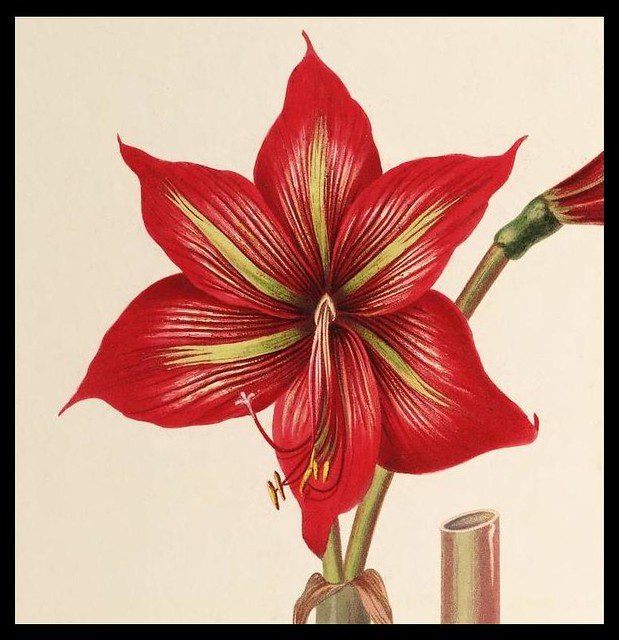
Everyone knows the magnificent lily, the flower so loved by our own Priscilla Bury. It turns out there are over 100 species of lily. These flowers are found predominantly in the Northern Hemisphere, across Europe and Asia.
It is an exceptionally beautiful plant with an intoxicating scent, and it has inspired countless beautiful legends. For example, in Ancient Greece, the lily was associated with the goddess Hera, while the Romans considered it a symbol of hope. In Christianity, the flower symbolises purity and chastity, which is why lilies often adorn icons depicting the Virgin Mary.
The white lily is also considered a medicinal plant. It is used in homeopathy and, to a limited extent, in perfumery.
That is the life story of our local talent, Priscilla Bury, who, despite having no formal botanical education, worked in the field and made her own contribution to the advancement of science.
We hope you found this article informative and have drawn your own conclusions.
What are your favourite flowers? Let us know your thoughts on social media. Your opinion matters to us.