

As liverpoolname notes, the River Mersey, which flows in the north-west of England, is very important for Liverpool. Its interesting history helps to assess the ecological situation in the city and draw certain conclusions on how to allow nature to continue to support life on the planet in the future. It will also be interesting to learn more about the significance of the Mersey for the religion, culture and recreation of local residents and visitors to the city.
The meaning of the name and general information
What does the name Mersey mean? Linguists found the answer. It means “boundary river“. Apparently, it divided the small kingdoms that were on the island in the past. It is assumed that those were the kingdoms of Mercia and Northumbria. Mercia means “borderland“, as it was the westernmost Anglo-Saxon kingdom. Later, the river was part of the border between the counties of Lancashire and Cheshire.
The Mersey starts in Greater Manchester, not far from Stockport, and flows into the Irish Sea near Liverpool, which is its mouth. The river is about 112 km long. It is very important for the economy of the region, shipping and some entertainment activities.
Importance for transportation
The River Mersey is essential to the functioning of Liverpool’s seaport, one of the largest and most important in the UK. It not only serves the local region but is also of international importance in terms of trade and logistics. The port is used for the transportation of goods, cargo, passengers and containers.
The River Mersey also provides connections with other seaports in Great Britain and beyond. Liverpool is an important transport hub for international trade and passenger transportation owing to the river. Two car tunnels pass under the mouth of the river, namely Kingsway and Queensway, or Birkenhead. The first one connects Liverpool with Wallasey and the second with Birkenhead. Both of them are located on the opposite bank. These tunnels help to reduce land traffic and facilitate movement between the banks of the Mersey, which is of great importance to residents and visitors to Liverpool.
Water quality and its environmental role
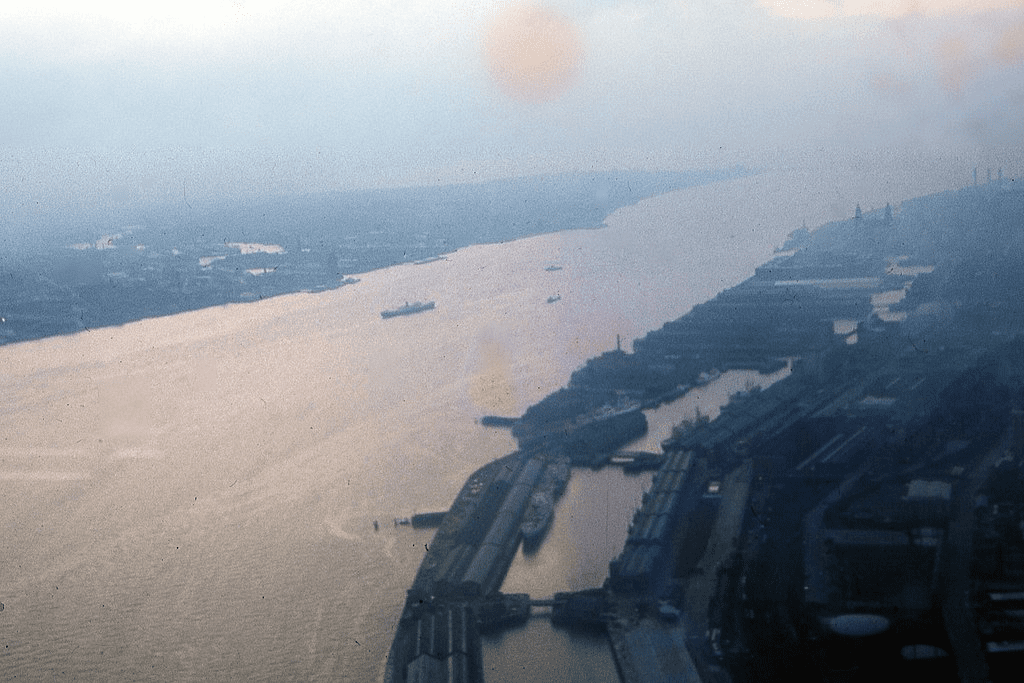
The water quality of the River Mersey has been greatly affected, mostly negatively, by industrialisation. In 1985, concerned authorities took some measures to improve the situation. They achieved certain results and it was even declared that the river became cleaner than ever since the Industrial Revolution. It was also declared one of the cleanest rivers in Great Britain. To preserve the environment in the Mersey Valley, the city also created reserves, such as Chorlton Ees.
Estuary and Merseyside
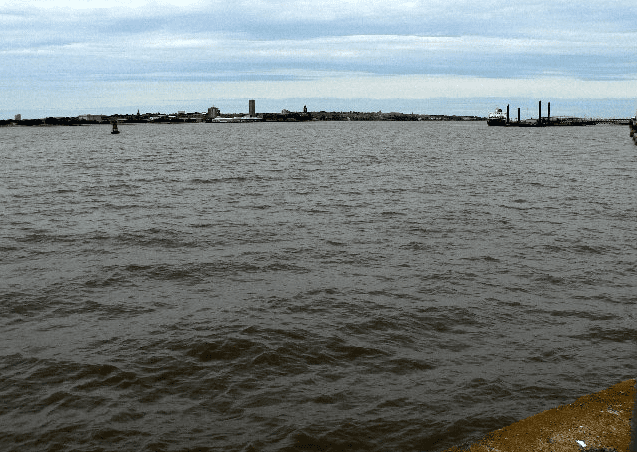
From the Runcorn Gap, the river expands into a large (4.8 km wide) estuary, an aquatic environment that occurs at the interface between the river and the sea. There, fresh water from the river mixes with salt water from the sea. The eastern part of this estuary has suffered greatly from siltation, so it can be marked as a land on modern maps.
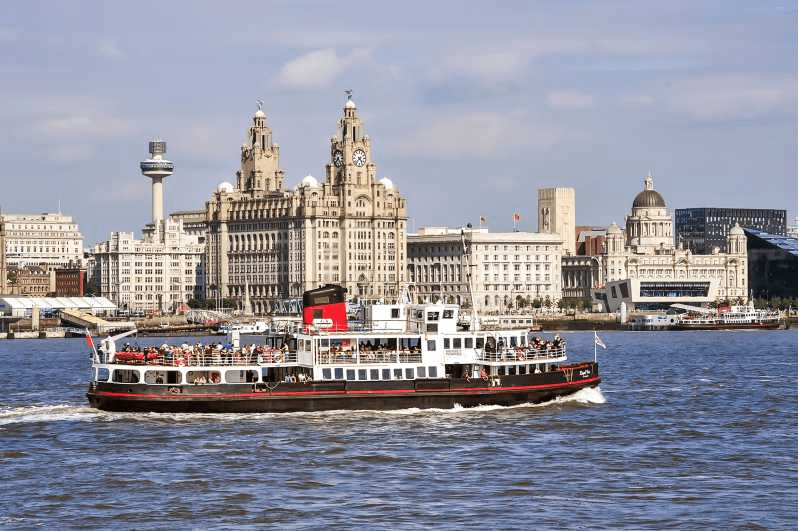
A large part of the conurbation on both sides of the estuary is called Merseyside and its inhabitants are called Merseysiders. The estuary narrows between Liverpool and Birkenhead to 1.1 km wide. On the Liverpool side, the river docks stretch for more than 12 km and form the largest closed dock system on the planet. Herman Melville, an American writer, compared them to the pyramids in terms of construction scale.
How did the river cause a disaster?
Before bridges and tunnels became a safe way to cross the river, it took away many lives. Many of them worked at local docks. In addition, a lot of people who worked on Mersey flatboats drowned because of bad weather conditions or because the vessels were poorly maintained.
There were also natural disasters such as Storm Christoph in 2021. It affected the territory of England and Wales and more than 2,000 households were forced to evacuate. Many people living near the River Mersey faced such a devastating flood for the first time in their lives.
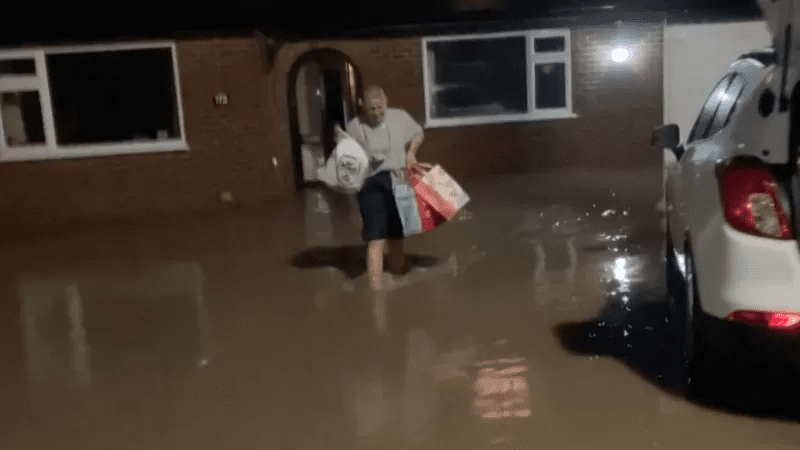
It should be added that this situation was even more complicated because it happened during the COVID-19 pandemic. People were advised not to leave their homes unless absolutely necessary and the storm created that case. In some places, protective structures did their job, but still, the natural disaster caused panic. In that period, it was recommended to stay at home, but the alarm urged everyone to leave. Some people from the affected areas were accommodated in sports centres or nearby churches.
Mercury pollution and recovery
As the research by the British Geological Survey has shown, there are persistent organic (PAH, polyaromatic hydrocarbons) and mercury pollution in the sediments at the mouth of the River Mersey. There is speculation that the pollutants in the Mersey are combustion products. That is, they could be caused by car exhaust gases as well as coal burning. The researchers analysed 203 sediments from the river and nearby salt marshes to measure mercury levels. Thus, they found out that the average amount of this element is 2 mg per kilogram. It also turned out that metal pollution has decreased significantly since the 1980s.
River’s fauna and salmon return
There were some problems with the fauna of the River Mersey. However, at some point, the salmon did return to the river. For example, it was noticed at Woolston and Howley Weirs in autumn. People also caught this fish in the Mersey tributaries.
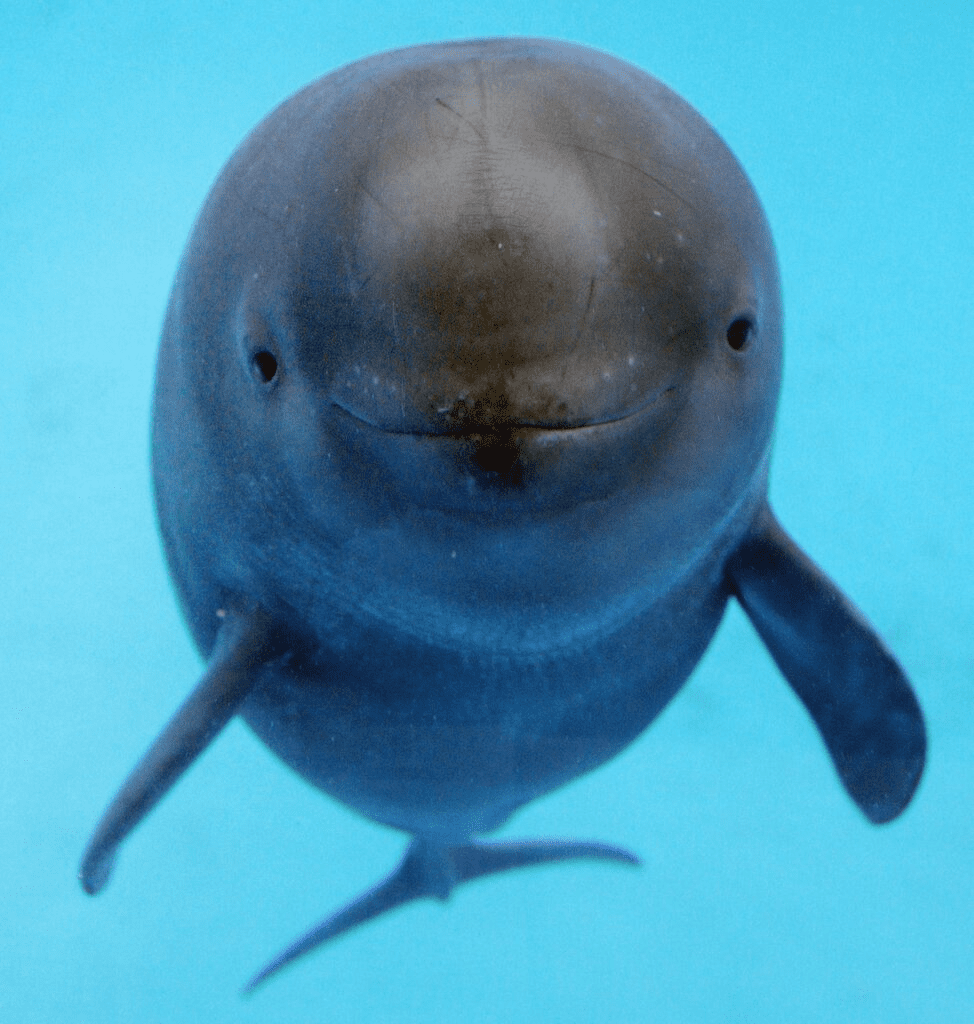
Interestingly, Atlantic grey seals sometimes enter the estuary from Liverpool Bay. Bottlenose dolphins and a porpoise (an animal resembling a dolphin) also get here in the same way. Traces of an otter’s stay were found in Mersey too. In addition, there are shrimp, mackerel, flounder, cod and whiting in the mouth of the river.
Recreation
Tourist services are provided by the Mersey Valley Countryside Warden Service, which manages local nature reserves. For example, here, you can go canoeing on the stretch between Stockport and Carrington. You can also get involved in the water sports offered by the Liverpool Sailing Club, located in Garston Coastal Park.
You can fish in the river. It is a popular outdoor activity. Here, you are most likely to catch trout, perch, pike, barbus, carp, bream, tench, roach or chub. However, it is worth noting that fishing in these areas is strictly regulated here. Such fishermen’s associations as Warrington and Prince Albert have such a right in certain sections of the river. The authorities are fighting poaching, so you have to be careful. Besides, we must show love for nature because if we don’t take care of ecology now, soon such wonderful places simply won’t exist.
Culture and religion
The Stone Roses’ song Mersey Paradise is devoted to the river’s stretch flowing through Manchester. The river also gave its name to the musical term, Merseybeat. It is a musical genre and movement that was formed in Liverpool in the 1960s. Merseybeat is characterised by lively rhythms, melodiousness and the influence of rhythm and blues. The famous group Beatles also contributed to the development of this unique genre.
It is also interesting that the River Mersey is worshipped by British Hindus. This religion is characterised by the cult of rivers. Thus, in India, they worship the Ganges. Every year, the Mersey holds Immersion ceremonies, during which people throw figures of the Hindu god Ganesha into the river. Adepts also throw flowers, coins and even paintings in the Mersey.