Thurstaston Common is a place where nature, geology, and history are wonderfully intertwined. Here, among the red sandstone and heather-clad hills, you can feel the breath of the Ice Age, see the legendary Thor’s Stone, and enjoy the views that open up over the Dee Estuary and the distant hills of Wales. This is the geological site we’ll be talking about on liverpoolname.com. We’ll tell you the main things you need to know about it.
Where Is Thurstaston Common and Why Is It Special?
On the Wirral Peninsula, between the small villages of Thurstaston and Frankby, lies one of Merseyside’s most interesting conservation areas—Thurstaston Common. This geological landmark has the status of a Site of Special Scientific Interest (SSSI) and a local nature reserve, so it is protected. It is an important site primarily from a geological perspective, but it is also interesting due to its amazing biodiversity.
The total area is about 70 hectares—and within this relatively small territory, you can see several landscape ‘scenes’ at once: from sandy paths winding through the heather to rocky outcrops of Triassic sandstone. It is this very diversity that has earned Thurstaston Common the nickname ‘a miniature model’ of the peninsula’s natural history.
In addition, this place attracts more than just scientists. Tourist guides emphasise that Thurstaston Common Wirral—is one of the most popular locations for weekend walks. From the top of the hill, a panorama opens up over the Dee Estuary and the distant hills of Wales, and the atmosphere itself reminds you that a corner of wild, almost primeval nature can be preserved right next to a big city.
Geological History: From Glaciers to Thor’s Stone
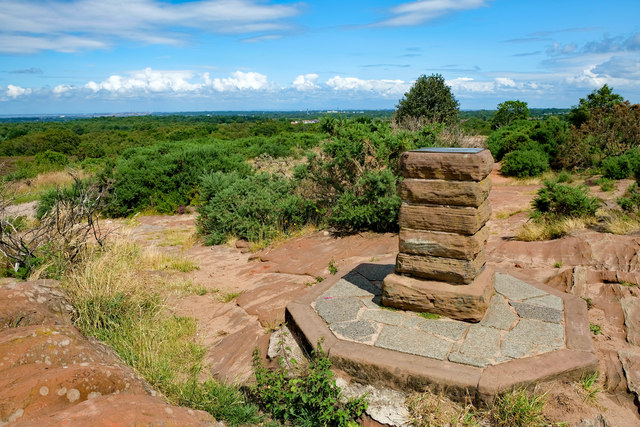
The foundation of Thurstaston Common is the Triassic red sandstone that formed about 240 million years ago when the area of the modern peninsula was an arid desert with sand dunes. Subsequently, the Pleistocene glacial processes left their marks on this ‘foundation’—clay deposits and hills formed by the retreat of the ice masses.
The most famous geological formation is Thor’s Stone—a large boulder of sandstone that stands tall among the heather thickets. In the 19th century, it was considered a remnant of Viking rituals, and even the name is associated with Thor, the god of thunder. However, modern research explains the origin of the stone by natural processes: it was formed as a result of weathering and erosion during the glacial period.
Geological maps and tourist guides, where key sites are marked, help to understand how diverse this corner is. This is why ‘Thurstaston Common map’ is a common search query—visitors want to plan a route to see the panoramas from the hill, Thor’s Stone, and the less-known sandstone outcrops along the paths.
Vegetation and Wild Inhabitants of the Heather Hills
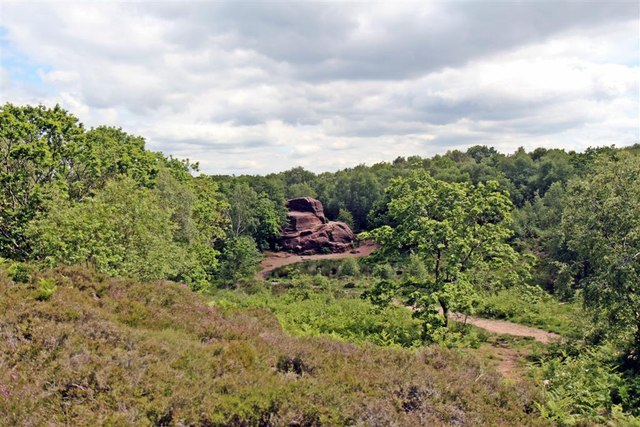
Thurstaston Common is known for its mosaic of natural habitats. The most characteristic is the heather landscape: at the end of summer, the whole area is covered with a purple carpet created by blooming heather. Alongside it grow mountain grass, bilberries, and fragrant gorse, which give the hills an almost Scottish look.
In the wetter areas, you can find sphagnum mosses and rare bog plants. There are even carnivorous species here, such as bladderwort, which hunts for small insects. For botanists, it’s a real ‘living museum,’ as different micro-environments are located very close to each other.
The fauna is no less interesting. You can often hear the tapping of a woodpecker or the cry of a jay in the air, while hawks soar over the heather. In autumn, flocks of goldfinches and common redpolls appear, feeding on grass seeds. Thanks to this diversity, Thurstaston Common is an important hub of biodiversity for the entire Wirral Peninsula.
Walks and Scenic Routes
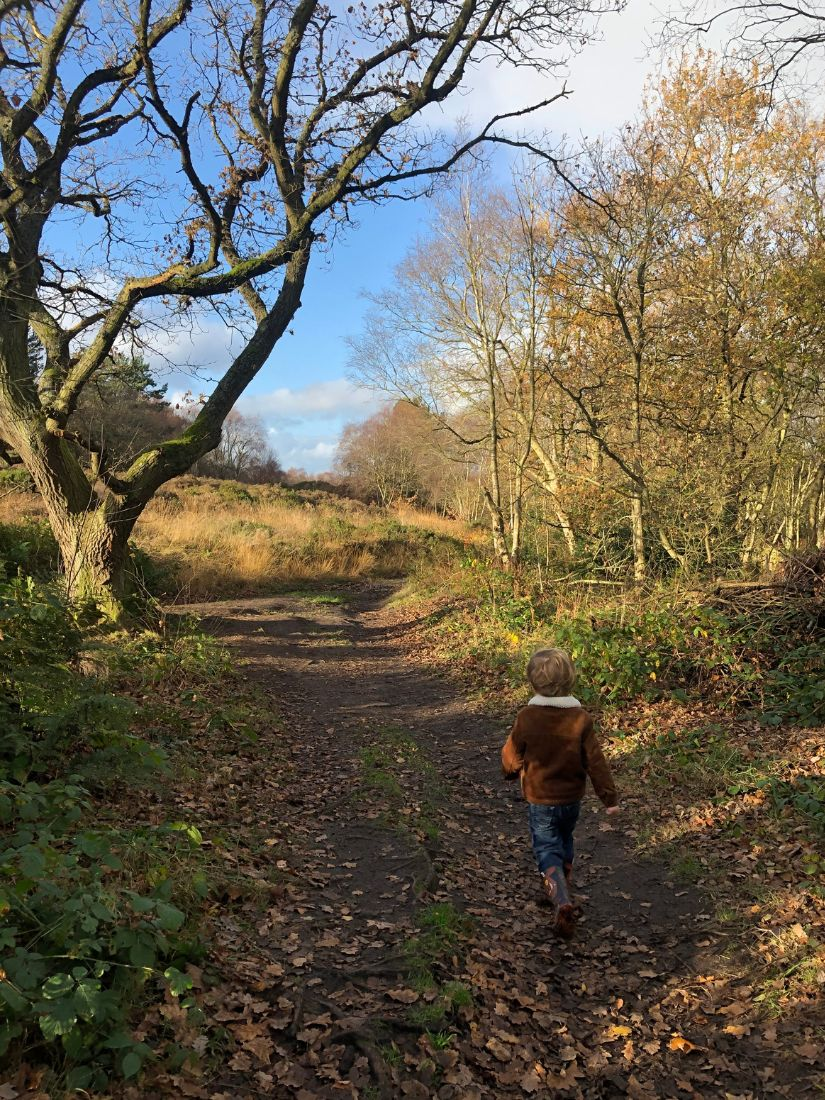
Thurstaston Common is a true paradise for those who love leisurely walks in nature. Several popular trails have been laid out here, suitable for both short family outings and longer hikes.
The most famous route is the Thurstaston Hill Circular, about 5 km long. It starts near the car park, climbs to the top of the hill, and offers a panoramic view of the Dee Estuary and the distant mountain ranges of Wales. On a clear day, you can even see the outlines of Liverpool from here.
Another option is to combine the walk with a section of the Wirral Way, an old railway line that has been converted into a walking and cycling route. This is a convenient way to extend your walk and combine the hills with the seashore.
It’s no wonder that the search query ‘Thurstaston Common walk’ is so popular: everyone wants to find the perfect route—from a short path to a full-day hike. And the walks here are also special because they change with the seasons: spring brings greenery and bird song, summer brings blooming heather, and autumn brings a carpet of yellow-and-red leaves.
For those planning a first visit, it’s worth considering a few details. The Thurstaston Hill Circular takes about 1 hour and 15 minutes at a relaxed pace—the route is not difficult, but the climb to the hill may require comfortable footwear. If you choose a walk with an exit onto the Wirral Way, you should allow about 2–2.5 hours. This option is great for combining a walk with a picnic by the coast.
How to Visit: Practical Tips and Frequently Asked Questions
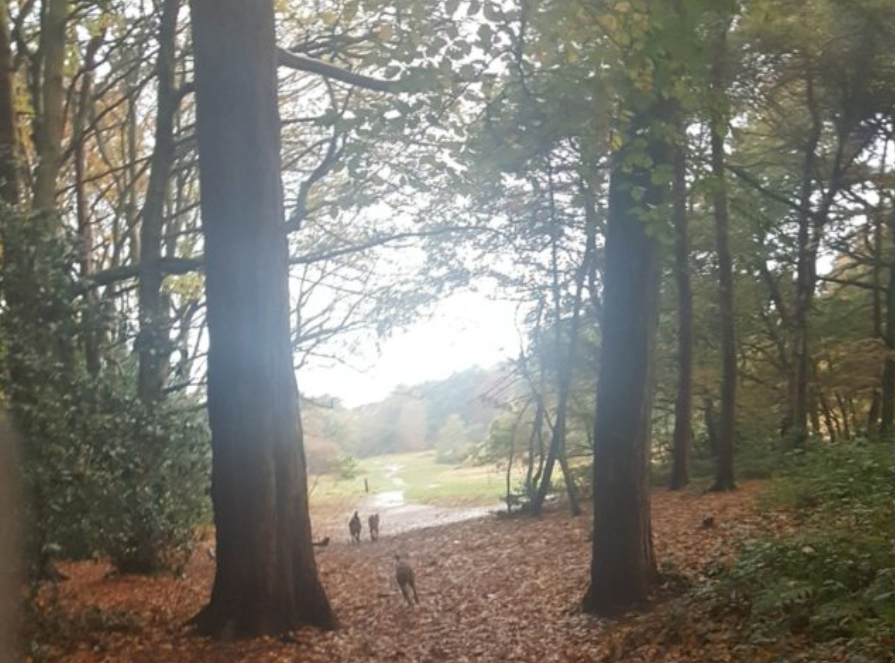
The most convenient way to start exploring Thurstaston Common is to drive to Thurstaston Common car park. The car park is located next to Telegraph Road and has information boards from which it’s easy to start your walk. Most popular routes start from here, so it’s easy to get here even for the first time.
Sometimes visitors ask: can you pitch a tent? The answer is no; the area has nature reserve status, so camping and overnight stays in tents are forbidden here. If you need accommodation, you should look for campsites on the coast or private campsites nearby.
Many people also ask: is cycling allowed? On Thurstaston Common itself, you can only ride on designated trails to avoid damaging the heather thickets and the ground. However, the Wirral Way—an official cycling and walking route—runs nearby, which is a convenient way to combine a walk with a ride.
Another tip is to bring a map of the area with you. It’s not for nothing that some people search for a Thurstaston Common map—even experienced hikers find it useful to have a guide, as the trails intersect, and the woods and heather fields can easily lead you astray.
In Conclusion
Thurstaston Common is a combination of geology, wild nature, and history, accessible just a half-hour’s drive from Liverpool. And, perhaps, that is why it remains a favourite place-magnet for both locals and those who want to escape the city into a world of panoramas and legends. There is something incredibly appealing about it.
In this place, geological history meets wild nature and tourist routes. The panoramas over the Dee Estuary, the legendary Thor’s Stone, and the heather fields make it one of the most valuable corners of the Wirral. This reserve reminds us how closely the environment is connected to the region’s history. And it also fits into the nature of Merseyside, with the climatic features of our region and its hydropower projects that influence the development of the local ecosystem.