

Liverpool and the environment are topics that frequently make headlines, sometimes for positive reasons and other times for negative ones. So, what are the main concerns? What steps have been taken to address these problems, and have they made a real difference? Let’s dive in. Learn more at liverpoolname.com.
The Problems
Many of Liverpool’s environmental challenges are common in developed European nations, and the UK is no exception. These include long-standing issues like air, water, and soil pollution. However, the city also faces more modern problems:
- Thermal pollution from the discharge of heated water.
- Noise pollution from the constant hum of airplanes, cars, and industrial plants, as well as the barking of dogs. With so many vehicles and businesses, noise is a significant issue.
- Light pollution, where artificial light from sources like sports fields can become a nuisance.
- Visual pollution, caused by things like overflowing trash in public areas, an overwhelming number of billboards, and unsightly power lines.
Focusing specifically on Liverpool, one of the most critical issues has long been air quality, with carbon dioxide emissions remaining high for years. Liverpool researchers noted that by 2019, the Earth’s average surface temperature was 1°C higher than in the pre-industrial era. Without action, this figure was projected to keep rising, first to 1.5°C and then to 2°C.
Another study on Liverpool’s air quality in early 2021 showed a surprisingly good picture. Citing World Health Organization data, the report noted that the city’s Air Quality Index was only 17, a level low enough for people to breathe easily with their windows and doors open. However, it’s worth noting that air quality is typically worse in the colder months. This is because many Liverpudlians heat their homes and offices with wood, a primary source of PM2.5, a pollutant extremely harmful to human health. Many residents opt for wood because electricity and gas are often too expensive, forcing them to find cheaper alternatives.
But heating systems aren’t the only source of air pollution. The main source of nitrogen dioxide (NO₂), another harmful gas, is city traffic, which takes a toll on the respiratory health of residents. Overall, Liverpool has struggled to meet EU air quality standards for nitrogen dioxide. Pollution levels on several major highways running through the city are higher than average.
The data reveals a stark human cost. Up to 1,040 deaths per year in the area are linked to exposure to PM2.5 and NO₂. Furthermore, children born in Liverpool since 2011 have a reduced life expectancy of about five months due to this exposure.
Efforts to Solve the Problems
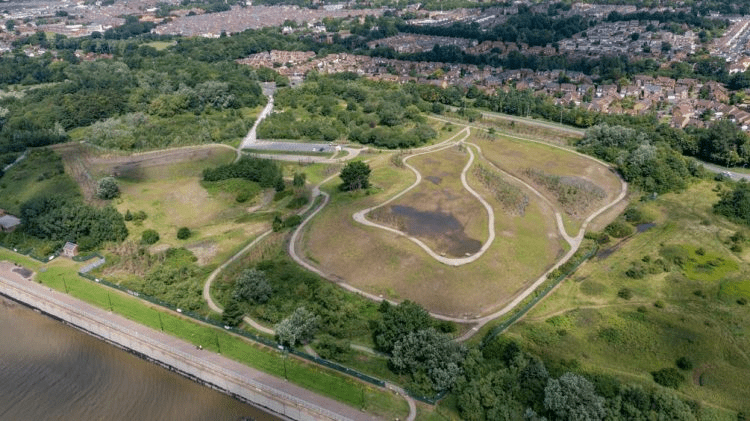
The city’s leadership has been working to fix the situation, with efforts becoming particularly noticeable around 2012, when Liverpool began its campaign to become a greener city.
Replacing Lighting
In February 2012, the city announced a major plan to replace outdated streetlights with new, energy-efficient lamps. This move significantly cut carbon emissions within the city. Since then, Liverpool has also seen a 55-fold increase in the use of renewable energy sources.
Blockchain and Incentives to Reduce Pollution
In 2018, the city launched an even more ambitious program using blockchain technology to help make Liverpool a “climate-friendly city” by the end of 2020. The mayor at the time even projected that the initiative could lead to a 40% reduction in carbon emissions by 2030.
So, how did it work? The program encouraged organizations to switch to cleaner technologies, with all their environmental impact data stored on a special ledger. The core idea was to motivate companies by offering carbon credits. When a business or organization reduced its harmful emissions, it would earn tokens on its account, which could then be exchanged for money.
A mobile app also allowed individual users to track how their daily behavior affected air pollution. To offset their impact, users could purchase credits from companies involved in tree planting. The program’s main focus, however, was on partnering with firms developing green energy solutions.
Other Steps
Several other actions have been taken to improve the environment:
- Between 2021 and 2023, a new building was constructed with the goal of being the most eco-friendly residential space in the city. Its apartments feature smart technologies like LED lighting, solar panels, and rainwater recycling systems.
- In January 2020, the City Council began developing a plan for a “Clean Air Zone.” The idea was to charge owners of high-polluting vehicles for driving in the city center, thereby encouraging people to use private cars less frequently.
- The city conducts legally required air pollution monitoring, specifically tracking levels of PM2.5 and nitrogen dioxide.
- Studies are regularly carried out to determine the specific sources of various pollutants. Initial results from these studies have pointed to vehicles as the primary cause.
The Results
A 2023 study by ReliableSkip.com, which ranked the greenest cities in the UK, found that Liverpool was one of the most polluted cities in the country. The study considered factors like recycling rates, air quality, and the number of nature reserves and parks. On a 100-point scale, Nottingham had the worst score at 43.75, while Liverpool ranked 5th from the bottom with a “green score” of 46.94. Its air quality was rated just 2.63, its household recycling rate was 23.5%, and it had only 0.97 nature sites and parks per 10,000 people.
However, there has been positive progress, particularly concerning the city’s eco-friendly bus fleet and a new e-scooter scheme. A 2020 study by Uswitch.com revealed that Liverpool ranked second among UK cities for the greenest public transport, just behind London. The study assessed factors like e-scooter legislation, green transport plans, bike-sharing systems, and the availability of eco-friendly buses.
Assessors were most impressed with Liverpool’s eco-friendly bus fleet. The city has successfully introduced a new generation of buses that operate in the city center with significantly lower carbon monoxide and nitrogen oxide emissions. The launch of an e-scooter program also contributed to its high score of 43.5 out of a possible 60 points, with London taking the top spot at 55.

Final Thoughts
Ecology and the environment are complex issues for the modern world, and perfection is hard to achieve. Liverpool is clearly making efforts to improve its environmental situation, which is encouraging. However, there are still areas that need significant improvement, so the work is far from over.