

Liverpool is rapidly moving towards its goal of becoming a net-zero carbon city by 2030. This would not be possible without the ambitious environmental programmes that have been developed in the 21st century. The implementation of ‘green’ infrastructure and the use of energy-efficient solutions in buildings and transport are just the tip of the iceberg when it comes to the efforts directed towards a sustainable future. In this article at liverpoolname.com, we will take a detailed look at the development of the most important scenarios for reducing the city’s ecological footprint.
Scenarios Developed by the Liverpool City Region
The Liverpool City Region (LCR) is a combined authority that covers Liverpool and its surrounding boroughs. This organisation is responsible for the region’s development, the management of local services, and environmental initiatives. It recognises the scale of the climate crisis and is taking action to address it. For example, the LCR works with Nature Connected to conserve local natural resources as much as possible.
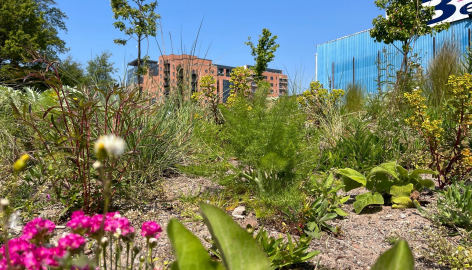
In this respect, Liverpool has several advantages, particularly thanks to its coastal location and estuaries, which offer the potential to harness wind, tidal, and wave energy. Furthermore, the area under LCR’s control has green spaces and numerous former industrial sites suitable for rewilding.
It is forecast that population and employment growth in the LCR will be slower than in other UK regions up to 2040. At the same time, its Gross Value Added (GVA) is set to grow faster, which opens up new opportunities for economic development. However, this also brings potential environmental challenges if efforts are not made in this area.
The LCR operates within a framework of global, European, and national policies while developing local strategies for industry. The goal is to reduce environmental risks, stimulate clean technologies, and develop an economy that serves the well-being of society.
For example, the Paris Agreement was adopted at a global level in 2015. The LCR primarily takes this, along with the recommendations of the Intergovernmental Panel on Climate Change (IPCC) aimed at limiting global warming, into account. Thanks to this, plans are being developed in Liverpool to stimulate investment in the low-carbon economy, particularly the development of offshore renewable energy.
Liverpool’s Steps Towards Sustainability
Liverpool has already reduced its CO2 emissions—between 2005 and 2019, the amount fell by 840,000 tonnes. In addition, it was reported that over 500,000 trees have been planted in 25 years. The city is implementing an energy efficiency grant for 700 households, which includes wall insulation, heat pumps, and solar panels.
The capital of Merseyside is also introducing new green energy initiatives. The City Council has secured a green energy tariff and applied for £9 million in funding to decarbonise sports centres using heat exchangers and solar panels. Additionally, assessments are being carried out to retrofit buildings, including city libraries and the Town Hall.
By 2030, the city plans to cut its electricity consumption by a further 60% and switch to low-carbon heating technologies. The Council has launched large-scale surveys to modernise heating systems in buildings and is implementing plans for major projects, such as a hydrogen station for buses and the use of biomass. Furthermore, there are plans to install infrastructure for electric vehicles by 2030.
Pathway to Net Zero
The Pathway to Net Zero programme for the Liverpool City Region aims to achieve net-zero carbon emissions. This will require the modernisation of residential areas, transport, and workplaces, with an investment of around £45 billion over 20 years. The six local authorities are collaborating to implement energy-efficient technologies and zero-emission transport. The next stage includes the creation of a detailed action plan to reduce the region’s carbon footprint.
URBAN GreenUP
As part of the URBAN GreenUP project, over 40 nature-based solutions have been implemented in Liverpool to combat climate-related challenges. Particular attention was given to high temperatures, flooding, and biodiversity loss. The solutions themselves were not necessarily original, but that does not diminish their importance. They include the creation of green corridors, urban water filters, green walls and roofs (see the example of Wroclaw), and floating gardens. Specific solutions, such as the 132 m² green wall on Parr Street and the floating garden in the city’s docks, improve air quality and biodiversity by attracting pollinating insects.
Initiatives from Liverpool FC
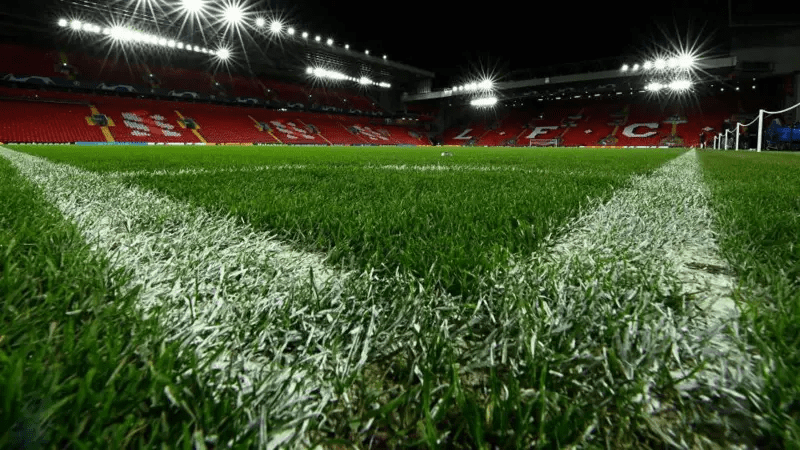
In April 2024, a BBC report highlighted several key environmental initiatives by Liverpool Football Club. Notably, the club is a signatory to the UN Sports for Climate Action Framework and also joined the United Nations’ Race to Zero campaign in 2022.
The club has taken important steps. All kit worn by the players and coaching staff is made from recycled polyester derived from old plastic bottles. The team buses have switched from diesel to sustainable biofuel, which reduces emissions from travel by up to 90%. Also, 94% of the club’s operations are run on clean energy.
In addition, Liverpool FC is planting hundreds of trees, shrubs, and flowers on the grounds of the club’s academy. Seasonal produce is grown in special gardens for use in its kitchens.
Why is it so important for Liverpool and other Premier League teams to reduce emissions from player and fan travel? Because climate change also affects football itself. Every year in England, over 120,000 amateur matches are cancelled due to adverse weather conditions. Climate change is, therefore, a real problem, not a work of fiction.