For much of the 20th century, the Mersey Estuary was treated as an industrial utility rather than a living system. Its waters and coastal canals received the waste of chemical plants, factories, and the city’s sewage systems. Today, the picture is entirely different. The Mersey Estuary has become a testing ground for a new ecological logic: you don’t fight nature — you come to terms with it. What has changed? Who is behind the “re-education” of the Mersey? And why can a shoreline reinforced by marshland be more reliable than concrete? More in our report on liverpoolname.com.
What an Estuary is, and What the Mersey Estuary is Like
An estuary is where a river grows tired of being fresh and decides to mix with the sea. This brackish zone is where life begins in ways that don’t fit into textbooks: gastropods, migratory birds, resilient coastal plants, and multi-storey food chains. Furthermore, there are tides, mud that nourishes the bank, and a smell that suggests nature is wide awake here.
The estuary lies where the River Mersey flows into the Irish Sea – between Liverpool and the Wirral. Ferry routes pass through it, docks line its banks, and over a million people live nearby. But despite this, the estuary remains a territory of wilderness. Under international classification, it holds Ramsar status, meaning the area is vital for migratory birds. Every winter, tens of thousands of mallards, wading birds, and gulls flock here. They are indeed counted – according to JNCC data, there are over 100,000 such birds here annually.
The saltmarshes, mudflats, and tidal marshes in the Mersey capture carbon, absorb wave energy, and, ironically, cope with flooding better than some infrastructure. That is why environmentalists insist: these “marshes” should not be drained, but restored. Crucially, the Mersey demonstrates that the estuary is an entirely self-sufficient territory with its own rhythm, inhabitants, and challenges. And if you work with it, rather than intervening with a shovel and concrete mixer, it will reciprocate.
How the River Mersey Estuary Fared in the 20th Century… and Didn’t Die
By the mid-20th century, the Mersey coastline resembled a catalogue of engineering experiments: dredging, concrete walls, river channel straightening, land reclamation. Natural structure? “Well, it’s not bad, but we’ll make it better,” people decided. Concern for the environment? “No, we haven’t heard of it.” Everything was poured into it – from industrial waste to urban sewage. The estuary literally suffocated: oxygen levels dropped to zero, fish disappeared, leaving only algae and bacteria that could withstand anything.
In the 1980s, the Mersey was considered one of the most polluted river systems in Europe. The level of contamination of bottom sediments was such that swimming was out of the question – and not because it was cold. All the conditions for decline were present, but something did not go according to plan. The revival is mainly attributed to the Mersey Basin Campaign – a campaign that seemed almost utopian at the time. The plan was to bring together local authorities, businesses, communities, and scientists for the idea of bringing life back to the water. They started with the obvious – sewage treatment plants, emission limits, and water quality monitoring. The results did not come immediately, but they did arrive.
Subsequently, fish returned to the river, and the water became clearer, as it had previously been very rusty. Swimming there is still not recommended, but seagulls and cormorants hold banquets here. Nature is undemanding – if you don’t interfere, it will do everything itself.
Where the Bank Disappears and Who Pays for It
The bank of the Mersey is not static – it sounds strange, but it’s true. Sediment is deposited, waves erode, and tides cut the saltmarshes like a knife. Hundreds of hectares of saltmarsh have already disappeared or lost stability. These areas act as buffers – absorbing wave energy, restraining floods, trapping carbon, and forming a habitat for those very birds, fish, and invertebrates that keep the ecosystem afloat. When they disappear, the waves advance further – towards concrete, roads, and residential areas.
Add to this sea level rise, more intense storms, and the historical fondness for dredging. This entire campaign significantly accelerates erosion. Channels created for shipping alter the direction of currents and drag the bank with them. Furthermore – development that creeps right up to the water, and infrastructure that has shackled the river in concrete “ribs.”
The natural systems that should stabilise the coastline are being destroyed or isolated. It becomes a vicious circle: the more we “fortify” the bank, the faster it loses its ability to hold itself. And then it’s back to concrete – and back to costs… and a new tender.
Marsh Against Concrete: How Nature Knows What to Do
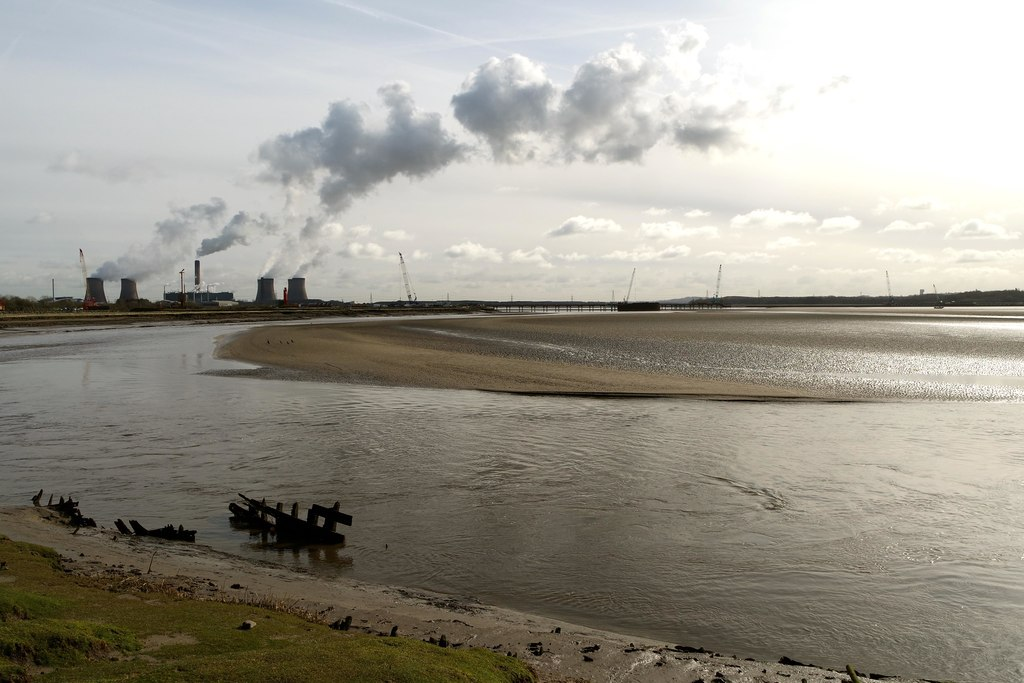
Saltmarsh – the word is not overly poetic. But in ecology, it is one of the most effective tools for coastal protection. It doesn’t need to be built, repaired after every storm, or painted in corporate colours. It just needs not to be destroyed. Or even better – restored.
Today, there is increasing talk in the Mersey valley about an approach called “living coastlines” – where the bank is not concreted, but “nurtured”. This can involve restoring saltmarshes, planting coastal vegetation, and bringing back sediment flows that were previously blocked by dams. Such solutions are cheaper in the long run and look better. And they smell – genuinely, not artificially.
Saltmarshes absorb carbon from the air and bury it in the mud for decades. They slow down the wave when it hits the bank and create a habitat for those same birds, fish, and invertebrates that keep the ecosystem afloat.
Soft banks are not as spectacular as concrete supports. But nature doesn’t compete for likes on Instagram. It works for results – and has shown more than once that it knows better than we do.
Who is Saving the River Mersey: Projects, Communities, Strategy
In saving the Mersey, there is no single hero with a cape and a 20-year strategy. Instead, there are dozens of people, institutions, and initiatives that are pushing this effort forward as best they can – each from their own side.
One such player is the Mersey Rivers Trust. This team genuinely works with water bodies. It developed the Blueprint for the Mersey Estuary – a strategic restoration plan that takes into account biology, hydrology, and, importantly, social aspects. That is, it’s about both how to “clean up,” and how to bring the Mersey back into people’s daily lives.
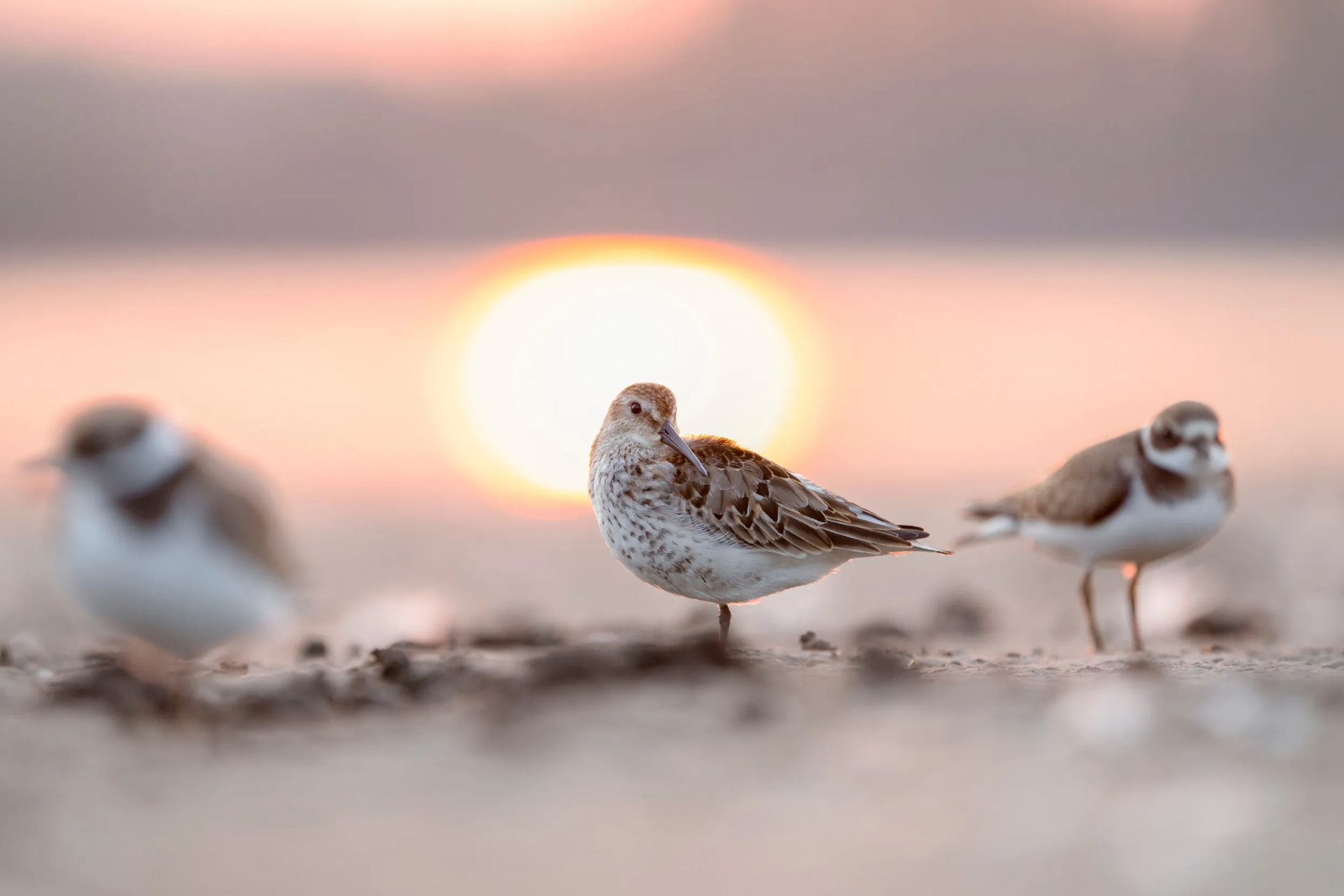
Another player is the RSPB (Royal Society for the Protection of Birds). Its mission is to protect the habitats where birds live. The RSPB has repeatedly blocked projects that could destroy saltmarshes or cut off birds from feeding grounds during migrations.
Local councils, scientific institutions, and volunteers are also involved in the process. Some monitor water quality, some conduct tours, and others plant coastal vegetation. And this interaction is often more effective than centralised “policy from above.”
The future of the estuary is not decided in one office. It is shaped by small local initiatives. The authorities have finally stopped competing with nature, starting instead to participate in the care of what was written off as waste yesterday.
A Final Word
The Mersey is an example of how ecology stops being a niche topic for activists in waders. The restoration of the banks here is closely intertwined with urban planning, community initiatives, and technical solutions. And what is interesting – it is nature itself that increasingly suggests how to act more effectively. Incidentally, these processes are no less important than cybersecurity in a city with so much cybercrime.
…Actually, Google says the estuary became tidal long before the industrial era. But its modern appearance largely depends on our choice. On the decisions we make every day.