

Liverpool’s mills play a crucial role in the city’s industrial history, reflecting not only technological innovations but also significant economic and social transformations. As a major trading hub and port with a rich history, Liverpool became a centre for numerous milling enterprises that showcased the region’s capacity for creative engineering solutions. Find out more at liverpoolname.com.
Interesting Facts About the History of Liverpool’s Mills
The history of Liverpool’s mills begins in the Middle Ages, when they were key elements in the grain processing system. Their role was vital not only for local production but also for ensuring food security on a national scale. These engineering structures evolved from medieval royal mills to innovative watermills and windmills.
Liverpool’s mills served the economic needs of the city and had a significant impact on its social and environmental landscape. Various engineering solutions—such as water wheels, complex gearing systems, and other efficiency-boosting devices—became an integral part of the city’s industrial architecture.
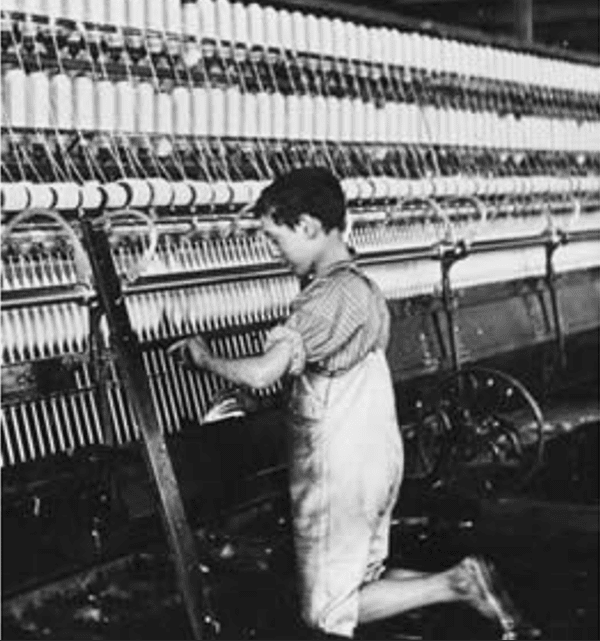
Cotton mills were of immense importance in their time, shaping entire communities in Lancashire with a specific industrial focus. The shift from domestic production to the factory system led to the dominance of large mills and factories, highlighting significant engineering changes and the expansion of the industrial environment. When the cotton industry later declined, these mills were either demolished or repurposed for tourism or residential use.
Working conditions in the cotton mills were appalling, with high temperatures and humidity deliberately maintained. This was done to prevent the threads from breaking, but for the workers, it was hellish, as the cotton dust hanging in the air led to lung diseases. Long working hours and the exploitation of children as young as seven were common in the 19th century.
Architectural and Engineering Features of Liverpool’s Ancient Mills
In Liverpool’s early history, prior to 1257, there is no record of mills, but it can be assumed that the young garrison town may have already had simple milling structures. Most likely, a horse-powered mill, operating alongside a bakery, was established within the castle grounds. Over time, watermills also appeared to meet the needs of the constantly growing population.
What is known for certain is that Liverpool had both watermills and windmills. The first watermills, appearing in 1257, were likely located on the hillsides outside the town. Horizontal watermills, which used water fed from an upper level onto the wheel, were also quite common here.
For a time, transporting raw materials and finished products from the mills to neighbouring towns and regions was somewhat difficult. The presence of these large-scale operations in Liverpool necessitated the development of more efficient transport. Therefore, it can be argued that the mills were a contributing factor to the creation of the Liverpool and Manchester Railway.
The Status and Preservation of Liverpool’s Mills
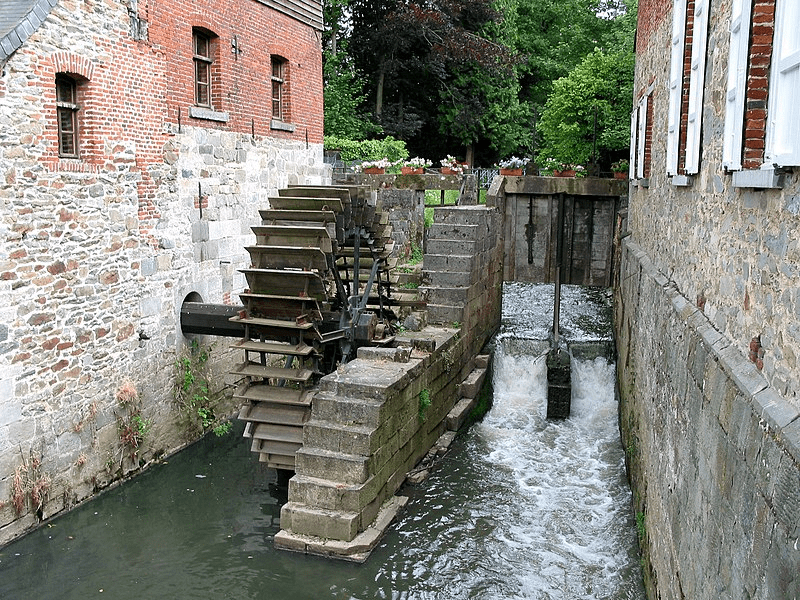
In 1296, following the death of the aristocrat Edmund, Earl of Lancaster, Liverpool had two mills: one watermill and one windmill. By 1322, their value had fallen compared to previous years. In 1346, the area had one watermill, two windmills, and one horse-powered mill. By that year, the value of the mills had increased again, partly due to the use of new engineering solutions.
By the end of the 16th century, watermills had disappeared from the Liverpool area, and the town came to rely solely on windmills. The watermills were abandoned, and the local watercourses were filled in. In 1563, they were noted in the Liverpool town books as simply being part of the town’s land.
The History of Eastham Mill
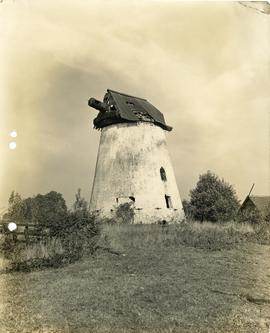
The mill historically referred to as ‘Eastham Mill’ (likely a reference to Everton Mill) has a long and interesting history. Although it probably existed as early as 1257, the first records appear in 1390, when John de Gall granted William de Peneret a plot of land near ‘Euerston Mylne’. This could refer to Everton Mill, but there is no definitive proof.
In 1451, Henry VI granted Thomas Fletcher a lease on a ‘windmill called Easton Mylne’, which indicates the mill was operational at that time. Documents also mention repair costs for the mill, highlighting its importance. Until 1679, the ‘Eastham’ mill was mentioned in numerous documents, including town books and land records.
The mill suffered significant damage during the siege of Liverpool in 1644 and was not rebuilt, despite efforts by the town’s administration. In 1660, Lord Molyneux decided not to restore the Eastham/Everton mill, operating the Townsend Mill instead.
Mills and the Environment
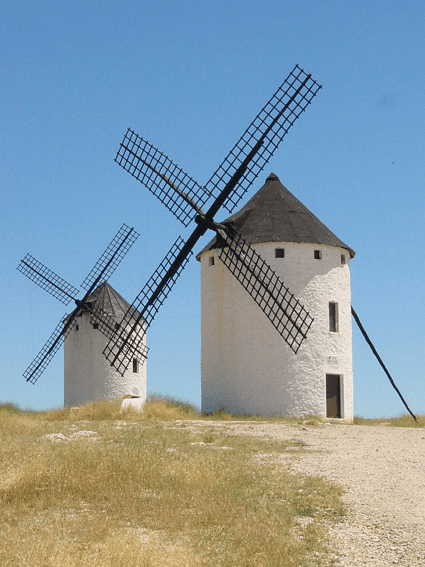
Mills located near water bodies had a significant impact on the environment. Using water to power these structures led to changes in the natural course of rivers, which affected the regional ecosystem. Windmills, on the other hand, did not harm the environment and were less dependent on specific weather conditions. The last watermills, including the one in the Eastham/Everton area, are now just a part of history, as modern production methods no longer require their use.