

Merseyside County is famous for its car factories, which are located not only in Liverpool. Thus, the plant in Halewood is known around the world for the high-speed Land Rover Freelander and Range Rover Evoque. Such productions have a significant impact on the environment, but some engineering solutions can reduce the harmful effects. Learn more about the impact of this factory on ecology at liverpoolname.
Start of production and the first tasks
The Jaguar Land Rover Halewood plant was established back in 1963 and became the main part of the complex. The secondary one, the transmission factory, appeared a year earlier.
Ford opened a factory in Halewood on October 2. Initially, the enterprise faced a rather specific and narrow task, which was the production of a small Ford Anglia car. As Ford’s main plant in Dagenham couldn’t cope with the growing production needs, the one in Halewood was engaged in the production of the Ford Corsair.
As for the Ford Anglia, Lord Mayor of Liverpool, David John Lewis, had the honour of being the first to take the car off the assembly line. The Anglia de Luxe cost as much as £30 million and was won by a Liverpool Echo newspaper competition to Mr Taylor. The man couldn’t drive the car and therefore sold it. Three years later, the Ford company bought the car to donate to the Museum of Liverpool.
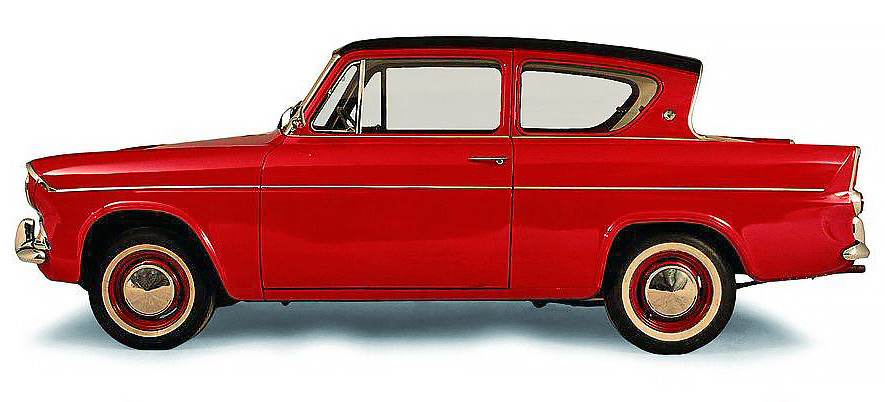
When it was decided to replace Ford Anglia with Ford Escort (in 1967), the plant’s capacity was also used for production. This model became a kind of business card for the company for a while. Then when the Capri appeared in 1969, the Halewood plant began work on its production as well.
A new stage began in 1976 when Ford started restructuring European production. Since then, the Capri was only made at the factory in Cologne, Germany. Meanwhile, Halewood was adapted to produce the Escort and its derivative, the Ford Orion.
Scandal with female machinists in the 1960s
In the 1960s, a scandal erupted in Britain over the treatment of female machinists, who were grade B in the pay structure. This meant that they were considered unskilled staff, even though they had to pass difficult tests. For some time, women tried to achieve recognition as skilled workers without success. Then in 1968, as a sign of solidarity with their colleagues in Dagenham, they simply abandoned the factory, halting production for a while and becoming the heroines of the national news.
Our times
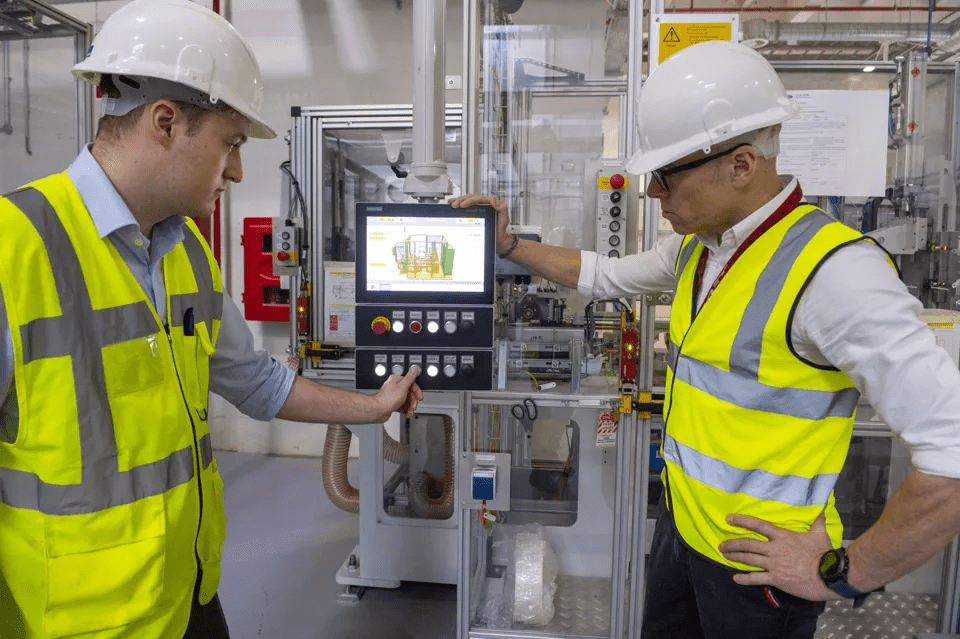
The 2000s ushered in a new era for the Halewood plant. Production technologies, their structure and methods as well as approaches to payment for labour have changed. At the same time, the automobile giant began to think about preserving the environment, introducing the most progressive engineering solutions. Here are some of the important events and dates:
- 1997. Plans to replace Escort with Ford Focus were announced. There were also rumours that the new car would be produced only in Germany and Spain and that production in Halewood would be closed. However, simply closing the plant would be a bad decision, because it could be used for other production. In the end, Halewood was handed over to Jaguar Cars, which at that time belonged to Ford.
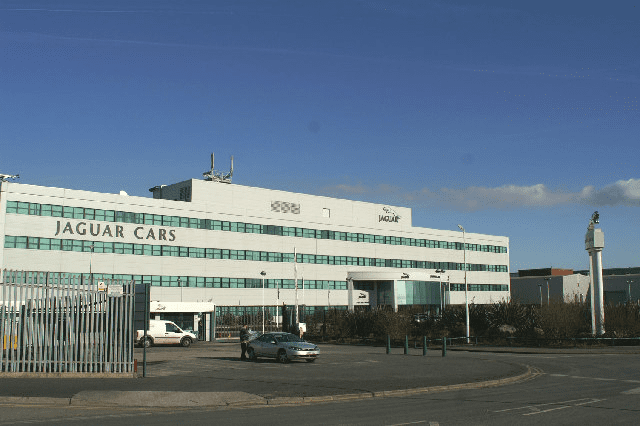
- 2000. The Escort main body was discontinued, but the minibus version remained for another two years until it was replaced by the Turkish Transit Connect.
- 2001. Jaguar X-Type production began in Halewood.
- 2007. Land Rover Freelander of the second generation began to be produced in Halewood, so a ground test site was built too.
- 2008. Jaguar and Land Rover are sold to Tata Motors, a part of the Indian group of companies specialising in commercial vehicles and one of the leaders in this field. At the same time, Ford retained partial ownership of the transmission plant.
- 2009. X-Type was discontinued resulting in 300 job cuts.
- 2010. The British government announced a £27 million grant for Jaguar Land Rover to produce an all-new Range Rover Evoque. However, there was one condition that it had to be manufactured in Halewood.
- 2011. The first Range Rover Evoque left the factory gates. The car became a bestseller, while critics were delighted with its concept-car-like style. Meanwhile, the most powerful blacksmith and press shop continued to stamp body parts for older models.
- 2012. Due to the huge demand for the Evoque, the plant had to increase the number of employees to 3,000 (which is 1,000 more than before). It happened at the beginning of the year, and in August, the plant switched to a 24-hour mode of operation in order to produce a sufficient number of cars, taking into account the demand. In the end, the number of employees reached 4,500.
- 2014. The JLR company announced an investment in the Halewood plant. Those £200 million made it possible to launch the new Land Rover Discovery Sport, the first representative of the Discovery family.
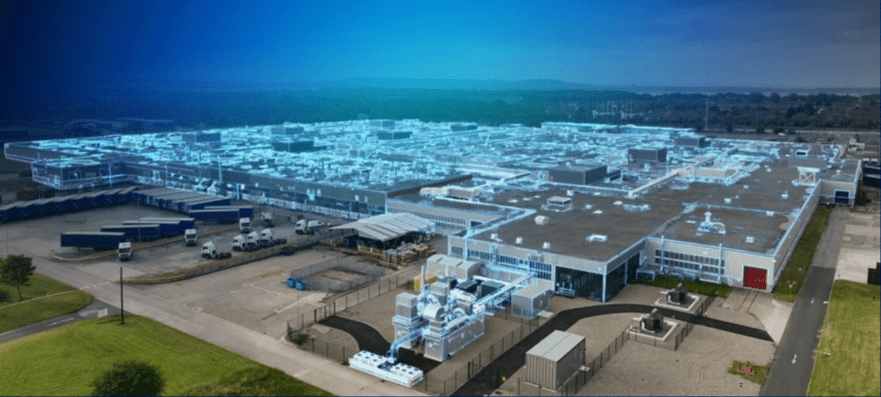
If you walk around the territory of the plant, it may seem that it is somewhat deserted. The reason is that it occupies as much as 300,000 square metres, so even several thousand workers seem like a drop in the ocean on such a territory. The largest number of personnel in certain areas of the enterprise can be seen during the lunch break, which is modestly called here a tea break. Workers usually bring their lunches along because it is impossible to cook inside due to sanitary requirements and it would take too long to go to the canteen.
As for working conditions, wages at the plant are quite high, so mostly local citizens work here instead of emigrants from poor countries. The company also offers the prospect of career growth. However, on the other hand, it isn’t an easy task to get a job at this company.
Investments and the course on electric cars
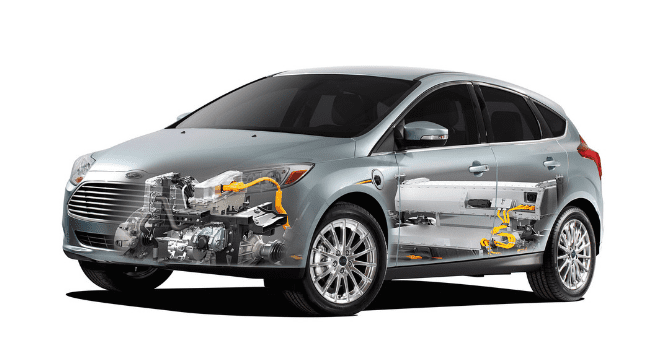
In the 2020s, some more important changes took place in Halewood production. In December 2022, it was announced that Ford would allocate another £150 million, increasing their total investment to £380 million. All this happened after Halewood started to produce components for electric cars that allow to reduce the harmful impact of vehicles on the environment.
It was interestingly commented on by Kieran Cahill, who holds a high position in the Ford company.
- “Our vision in Europe is to build a thriving business, by extending leadership in commercial vehicles and through the electrification of our car range. Halewood is playing a critical part as our first in-house investment in EV component manufacturing in Europe.”
At the time, the plant produced transmissions for cars with an internal combustion engine, but shortly before that, it signed a contract to assemble power units for Ford electric cars. Its initial fund was £230 million, which made it possible to plan the supply of 250,000 units per year, starting in 2024.
Ford’s E:Prime centre played an important role in the creation of prototypes of the electric power unit and also taught Halewood workers how to make it properly. Tim Slatter, chairman of Ford UK, noted that the company is moving towards an all-electric future in such a way. It means a large number of cars with zero emissions into the atmosphere. This goal was to be achieved in several stages:
- The number of new power units produced was to increase to 420,000 per year (up from 250,000). It also means that 70% of the 600,000 electric vehicles that Ford will sell in Europe by 2026 must be equipped with technology produced at the Halewood plant.
- Ford was going to make electric cars its business card by 2030, and Halewood was to play a leading role in this plan.
- Ford planned a complete transition to cars with a zero level of harmful emissions into the atmosphere by 2035.
The above-mentioned investment also meant saving 500 jobs and improving the qualifications of the staff. In addition, it allows Merseyside to make a significant contribution to the strategy to combat climate change.