

Many people associate Liverpool with the port, the Beatles, fascinating city life and two famous football clubs, but not with agriculture. However, this sector is very important for the Merseyside area. Therefore, this industry is controlled by the city government and is in the constant process of development. Learn more at liverpoolname.
The role of agriculture in the region
In 2023, Metro Mayor of the Liverpool City Region Steve Rotheram and other interested politicians visited the countryside, or rather the farm. This meeting was made possible by the NFU, the National Farmers’ Union. The event was important for interested authority representatives, farmers and residents of the region, as people need to know where their food comes from.
Politicians could get a better understanding of the value of farmers and the role of agriculture in Merseyside. Even small farms, let alone large ones, play an important role in the prosperity of the region, because the production of food that meets the needs of the local residents, as well as people from other parts of Great Britain, largely depends on them.
A lot of interesting information was announced at that important meeting. For example, the agricultural sector in the north-west of the country brings £726 million to the economy. 15% of England’s food industry is located here. Farmers in Merseyside grow vegetables and cereals. They also keep livestock, thanks to which the people of the Liverpool region can consume beef, lamb, milk and products based on it, brought not from far away, but from local farms.
Steve Rotheram also promised to provide the farmers with his support. In particular, it was discussed how the NFU can cooperate with him to continue the production of quality food products that will contribute to the country’s economy. It was pointed out that the region has huge countryside territories, about 50% of the total area. It can be beneficial for the economy as well as for those who want to consume quality and organic food.

Mr Rotheram also said that farmers deserved more recognition than they were getting then. He expressed hope that he will be able to continue developing the agricultural sector and contribute to its prosperity. Among other thoughts, which were spoken out at the event, were
- the public should better understand where food comes from
- career growth in agriculture is also possible
- there is a labour shortage in some branches of the agricultural sector, in particular, in horticulture.
Vertical farming
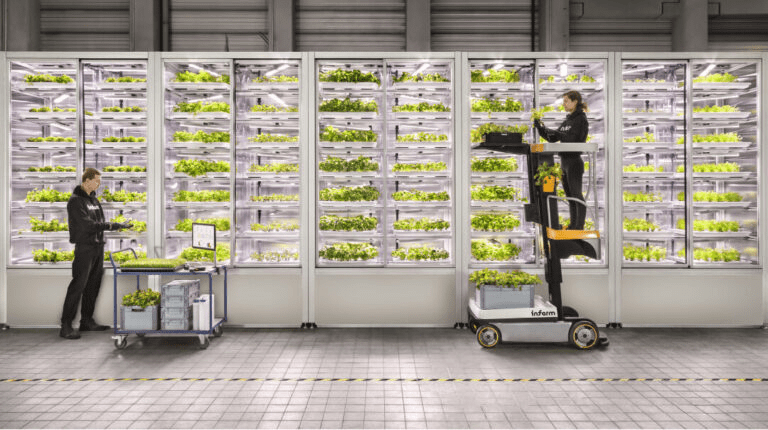
It isn’t surprising that Liverpool promotes various innovations that can improve the development of agriculture, make farmers’ lives easier and also make their work more efficient. One of these developments is the so-called vertical farming. Francis Beaumont de Oliveira, a student at the Institute for Risk and Uncertainty at the University of Liverpool, has made great strides in this sphere (source). Enlisting the support of the Low Carbon Eco-Innovatory, he began working with the local social enterprise Farm Urban to unlock the potential of vertical farming.
What is vertical farming?
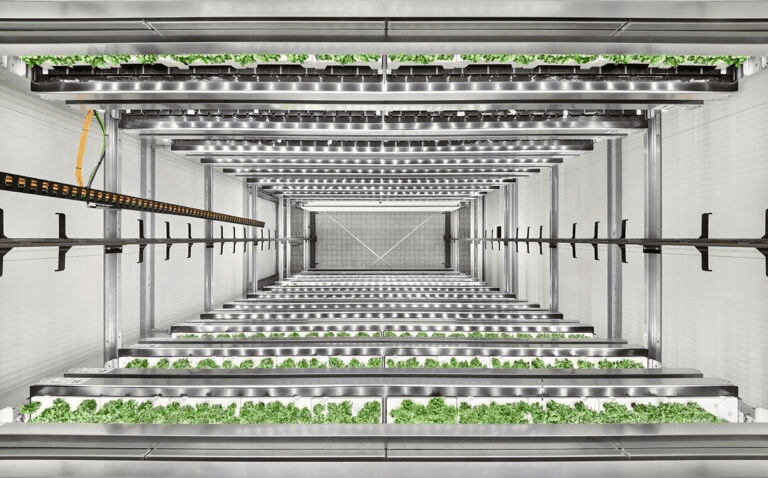
Vertical farming is hydroponic (with an artificial medium instead of soil) growing plants indoors or on rooftops in racks or towers. Layers of plants are located one above the other, which makes it possible to use premises space more rationally. Thus, agriculture can involve a city, which is very important in conditions of total urbanisation. In addition, it is possible to increase yields without using chemicals and to grow plants all year round, regardless of weather conditions.
Development and profitability
It is worth noting that vertical farming is in the early stages of its development, which takes place, in particular, thanks to such activists as the above-mentioned student. At the same time, there are certain difficulties in bringing the business to profitability. At the initial stage, huge costs are needed for internal lighting, climate control, irrigation systems, etc. This business requires big investments, and therefore, its profitability raises big questions.
Vertical farms more often grow greens, herbs, flowers and some types of vegetables. However, crops, such as wheat, require a lot of light, so growing them in this way is not entirely profitable, except that the harvest is more expensive to sell. It is also worth considering that this type of business requires a skilled workforce. Therefore, not all projects of this type were well-planned and some had to be closed. Still, there are also positive cases.
Relevance
This narrow branch of agriculture really needs innovation and further development to make it more profitable and still stand the test of time. The earth’s resources are gradually being exhausted, the population is growing and food shortages are becoming more and more urgent due to the decline of countryside areas in some regions and rapid urbanisation. The global population is estimated to grow to 9.77 billion by 2050. A very large percentage of humanity is starving or at least has a poor diet and doesn’t get the necessary nutrients.
Thus, there is an urgent need for a safe, affordable and resource-efficient food system. Vertical farming won’t solve all problems, but it can help at least partially. Of course, it will bring the agricultural sector closer to the civilization’s origins because people will consume food that was grown nearby as it was in ancient times. In addition, the emergence of urban farms will make local communities more valuable, as they will be able to develop effective models of urban agriculture.
The role of the student from the University of Liverpool
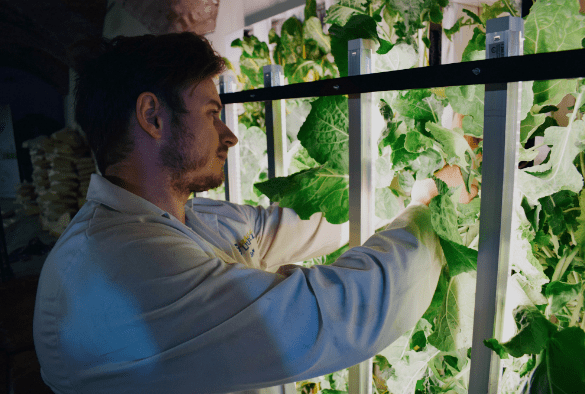
Francis Beaumont de Oliveira undertook a dissertation project on the creation of an aquaponic system and was fascinated by the concept of this method of growing plants. He decided that he wanted to contribute to the development of this industry by using his engineering skills. He created a prototype of one of the Farm Urban tabletop aquaponic systems, for which he received the IMechE Best Project Award.
In particular, his project was related to the assessment of risks and environmental impact. Are vertical farms economically justified? There are different opinions about it. For example, Paul Gauthier, an employee of the Princeton Environmental Institute, concluded based on a small sample that 85% of such farms, if they are not invested in, will go bankrupt in a few years. It is more profitable to grow medicinal plants or marijuana in this way. However, there is a lack of reliable data on investment risks, which makes such investments dangerous at first glance.
So, the student from Liverpool took the reliable scientific literature as a basis and identified a triangle of current constraints, namely public policy, economic viability (reliable analysis of operational costs) and knowledge transfer (i.e. experience exchange between similar farms). Francis was developing a planning tool that helps assess project risks. Also, the student united several associations and companies to make urban vertical farms more successful.
Conclusion
There are frequent concerns of environmental organisations that the expansion of various facilities in the Merseyside area will lead to a reduction in green spaces and agricultural land. However, the case of vertical farming seems to be a compromise option for all the fighters for ecology and the environment. Therefore, the city authorities may take control of this promising industry and at least slightly ease its business conditions, providing it with financial support and reducing investment risks.