

What are the key features of the climate in Merseyside? How is it affected by sea breezes, the Atlantic Ocean, and wind patterns? What climatic shifts have Liverpool and its surroundings experienced due to human activity? And what is being done to help the population adapt to these changes and mitigate their negative impacts? This article from liverpoolname.com will explore these very questions.
General Characteristics of Merseyside’s Climate
Liverpool and the wider Merseyside region have a climate typical of a coastal area. Its geographical location, particularly its proximity to the Atlantic Ocean, significantly influences its weather conditions. Overall, the climate is considered temperate and remains relatively mild for most of the year.
Summers in Merseyside, especially during July and August, are generally pleasant, with temperatures typically ranging from 20 to 25°C. This makes it an ideal time to visit the region, as the weather is perfect for walking and exploring the urban landscape. The coldest month is February, when the average maximum temperature is around 8°C.
Rainfall levels also vary significantly by season. December sees the highest amount of precipitation, so if you’re not a fan of rain, it might be best to avoid visiting then. In contrast, April is the driest month. The sunniest month in the region is May.
Merseyside’s climate is also quintessentially British, characterised by moderate temperatures and frequent, often rapid, changes in the weather. While it remains comfortable for most of the year, the swift shifts between sunny and overcast skies can sometimes be a little bewildering.
The Influence of the Atlantic Ocean and Wind Patterns
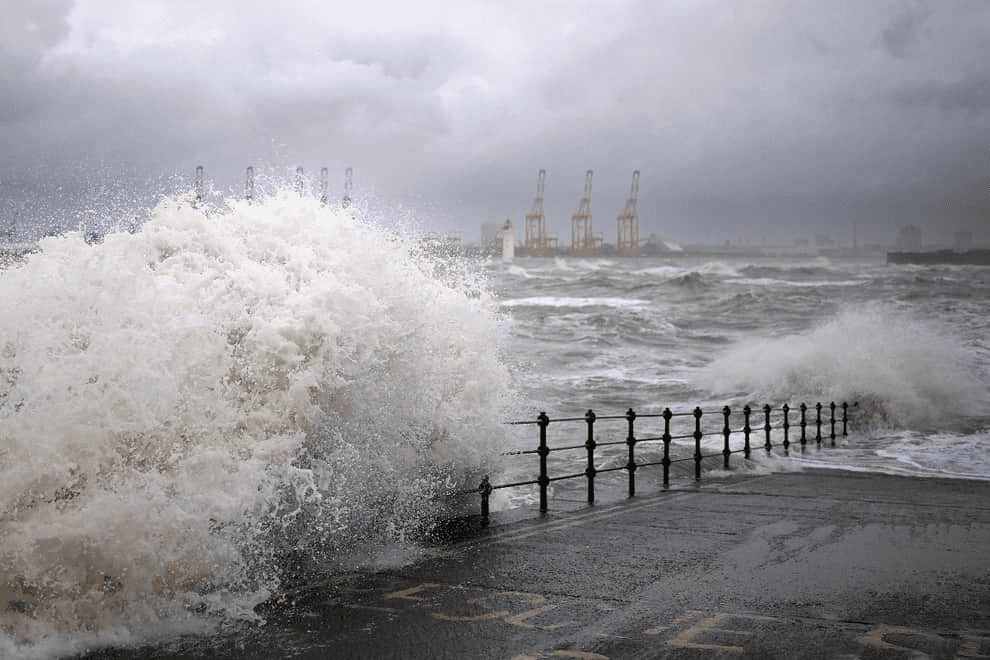
The Atlantic Ocean and its associated wind patterns play a pivotal role in shaping the climate of Merseyside, especially in Liverpool Bay. The region is heavily influenced by oceanic systems, which determine the nature of its waves and sea currents. Studies using buoys and acoustic instruments have revealed that many waves in Liverpool Bay are ‘fetch-limited’—meaning their development is constrained by the available open water distance. The largest waves occur when cyclones track across the UK from the southwest, generating strong westerly and north-westerly winds.
Merseyside’s climate experiences seasonal and year-to-year fluctuations, which are linked to variations in atmospheric conditions over the North Atlantic. These fluctuations can significantly affect the intensity of storms and extreme weather events. While the overall climate of Liverpool Bay is not expected to change dramatically in the future, some intensification of extreme wave events is anticipated. Specifically, a slight increase in the intensity of the largest storms is forecast, although the overall frequency of these events may decrease.
The climatic shifts in Merseyside are tied to these North Atlantic weather patterns, highlighting the importance of both local and global factors in shaping the region’s weather. Predicting future conditions is challenging, as the wave climate in Liverpool Bay has been observed to vary over multi-decadal timescales throughout the 20th and 21st centuries.
Climate Change, Environmental Challenges, and Local Action

In Liverpool, the issue of climate change is taken very seriously, a fact underscored by research and local government initiatives. In 2019, the Liverpool City Region became the first in the country to declare a climate emergency, committing to achieving net-zero carbon emissions by 2040—a decade ahead of the national target. This decision was a direct response to the climatic changes already affecting the local economy, agriculture, and ecosystems.
Research conducted by the Liverpool City Region Combined Authority revealed that 82% of residents agree that action is needed to reduce carbon emissions. At the same time, over half of those surveyed (52%) said they knew a ‘great deal’ or a ‘fair amount’ about the actions required. However, the challenge remains complex, as a significant portion of the population is still not fully informed about the necessary measures, creating a barrier to achieving these ambitious goals.
Climate shifts in the region, including rising temperatures and fluctuating rainfall, present major environmental challenges for the authorities and for all environmentally-conscious Merseysiders. These changes could have significant consequences for agriculture and local ecosystems. For instance, warmer weather could increase risks for traditional crops and alter the delicate water balance.
Liverpool and the regional authorities are actively working on adapting to climate change. For example, a 2022 action plan included over 80 immediate measures aimed at tackling these challenges. Significant progress has already been made through these initiatives, with successful projects focusing on green transport and reducing the city’s carbon footprint.
Local government is also investing heavily in clean energy projects, including the expansion of offshore wind farms in Liverpool Bay and the development of hydrogen production. These measures are part of the region’s broader strategy to create tens of thousands of new jobs in the green economy and secure a sustainable future for the area.