

Liverpool is famous not only for its architectural landmarks but also for its beautiful natural locations. The River Mersey, which flows through North West England and washes the shores of Liverpool, adds a special atmosphere to the city. The river begins at the confluence of the River Tame and River Goyt in Stockport and flows into Liverpool Bay. In total, its length is over one hundred kilometres (about 70 miles). It is a major waterway in England and, unfortunately, in past centuries the Mersey became heavily industrialised. As a result, the river’s water quality deteriorated significantly. Read more about the pollution problems at liverpoolname.com.
What Affected the Water Quality in the River Mersey?
During the 19th and 20th centuries, our city and country underwent active industrialisation. While this had a positive impact on Liverpool’s development, it also had negative consequences for the environment. Specifically, the River Mersey began to be polluted by industrial waste.
The main pollutants of the waterway were:
- Heavy metals. Lead, mercury, and arsenic are all toxic metals that are harmful to humans and animals. These heavy metals can accumulate in the environment, making them extremely dangerous.
- Organic pollutants. These include grease, oil, and detergents. They cause eutrophication—the excessive growth of algae in the water. This, in turn, reduces oxygen levels, which is fatal for fish and other river wildlife.
- Plastic. This is a 21st-century problem, as plastic harms not only our waterways but the entire environment. An analysis by Greenpeace scientists from the University of Exeter was particularly shocking, revealing that microplastics were present in 28 out of 30 UK rivers surveyed, with the River Mersey topping the list. A staggering 875 pieces of plastic were found in just thirty minutes. Sadly, the analysis showed that the river contains six times more plastic pieces per area than the Great Pacific Garbage Patch. Greenpeace suggested this high level of pollution could be linked to a nearby factory producing plastic ‘nurdles’, as well as the river’s proximity to the large populations of Liverpool, Manchester, and Warrington.
To add context, the Great Pacific Garbage Patch is a dense mass of plastic and other waste that has accumulated in one area. Its existence was discovered by oceanographer and sea captain Charles Moore. The patch is estimated to cover an area between 700,000 and 1.5 million square kilometres—an enormous territory larger than some European countries.
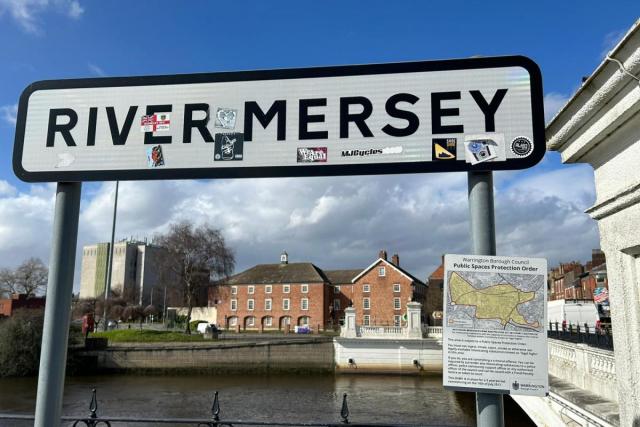
What are the Consequences of Water Pollution?
Understandably, polluting a waterway causes numerous problems: fish die, biodiversity decreases, and health issues arise, among others.
To improve the water quality in the River Mersey, the Mersey Basin Campaign was founded in 1985. This initiative yielded positive results. The campaign began to regulate industrial waste disposal rules, cleaned up polluted areas, initiated the construction of wastewater treatment plants, and restored wetlands. Of course, many educational and public awareness programmes were also organised for the local population.
What Can Liverpudlians Do to Reduce Pollution in the Mersey?
It’s not just industrial enterprises that are to blame for the poor water quality in the River Mersey. That’s why everyone should start with themselves and follow these simple recommendations:
- Clean in an eco-friendly way. Use fewer chemical products when cleaning. In particular, you should stop using bleach and ammonia, which are very harmful not only to the environment but also to human health. It’s essential to use natural cleaning products instead.
- Dispose of waste correctly. Experts stress that you should never pour paint, motor oil, solvents, ammonia, or other chemicals down the drain, as they all end up in our waterways. Also, do not flush medicines; they require special disposal.
- Reduce plastic use in your daily life. It might sound simplistic and almost impossible, as plastic is everywhere. However, its use can at least be reduced. Some items can be replaced, and others can be refused. Unfortunately, plastic is a genuine environmental catastrophe that is escalating every year. In waterways, it breaks down into microplastics. Fish and other aquatic animals mistake it for food and consume it. This fish then ends up on our table, and the plastic enters our bodies, causing harm. This creates a cycle: first, people produce and use plastic, and then they consume it.
We hope you found this article informative and have drawn your own conclusions. Did you know the River Mersey was so polluted? Let us know your thoughts in the comments on social media.