

Liverpool is actively transforming its urban landscape with the Urban GreenUP programme, an initiative focused on implementing nature-based solutions to improve the local environment. It’s part of a European project aimed at helping cities adapt to climate change, reduce pollution levels, and enhance the quality of life for residents. You can learn more about this green initiative in Liverpool in our article at liverpoolname.com.
So, why Liverpool? The city is already facing challenges typical of urban areas: high CO₂ levels, a shortage of green spaces, and a risk of flooding from heavy rainfall (though its surface water management strategy helps to mitigate this). This is precisely why it became one of the pilot cities for Urban GreenUP, testing effective environmental solutions like vertical gardens and bio-ponds that purify water naturally. And these are just two examples from a long list of innovative solutions.
Urban GreenUP in Liverpool: What is the programme and who is behind it?
Liverpool became one of the flagship cities for Urban GreenUP, an initiative funded by the EU’s Horizon 2020 programme. The project is designed to integrate natural, green solutions into the urban environment to improve air quality, boost biodiversity, and help the city adapt to climate change.
Three teams worked on its implementation, with clearly defined roles:
- Liverpool City Council provided managerial support and oversaw the implementation of decisions.
- The University of Liverpool conducted research into the impact of these solutions.
- The Mersey Forest organisation contributed its expertise in creating green infrastructure.
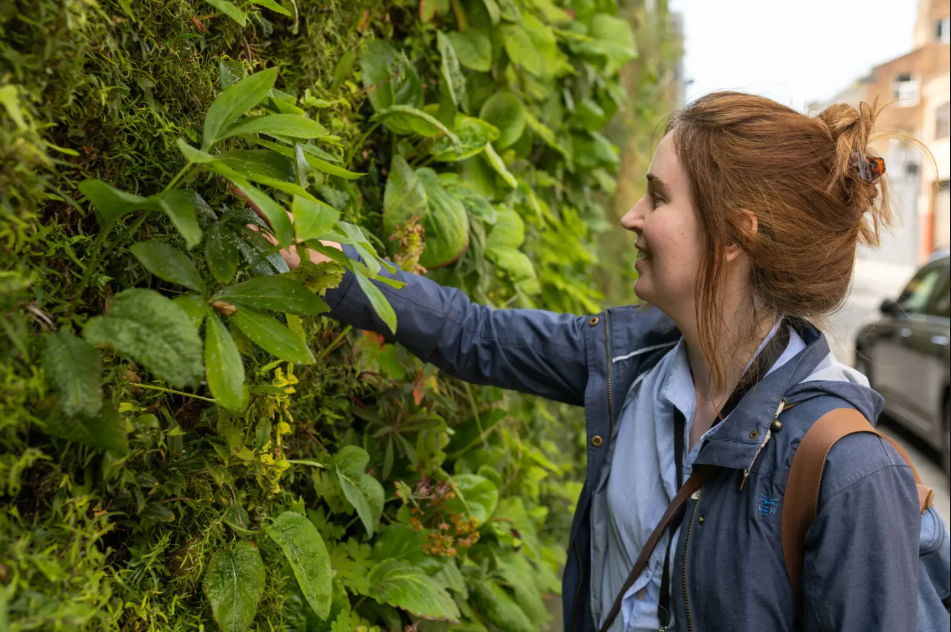
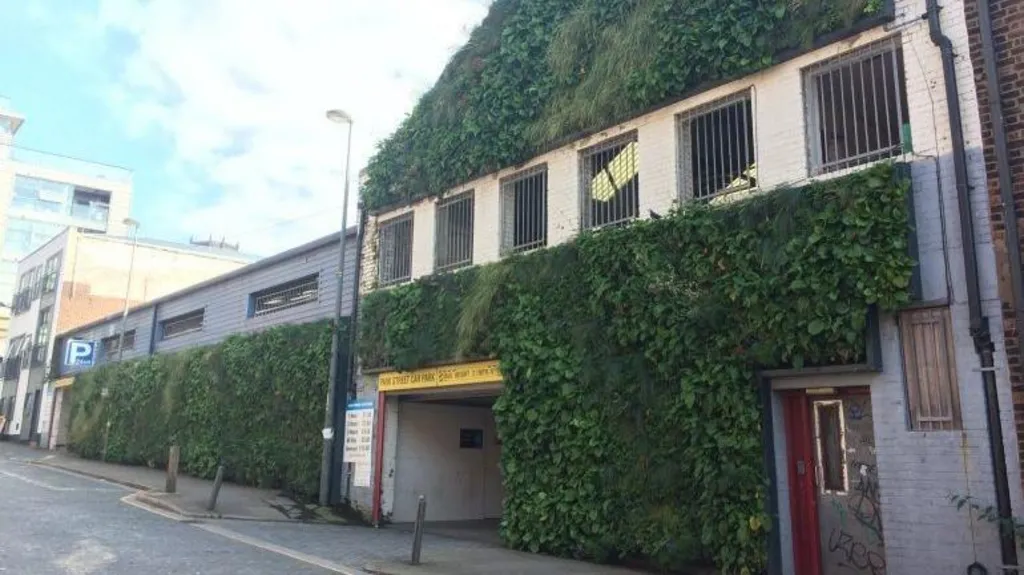
Among the most noticeable innovations of Urban GreenUP are the living green walls. Two such structures were installed back in 2020.
- The first, covering 200 m², is located on the facade of a shopping centre near the main bus station. It serves several functions at once: improving the local microclimate, absorbing pollution, and creating a favourable environment for pollinating insects.
- The second, slightly smaller at 130 m², is situated in a quiet city lane. What makes it special is its accessibility to passers-by: in the summer, they can pick fresh strawberries directly from the wall.
We have also discussed other interesting greening details related to Urban GreenUP here. Let’s briefly recall the floating ecosystems, which include raised plant beds, shallow water bodies to support local wildlife, and an underwater reef made from empty oyster shells. This experiment could be scaled up in the future, especially in cities struggling with deteriorating aquatic ecosystems.
Innovative Approaches of Urban GreenUP
Here are two examples of the innovations used in the programme’s implementation.
Sustainable Drainage Systems (SuDS) use planted trees as natural filters. Rainwater running off roads flows into special tree pits, where it is cleaned before being gradually released into the drainage system, reducing the risk of flooding.
Another innovative approach is the use of ‘smart pollinator pillars’. These are special structures built around lamp posts and planted with flora that attract pollinating insects. They feature their own irrigation system, which minimises water consumption.
Challenges Faced
Urban GreenUP encountered several difficulties. For instance, there were bureaucratic hurdles, as the project required more permits than initially anticipated. A permit was even needed to conduct DNA analysis of water bodies to check for newts! In practice, there was also a shortage of specialists in Liverpool who knew how to build such ecological structures. Furthermore, implementing small-scale projects in narrow, confined spaces proved to be a challenge.
The COVID-19 pandemic presented an unexpected obstacle. Lockdown restrictions worsened staff shortages and created supply chain issues for plants, a problem particularly exacerbated by Brexit. However, the team found solutions – they used the time to revise their greening plans and cared for the trees in storage while they awaited planting. These are further examples of the innovative approach that shows that even in difficult circumstances, ways can be found to implement such an important programme.
Awards and Achievements of the Liverpool Programme
As well as changing Liverpool’s urban landscape, Urban GreenUP has gained international recognition. The project won three awards at the 2024 CIRIA Big Biodiversity Awards ceremony in London. It was recognised in the “Innovation of the Year” and “Nature-based Solution Project” categories, and was also named the Overall Winner for Biodiversity. Liam Robinson, Leader of Liverpool City Council, expressed his hope that this initiative would inspire similar changes across the country. Subsequently, Liverpool became the first city in the world to be granted Accelerator City status under a UN climate change programme.
In facts and figures, the achievements look like this:
- Scale of impact: Implemented in 44 districts, reaching 500,000 residents.
- 100,000 trees and shrubs planted.
- The number of pollinators increased by 928%.
- Surface temperatures decreased by 7.2°C.
- Air quality improved: NO₂ was reduced by 8.4%, and particulate matter by 15.3%.
- Pedestrian activity increased by 13.9%.
- An estimated 26 lives are saved each year thanks to cleaner air and increased physical activity.
Thanks to Urban GreenUP, Liverpool has tested and refined technologies that can now be implemented in other major cities.